



The campaign to replace outgoing Sen. Joni Ernst (R-IA) suggests winning in Iowa is more complicated than simply running as a Republican or Democrat, despite the state’s rightward trend over the past decade.
Six weeks before Election Day, Iowa Republican Senate nominee Rep. Ashley Hinson (R-IA) wants Iowa to know she can work with Democrats while holding an endorsement from President Donald Trump as she takes on Democratic state Rep. Josh Turek.
Hinson has released several ads in recent history touting her as a “bipartisan fighter for Iowa,” placing heavy emphasis on her ability to work with Democratic colleagues to accomplish what Iowans want done. Most recently, Hinson came out in opposition to the Iran war, saying it must come to an end as Americans face a financial squeeze due to the effects of the conflict.
Turek is also stressing his willingness to work with Republicans, but has centered much of his campaign on a policy platform that he contrasts with what he argues are Hinson’s failures during her time in Washington.
The strategies of the two candidates offer a window into Iowa’s somewhat unusual electorate: Republicans hold a significant voter registration advantage after years of gains, but hundreds of thousands of Iowans remain unaffiliated with either major party.
As of September, Iowa has roughly 700,000 registered Republicans, 530,000 registered Democrats, and 564 registered voters with no party affiliation, according to the Iowa secretary of state’s office.
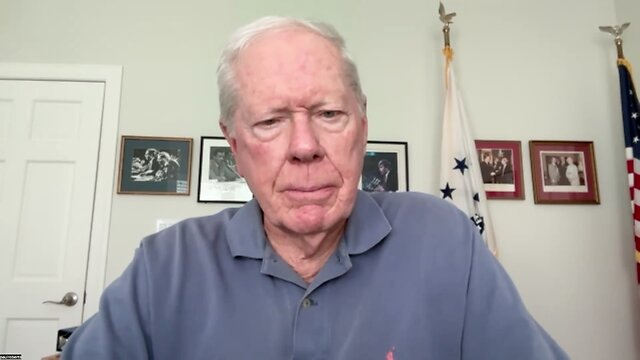
Tim Hagle, a political science instructor at the University of Iowa and Iowa politics expert, said the state’s electorate helps explain why the Senate hopefuls have such a strong incentive to emphasize work and results rather than simply appealing to their respective bases.
He explained that Republicans hold a substantial registration advantage, but independent voters remain a major constituency, making the race partly a contest over voters who may be less interested in partisan combat.
“As far as the no party voters are concerned … they don’t care about the political infighting as much,” Hagle said. “They care more about the so-called kitchen table issues: jobs, the economy, healthcare.”
A state ‘on the red side of purple’
Iowa’s Republican advantage is relatively new.
For decades, the state regularly swung between the two parties. Former Democratic Sen. Tom Harkin and Sen. Chuck Grassley (R-IA) represented Iowa in the Senate together for nearly three decades, while Iowa backed former President Barack Obama in the 2008 and 2012 presidential elections before moving sharply Republican in the Trump era.
Hagle described Iowa today as being on the “red side of purple,” pointing to the state’s independent voters as one reason its electorate is more complicated than recent election results alone might suggest.
That history helps explain the political identity Hinson is presenting to voters.
Hagle pointed to Grassley’s longtime “Grassley works” mantra as an example of a style of Republican politics with deep roots in Iowa — one built around showing voters that a politician is going to do the job rather than wading into partisan battles.
IOWA SENATE RACE SHIFTS TO TOSS-UP AS IRAN WAR PLAGUES REPUBLICAN HINSON
“Iowans tend to not necessarily go for the folks that are the so-called fighters, the people that always feel they have to fight,” Hagle said. “It’s not so much that you’re fighting all the time or antagonistic and all this stuff, but you’re there to work for the people, and so that’s kind of the thing that you might want to portray.”
Hinson has leaned into a similar message as she seeks a promotion from the House to the Senate.
Hinson sells work over fighting
On the post-primary campaign trail, Hinson has pushed her work in office to the forefront of her campaign. Her campaign has released advertisements in the past several weeks highlighting bipartisan work in Congress, including bills passed under former President Joe Biden.
“Used to be that reaching across the aisle wasn’t just OK, it was expected,” Hinson said in an ad released earlier this month. “Some people in Washington forgot that. I never have.”
She has also emphasized instances in which she was willing to buck her own party, but has not gone so far as to refrain from invoking Trump when discussing her achievements.
“Working across the aisle isn’t always easy, but it’s how you get results,” Hinson said.
In another video, Hinson pitches her plan to make healthcare costs more affordable, saying she will “continue to work every day to deliver bipartisan solutions that lower costs.”
Regarding her opponent, Hinson has often targeted Turek’s attendance record and emphasized her own hard work-focused campaign. She has posted videos claiming the Democrat has missed the majority of votes in the state House this year, noting that some votes were on legislation crucial for Iowa farmers.
More recently, Hinson broke with Trump over the war in Iran, calling for the conflict to end as high fuel prices have placed particular pressure on farmers and other Iowans reliant on diesel. Her shift came after she previously opposed congressional efforts to restrict Trump’s war powers, voting with the majority of her party.
The strategy does not require Hinson to run a campaign opposing Trump. Rather, it allows her to establish a political identity beyond the president for voters who may support Republicans without being motivated primarily by partisan politics.
But Hinson’s campaign noted that her bipartisan progress predates the 2026 midterm elections.
“Ashley will work with anyone to get things done for Iowa families and will take on anyone who gets in the way. Iowans want results, and that’s how you get them,” a campaign spokesperson said.
“Since coming to Congress, Ashley has always worked across the aisle, that’s how she’s delivered millions in federal funding for improvements to infrastructure, childcare centers, water quality — and has gotten bills signed into law on veterans mental health and to end the tragedy of stillbirth,” they added. “She will continue working across the aisle to take on big health insurance companies and lower costs.”
Turek has argued, however, that Hinson has failed to take action on the war she recently came out against.
“It’s easy to send a tweet, but when you had the chance to vote to end this war, you chose not to,” Turek said. “You voted seven times to continue it, including just last week. It’s time to actually end the forever wars and put Iowa and Iowans first. Glad you’re finally following my lead after waffling on the proposals I put forward last week to address the rising costs of the war in Iran.”
Additionally, the Democrat has ripped Hinson for her bipartisan branding, calling her “Iowa’s least bipartisan member of Congress,” again noting her votes on the war powers resolution.
Turek’s campaign said he would combat corruption in both parties and tied Hinson to the late convicted sex offender Jeffrey Epstein.
“A four-time Paralympian and two-time gold medalist, Josh Turek has been ranked one of Iowa’s most effective and bipartisan legislators because he’s voted with Republicans more than 700 times to cut taxes, lower costs, and keep Iowans safe,” a campaign spokesperson said.
“Josh is running for the U.S. Senate to take on corruption in both parties and will work with anyone to get things done for Iowans — and that’s why voters across the political spectrum — Democrats, Independents, and Republicans — are going to come together to send him to the U.S. Senate in just 41 days. Meanwhile, Ashley Hinson is a corrupt D.C. politician who has repeatedly hurt Iowans to enrich herself and her Epstein-linked billionaire donors,” they added.
Trump can still play an important role in getting Republicans to the polls, Hagle said.
“If he gets involved and he gets his base involved, that also gets Democrats’ base involved, the anti-Trump base involved as well, but again in Iowa and many other places, it’s not the bases that determine it,” Hagle said, adding that voters between the two partisan bases are particularly important.
“It’s still those middle voters that are going to determine the election,” Hagle said.
He pointed to Hinson’s recent position on Iran as an example of lawmakers responding to concerns that increasingly hit voters at home.
“I think that’s why we’re seeing different comments from some of the members of Congress, and Hinson would be one of them,” Hagle said, describing the emerging sentiment as, “OK, this is a bit much. We need to sort this out one way or another, or find some alternatives.”
Two campaigns built around Iowa voters
Turek is making his own pitch to voters outside the Democratic base.
The Democratic state representative represents a district won by Trump and has repeatedly touted his willingness to vote with Republicans in the Iowa legislature. His campaign also launched a “Republicans for Turek” coalition, arguing his record demonstrates an ability to work across party lines.
Where the candidates differ is largely in how they use their records.
Hinson’s campaign asks voters to view her years in Congress as evidence she can work within Washington to deliver results. Turek frequently uses those same years to argue that Hinson has already had an opportunity to address problems facing Iowa and has fallen short.
His campaign messaging often follows that formula: laying out a policy proposal and then contrasting it with Hinson’s votes or record in Congress.
For example, Turek has proposed a pause on diesel exports as the Iran war strains consumers at the pump, a policy Grassley has also backed, which he paired with a dig at Hinson.
“I have always said that no party has a monopoly on good ideas, and I’m glad to see Sen. Grassley echoed my call to pause diesel exports to provide relief to Iowa’s families and farmers hurting from skyrocketing fuel prices,” Turek said. “Meanwhile, Ashley Hinson has been silent, instead choosing to prioritize her Big Oil donors over Iowans, just as she has done seven times by voting to continue this war in Iran, even as her Iowa Republican colleagues cross the aisle to end it.”
That dynamic is typical when a challenger faces a sitting member of Congress, Hagle said, because an incumbent’s voting record provides years of material for an opponent to challenge.
“If you’ve got somebody who’s a sitting member of Congress right now, so Henson in the Senate race … you see a lot of, ‘Oh, they voted for this or they voted for that,’ and that’s often a problem for incumbents,” Hagle said.
But even those attacks have largely focused on policy rather than deeply personal battles playing out in other races in Texas and Michigan.
For candidates in both parties, the focus on kitchen-table issues will become increasingly important in the waning weeks of the midterm elections, as not every voter is in tune with the nitty-gritty of Washington politics.
“Even if they’re looking for support from Trump or to be part of the Trump coalition, they still need to make sure that they’re going to reach those other voters as well,” Hagle said.
Hinson has a Republican registration advantage behind her but is presenting herself as a lawmaker whose work is not defined solely by her party. Turek faces a tougher registration landscape, but is betting a policy- and work-focused campaign can reach cross-over voters.
HOW IOWA’S MARQUEE CANDIDATES AIM TO COMBAT STATE’S SURGING CANCER CRISIS
Iowa may no longer be the presidential battleground it was a decade ago, but the campaign to become its next senator shows that its electorate cannot be neatly divided along party lines.
For Hinson and Turek, the final six weeks will be a test of how many Iowans are willing to look beyond them.
Continue reading...
[ H/T Washington Examiner ]