
For decades, Washington behaved as though geography guaranteed American influence in Latin America. It does not.
While U.S. foreign-policy attention was consumed by conflicts and strategic competition elsewhere, China steadily built an economic and strategic presence across the Western Hemisphere through trade, infrastructure, ports, energy, telecommunications, mining, finance, and access to strategic resources. This was not one grand geopolitical maneuver. It was built incrementally, through investment and long-term relationships.
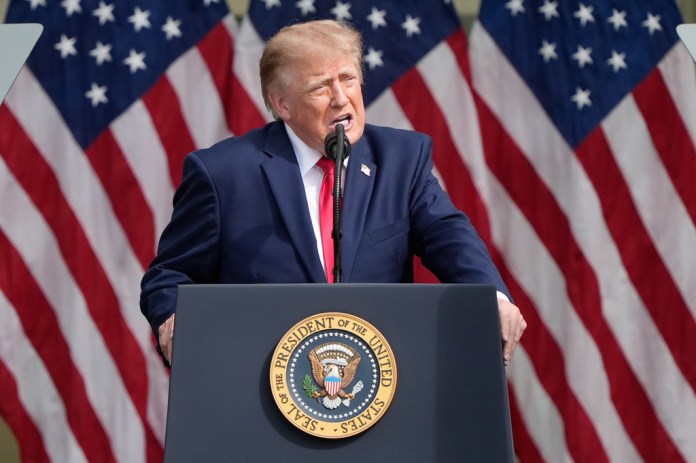
Washington is finally responding. President Donald Trump appears to understand what successive administrations underestimated: Latin America is not America’s backyard. It is a strategic component of America’s economic and national-security future. That recognition is important. But recognition alone is not a strategy. The real test is whether the Trump administration can turn its renewed attention into durable institutions, investment, infrastructure, and partnerships that survive the political cycle.
China played the long game
China did not need military alliances to increase its influence. It invested, traded, built infrastructure, financed projects, secured access to commodities, and developed relationships over decades. The Center for Strategic and International Studies has documented Chinese involvement in Latin American ports, railways, energy generation, and telecommunications. A port is not simply a port. A mineral deposit is not simply a commodity. Each can become part of a wider system of economic dependence, strategic access, and political leverage, which is why China’s presence deserves to be understood as a system, not a collection of transactions.
The critical minerals battle changes the equation
Latin America possesses resources central to batteries, advanced manufacturing, and defense technologies. But possessing minerals underground does not mean controlling their strategic value. The real competition is over the entire supply chain: extraction, processing, refining, and manufacturing. China has spent years building advantages across every one of those stages. A country can hold a vast mineral deposit while another country controls the processing technology. A producer can export raw materials while importing the high-value products made from them. The country that controls the higher-value stages ultimately captures the leverage. China understood this earlier than most Western policymakers. America is now trying to catch up.
That shift has become visible in U.S. diplomacy. In February, Washington hosted the 2026 Critical Minerals Ministerial with representatives from 54 countries, including Argentina, Brazil, Bolivia, Ecuador, Mexico, Paraguay, and Peru. On Aug. 7, Trump announced roughly $3 billion in critical-mineral and battery investments, including a $1.4 billion conditional War Department loan to Sila Nanotechnologies. Reuters reported the initiative is meant to strengthen U.S. defense supply chains and cut dependence on China. Washington cannot outcompete Beijing in the hemisphere through rhetoric — only through capital, technology, infrastructure, and long-term commercial relationships.
Latin America will not simply choose sides
Washington should avoid a fundamental mistake: assuming Latin American governments are waiting to choose between America and China. They are negotiating with both. Argentina is a useful example. President Javier Milei has built a close relationship with Trump, yet Argentina maintains substantial economic ties with China in trade, infrastructure, energy, and mining. That is not an ideological contradiction. it is national interest. If China offers something America does not, governments will take it. The right American response is not to demand loyalty. It is to offer a better proposition.
The objective should not be to eliminate China from the hemisphere overnight. That is unrealistic and unnecessary. The better objective is to prevent any external power from becoming indispensable, so that sovereign countries can trade with China, the U.S., Europe, and others without strategic dependence on any one of them. That requires competition: American processing facilities, American financing, American technology, and American demand, each giving governments another option.
A mine is not a supply chain
Signing a mineral agreement is not the same as building a strategic supply chain. An agreement can expire. A processing facility can operate for decades. Washington should be asking who processes the mineral, who owns the technology, who finances the infrastructure, and who guarantees demand because those questions determine where strategic power ultimately resides.
Presidents come and go. Supply chains do not. If American companies build processing capacity alongside Latin American producers, if U.S. financing reshapes trade routes, and if American markets provide reliable demand, economic integration becomes self-reinforcing and durable. China has a decadeslong head start, and alternative supply chains cannot be built overnight, which means America needs continuity. A strategy that disappears with one president is not a strategy.
BEIJING THINKS TAIWAN IS THE NEXT HONG KONG. THAT’S A FATAL MISTAKE
Washington should also resist reducing its Latin America policy to an anti-China campaign. Latin American governments want sovereignty, growth, security, and access to global markets, and will work with whichever partners deliver them. That is how influence becomes durable, not through demands for loyalty, but through partnerships that make countries stronger.
Latin America is not America’s backyard. It is America’s strategic neighborhood. The lasting measure of Trump’s hemispheric strategy will not be how much attention he brought to the region — it will be whether, years from now, America is stronger and less strategically dependent on China because of what his administration began. That is the long game, and America cannot afford to lose it.
Jessy Samuel Ejah is an author, strategic thinker, and opinion columnist whose work explores geopolitics, governance, business, sport, leadership, and Africa’s place in the global order. He is the founder & chief architect of JessyWorldwide.
Continue reading...
[ H/T Washington Examiner ]