







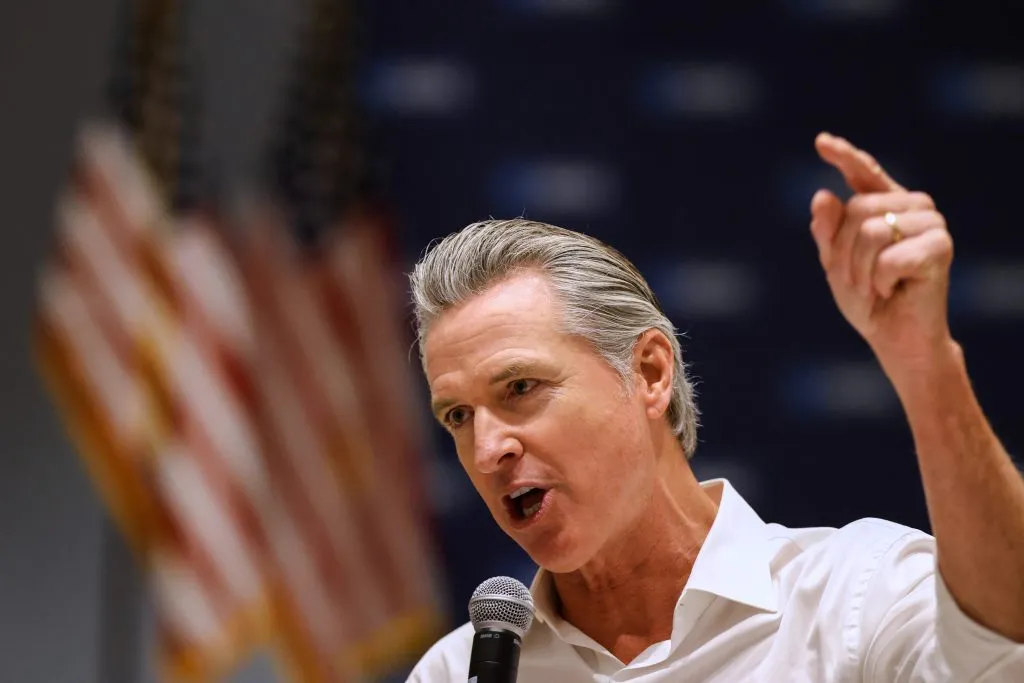
As the midterm elections approach, liberals are bragging about California as a beacon of progress and economic success.
This is one of my biggest issues with California. As someone who has done business in the state and published a book about it, my question is: What exactly is there to celebrate?
A continuing exodus of businesses and residents? High taxes? Some of the most expensive housing in the country? Excessive regulatory policies? One of the worst standards of living for the money in America? An enormous and costly welfare system? One of the least competitive business tax climates in the nation? The steady erosion of future economic opportunity? Or perhaps watching so many of the extraordinary achievements of the last century gradually unravel under the weight of political mismanagement?
According to research by the Hoover Institution, more than 350 corporate headquarters departed the Golden State between 2018 and 2021 alone, including nearly a dozen Fortune 1000 companies such as Tesla, Oracle, and Hewlett Packard Enterprise, among others.
And what about the exodus of ultra-high-net-worth individuals and billionaires? While many on California’s political left celebrate their departure, do they not realize the enormous share of the state’s income tax burden shouldered by its wealthiest residents? Beyond taxation, these individuals contribute substantially to a healthy state economy.
In 2021, the number of companies that relocated out of the world’s fifth-largest economy doubled from 2020, earning the state 48th place in the Tax Foundation’s 2022 State Business Tax Climate Index rankings. The state’s 8.84% corporate tax rate is no doubt part of the problem, as is its annual franchise tax for LLCs — the highest in the country — making the costs of running even a small business a burden for any entrepreneur, alongside the unusually high costs of property, labor, permits, and compliance.
For the same reasons, California is witnessing an unprecedented population decline. In fact, many believe, myself included, that California’s peak population days are behind them. California’s Department of Finance estimates that net domestic out-migration was 288,600 people in 2025, meaning that significantly more people left California for other states than arrived from them. This was the largest loss of any state in the country, according to Census data. Presumably, affordability is a driving factor, considering the average cost of living in California is 38% higher than the national average, housing is 97% higher, and California is home to the nation’s highest income tax rates. According to a recent poll, two-thirds of Californians now say their quality of life would be improved if they lived elsewhere.
If liberals truly regard California as an economic model for the rest of the country, how do they explain these inconvenient facts? And if their philosophies take control of Congress in the fall, how will this dysfunction affect other states?
California can’t even dispose of trash correctly. The Chiquita Canyon Landfill was the second-biggest active landfill in the Los Angeles area, but, with some legitimate concerns like an underground chemical reaction that generated noxious odors and massively complex regulations where federal, state, and local requirements overlapped and sometimes contradicted, it ended active waste disposal at the end of 2024.
The same politicians who helped create the noxious regulations that killed the landfill have also created the incentives for illegal dumping and more expensive trash removal. One small business owner was charged an $1,800 trash fee because the trash man had to open a lock. Then there’s the fee thrown on residents last year because — wait for it — Los Angeles liberals realized subsidizing trash removal was too expensive.
Sure, they shut down a smelly landfill with some concerning maintenance challenges. But they also just made the problem worse.
Of course, Gov. Gavin Newsom (D-CA) will ignore the Los Angeles governance failures, just like he and everyone else ignored the nearby empty reservoir until the 2025 fires were burning bright. Just like he ignored San Francisco’s trash and homelessness problem until China’s communists visited, and just as he pretends the high-speed railroad will ever be built.
For decades, California had a reputation as a world-class business and economic powerhouse. But those days are now long gone. Unfortunately, stifling regulations, an over-bureaucratic governing style, a deteriorating quality of life, and political leadership that treats its assets as permission to excessively tax anyone who calls the state home are driving businesses and residents elsewhere.
DON’T CALIFORNIA AMERICA
States need enforceable environmental standards that protect their residents, but the purpose of that oversight should be to produce solutions at a cost reasonable enough for businesses to remain confident their operations will continue producing returns. What reasonable leader can repeatedly increase the cost of doing business in a state and then express surprise when businesses leave? Simply put, unless you are on welfare, a drug tourist, homeless, live in a gated and privately protected neighborhood, or a California politician who flies in for a photo opportunity and promptly leaves, the California model no longer works.
California’s leaders have spent years showing us the results of their policies. This election season, voters should send the message that these ideas don’t work.
Chad Hagan is a financier, author, executive producer, and philanthropist involved in economic and environmental policy in the United States and United Kingdom. He is the author of the book “The Myth of California: How Big Government Destroyed the Golden State.”
Continue reading...
[ H/T Washington Examiner ]