
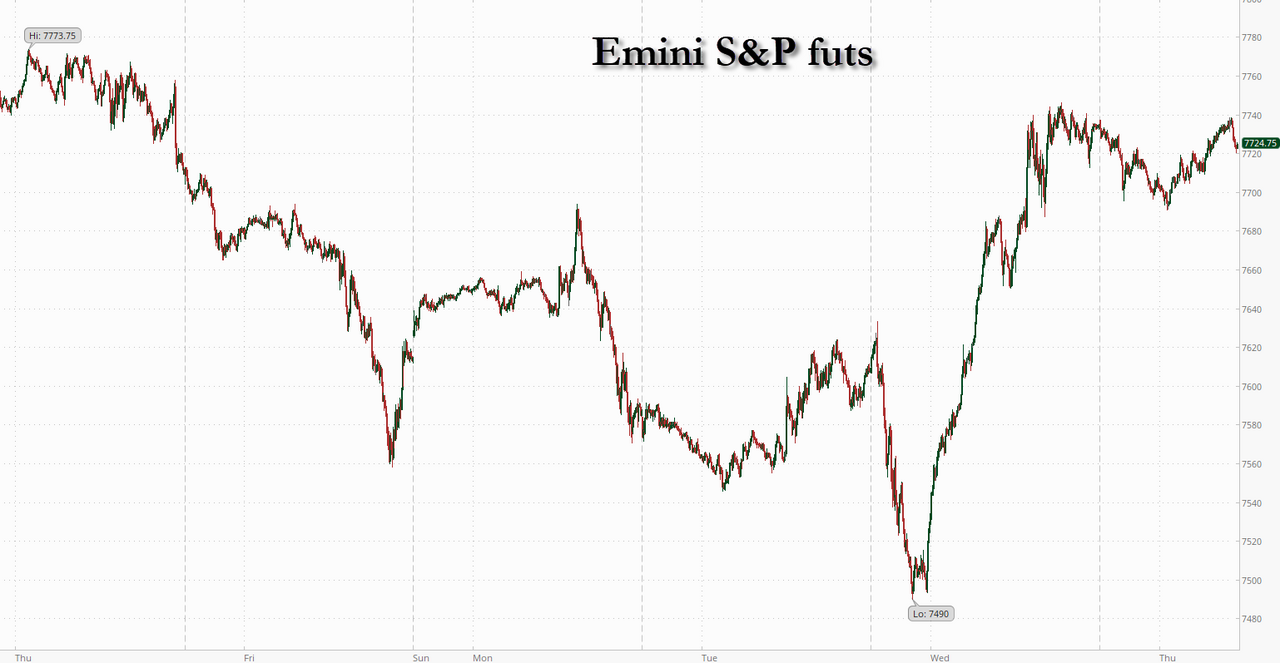
Brent On Track For Worst Week Since COVID, But UBS Warns Bears: "Fundamentals Still Provide A Floor"
Brent crude futures are on track for their largest weekly decline since the week ending April 24, 2020, during the early COVID-19 pandemic era, on the prospect that a Democratic sweep could end the US-Iran conflict.
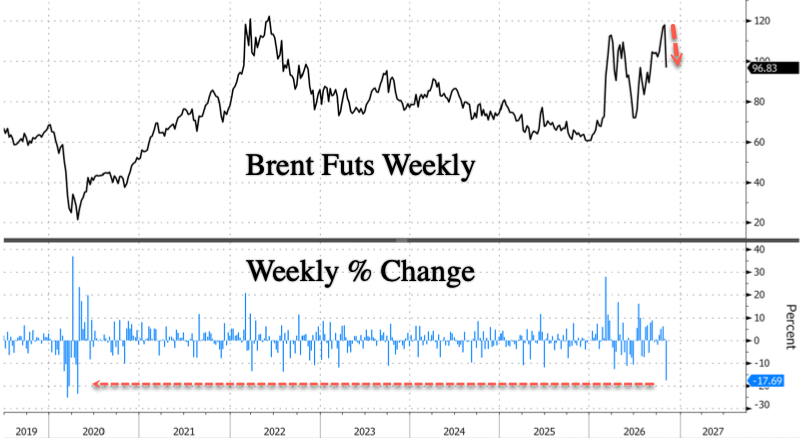
UBS energy expert Dominic Ellis wrote in a note earlier that the collapse in crude's war risk premium reflects the prospects for peace and the potential for the Strait of Hormuz to fully reopen. But those hopes are colliding with the harsh reality that replenishing depleted global oil stockpiles could take considerable time.
Brent's $20 plunge over the last several days reflects a massive unwinding of the war risk premium rather than a meaningful improvement in supply and demand, Ellis said. He estimates that another $10 to $15 of premium remains embedded in crude near $95, leaving more room for downside if further diplomatic signals emerge from the Gulf.
Ellis explained:
However, Ellis pointed out that the conflict has drained nearly 700 million barrels from global inventories, as fundamentals still point to a severe global energy crisis that won't dissipate anytime soon.
He said:
The takeaway is that further peace headlines and a possible resolution could push oil prices lower, but the reality is that stockpiles around the world need to be replenished, which should eventually put a floor under prices.
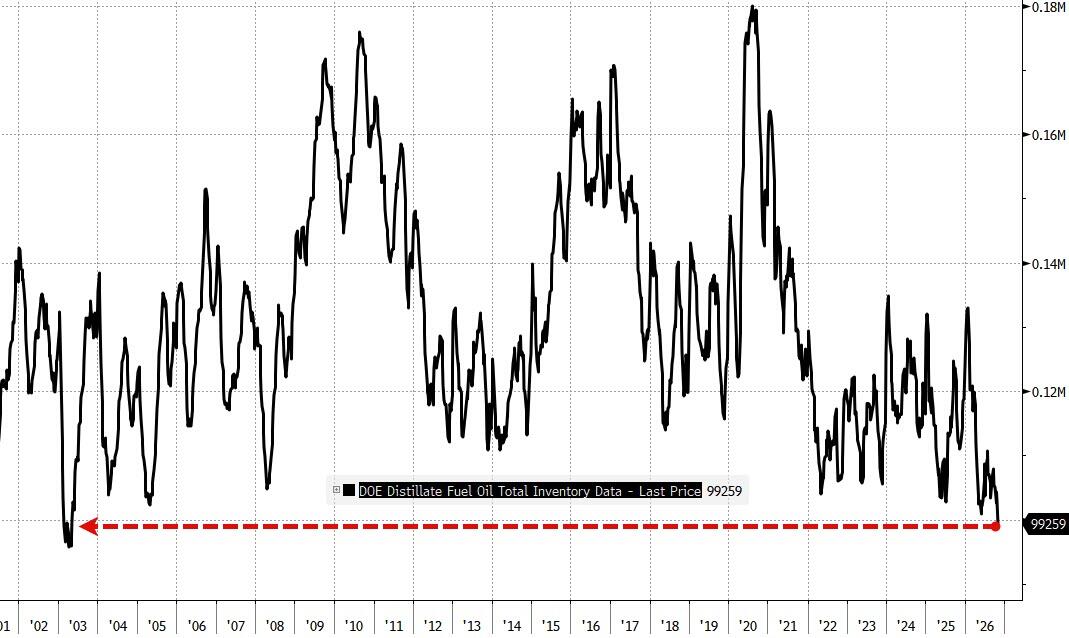
For instance, US distillate stockpiles fell below 100 million barrels for the first time since 2003.
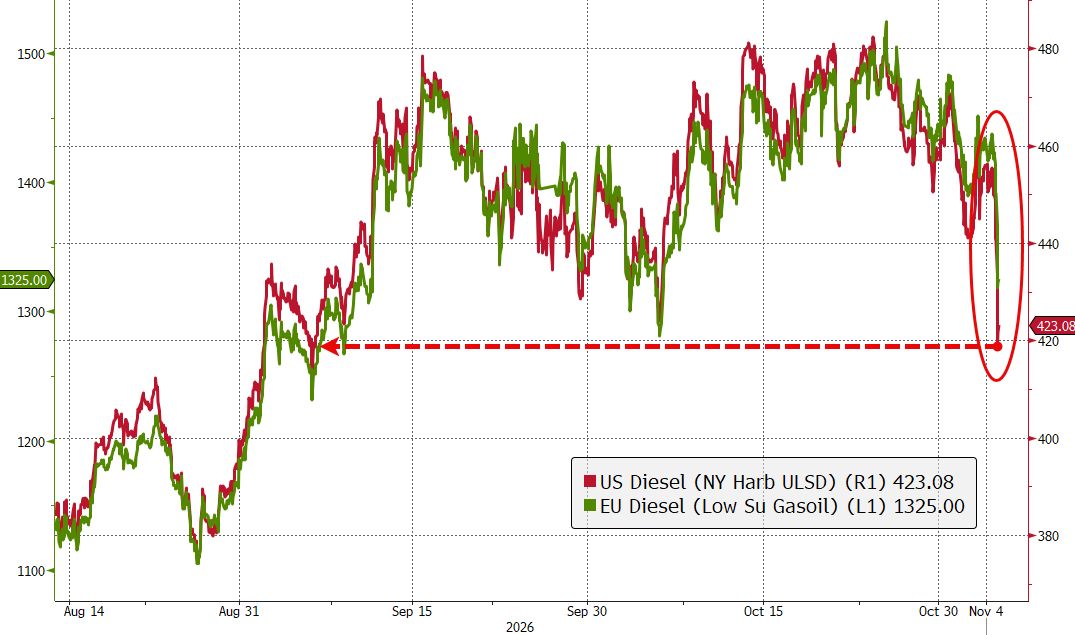
It's great news that US diesel prices hit two-month lows on Wednesday, but traders will have to reckon with depleted inventories (read here).
Our market technicians at The Market Ear have provided readers with a full breakdown of crude in a note titled "The Oil Massacre" ...
Tyler Durden Thu, 11/05/2026 - 08:10
Continue reading...
[ H/T ZeroHedge ]
Brent crude futures are on track for their largest weekly decline since the week ending April 24, 2020, during the early COVID-19 pandemic era, on the prospect that a Democratic sweep could end the US-Iran conflict.
UBS energy expert Dominic Ellis wrote in a note earlier that the collapse in crude's war risk premium reflects the prospects for peace and the potential for the Strait of Hormuz to fully reopen. But those hopes are colliding with the harsh reality that replenishing depleted global oil stockpiles could take considerable time.
Brent's $20 plunge over the last several days reflects a massive unwinding of the war risk premium rather than a meaningful improvement in supply and demand, Ellis said. He estimates that another $10 to $15 of premium remains embedded in crude near $95, leaving more room for downside if further diplomatic signals emerge from the Gulf.
Ellis explained:
However, Ellis pointed out that the conflict has drained nearly 700 million barrels from global inventories, as fundamentals still point to a severe global energy crisis that won't dissipate anytime soon.
He said:
The takeaway is that further peace headlines and a possible resolution could push oil prices lower, but the reality is that stockpiles around the world need to be replenished, which should eventually put a floor under prices.
For instance, US distillate stockpiles fell below 100 million barrels for the first time since 2003.
It's great news that US diesel prices hit two-month lows on Wednesday, but traders will have to reckon with depleted inventories (read here).
Our market technicians at The Market Ear have provided readers with a full breakdown of crude in a note titled "The Oil Massacre" ...
Tyler Durden Thu, 11/05/2026 - 08:10
Continue reading...
[ H/T ZeroHedge ]