




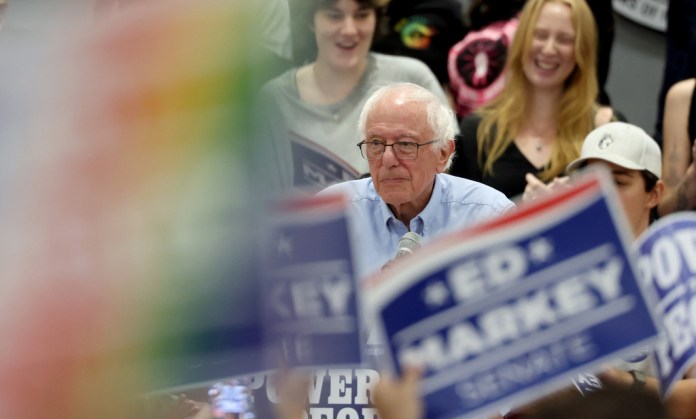
Sen. Bernie Sanders (I-VT) may be in the twilight of his career, but his political power is arguably at its zenith.
Sanders’s political influence previously peaked during what became a one-on-one 2016 Democratic presidential primary campaign against eventual nominee Hillary Clinton and his 2020 do-over when he was the last candidate standing against eventual nominee Joe Biden.
“While the Sanders campaign has been suspended — its impact on this election and on elections to come is far from over,” Biden said at the time. “We will address the existential crisis of climate change. We will confront income inequality in our nation. We will make sure healthcare is affordable and accessible to every American. We will make education at our public colleges and universities free. We will ease the burden of student debt. And, most important of all, we will defeat Donald Trump.”
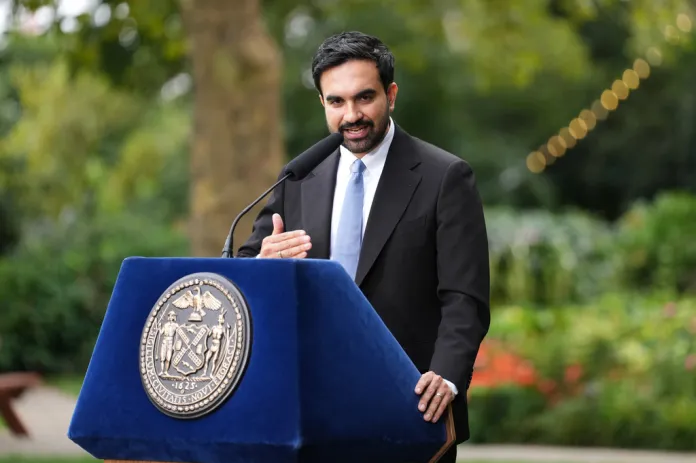
But six years later, Sanders’s power is on the rise again ahead of the 2026 midterm elections and the 2028 presidential contest to succeed President Donald Trump. In the past year, Sanders’s movement helped power New York City Mayor Zohran Mamdani’s victory in the Big Apple and the successful ouster of several establishment Democrats in primaries by avowed socialists.
Then there was also the success of Democrats running in Sanders’s mold, including Michigan Senate nominee Abdul El Sayed. Despite not identifying as a socialist, el Sayed has garnered the support of Sanders and his followers.
Progressive Change Campaign Committee co-founder Adam Green described Sanders’s influence on policy and politics as “a rolling snowball, growing and picking up momentum for the last decade.”
“He has been a huge player within an economic populist ecosystem that’s worked to popularize ideas like taxing billionaires, major public investments in infrastructure, and corporate accountability in blue, purple, and red states,” Green told the Washington Examiner.
But with the 85 year old unlikely to launch another presidential campaign in 2028, the coming midterm elections are seen as a test of whether Sanders’s politics is the future of the Democratic Party. Sanders, himself, is not taking anything for granted. The senator is mobilizing his fundraising operation behind socialists running across the country.
For example, Sanders is planning to spend more than $2.8 million of his $23 million war chest on Senate nominees Peggy Flanagan in Minnesota and Angie Nixon in Florida. Sanders is also planning to invest in the reelection of Minnesota Attorney General Keith Ellison, a progressive firebrand who backed his prior White House bids.
Sanders’s support will also include grassroots organizing and get-out-the-vote text messages, according to Politico.
“I am very proud that many strong progressives have won Democratic primaries. We got to defend them right now,” Sanders told Politico this week. “We got three Senate races in Michigan and Minnesota and Florida that I want to see us win, three great candidates, and they’re all taking on enormous amounts of money. So we need to strengthen the grassroots movement in those states.”
But it is el Sayed who has received the most assistance, at least so far, with Sanders raising $574,000 for the Michigan race. El Sayed defeated a more centrist Democrat for the nomination, giving Sanders and his allies another high-profile primary victory. But Michigan now presents a different test: whether the political movement Sanders has spent the past decade building can translate its success inside the Democratic Party into victory in a competitive general election.
Republicans are trying to make el Sayed’s politics and associations a liability, including his relationship with controversial Twitch streamer Hasan Piker.
“Hasan Piker is out with a new banger: America is ‘pound for pound’ worse than Al-Qaeda,” Republican National Committee press secretary Natalie Baldassarre told reporters this month. “Abdul El-Sayed continues to embrace Piker because ‘there are three million people who listen to him,’ and Democrats across the country continue to give him a platform by failing to draw a red line. Silence is complicity, and equivocating is endorsement.”
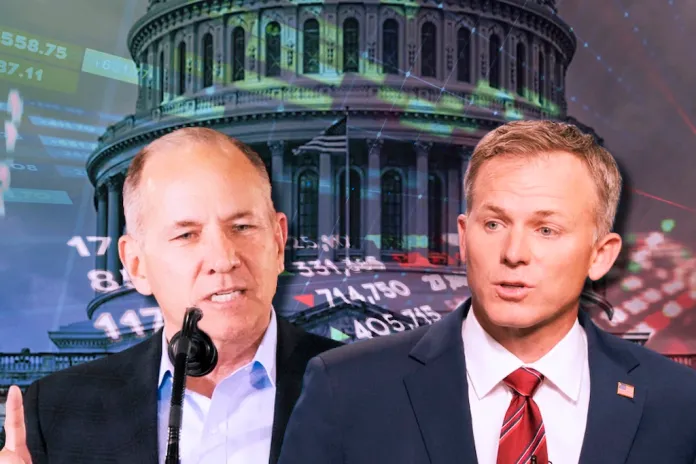
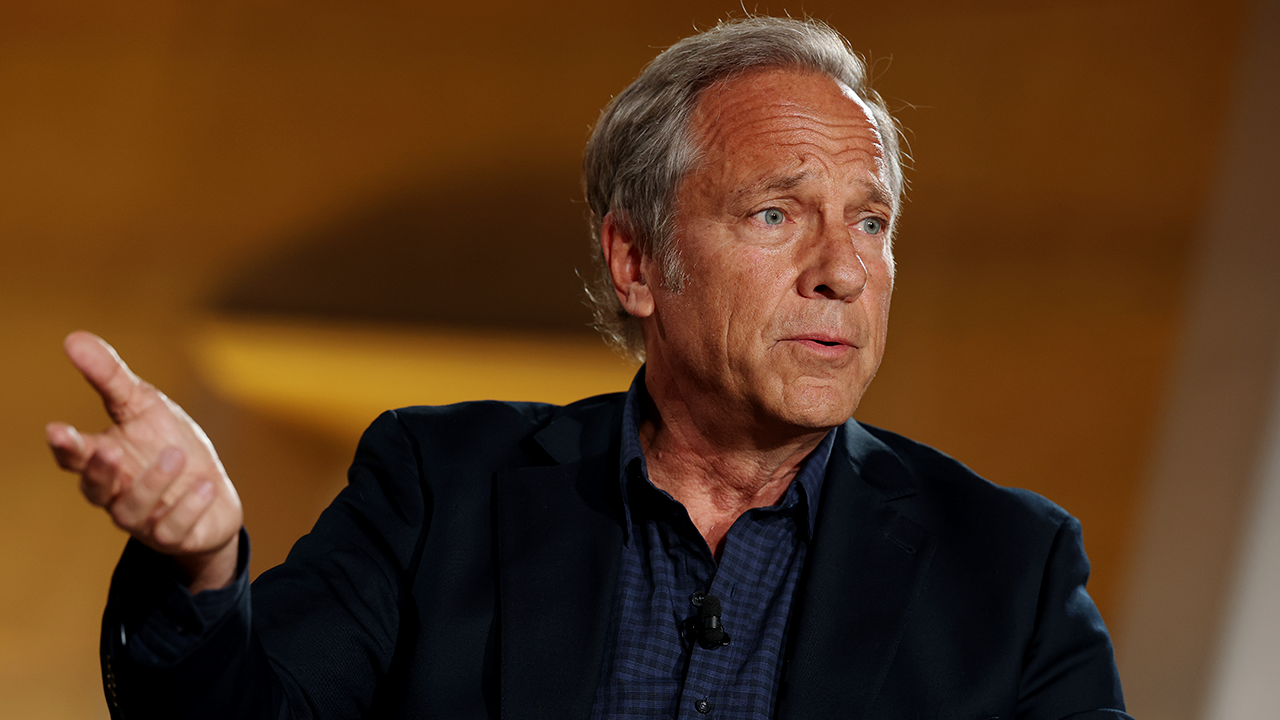
El Sayed nevertheless enters the final stretch of the campaign locked in a competitive race with Republican nominee Mike Rogers. Democratic strategist Christopher Hahn, who hosts the Aggressive Progressive podcast, argued the contest could help determine how Sanders’s political legacy is viewed after a decade in which he went “from a backbencher to a kingmaker.”
“The Michigan Senate race is a must win to secure that legacy,” Hahn told the Washington Examiner. “It’s a must win for him and the Democratic Party.”
Even some Democrats who opposed el Sayed in the primary are now backing him. Third Way Executive Vice President Jim Kessler, whose organization is spending $15 million to counter the Democratic Socialists of America, said he did not want el Sayed to win the nomination but wants him to prevail in November.
Kessler cautioned, however, against interpreting an el Sayed victory as proof that Democrats are moving decisively toward Sanders’s brand of politics. He argued that the broader political environment is favorable enough to Democrats that candidates across the party’s ideological spectrum could benefit.
REPUBLICANS SAY THEY LEARNED FROM BIDEN’S MISTAKES AS THEY TRY TO SELL TRUMP’S ECONOMY
“In 2018, AOC beat Joe Crowley in the primary, and the talk was that all the energy is on the left,” Kessler told the Washington Examiner. “Then you had an election, a general election, in which a lot of centrist Democrats flipped seats — Abigail Spanberger, Mikie Sherrill, Elissa Slotkin, Chrissy Houlahan — and the story after the general election was really how the moderates fought back.”
That tension makes November a potentially important measure of Sanders’s influence. The Vermont senator has already pushed socialism into the Democratic mainstream and helped a new generation of left-wing candidates win primaries. The 2026 elections will offer another measure: how far that movement can extend beyond the Democratic electorate as Sanders approaches the end of his own political career.
Continue reading...
[ H/T Washington Examiner ]