


The Houthis’ lightning offensive in September seized the entire Red Sea coastline, shocking the world and shattering confidence in the capabilities of the forces of the internationally recognized government. However, further Houthi offensives have met stiffer resistance from the recuperated forces of the Presidential Leadership Council, depriving the group of another quick victory.
The latter half of September saw fighting in Yemen shift to the strategic southwest highlands, concentrated around the critical city of Taiz, the third-largest in Yemen and the only one of the country’s top five cities the PLC controls outside of its capital, Aden. Thursday saw one of the heaviest days of fighting yet, after the Houthis launched an all-out offensive seeking to encircle the city.
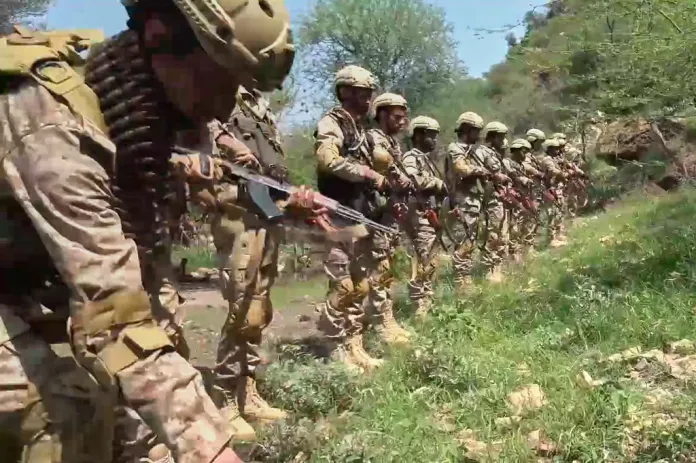
This image taken from undated video released by the Ansar Allah Media Office, the media arm of Yemen’s Houthi rebels, on Tuesday, Sept. 22, 2026, shows what the group says are Houthi fighters standing in formation in an area of clashes with Saudi-backed forces in Yemen. (Ansar Allah Media Office via AP)
" data-large-file="https://www.washingtonexaminer.com/wp-content/uploads/2026/10/AP26265728988880.jpg?w=696" src="https://www.washingtonexaminer.com/wp-content/uploads/2026/10/AP26265728988880.jpg?w=696" alt="Houthis" class="wp-image-4753012" srcset="https://www.washingtonexaminer.com/wp-content/uploads/2026/10/AP26265728988880.jpg 1024w, https://www.washingtonexaminer.com/wp-content/uploads/2026/10/AP26265728988880.jpg?resize=300,200 300w, https://www.washingtonexaminer.com/wp-content/uploads/2026/10/AP26265728988880.jpg?resize=768,512 768w, https://www.washingtonexaminer.com/wp-content/uploads/2026/10/AP26265728988880.jpg?resize=150,100 150w, https://www.washingtonexaminer.com/wp-content/uploads/2026/10/AP26265728988880.jpg?resize=696,464 696w" sizes="(max-width: 1024px) 100vw, 1024px">
This image was taken from an undated video released by the Ansar Allah Media Office, the media arm of Yemen’s Houthi rebels, on Tuesday, Sept. 22, 2026, shows what the group says are Houthi fighters standing in formation in an area of clashes with Saudi-backed forces in Yemen. (Ansar Allah Media Office via AP)
Two weeks into fighting, the unforgiving mountainous terrain, heavy Saudi and government air power, and a reenergized anti-Houthi coalition have kept the Houthi advance in check, preventing a collapse on the level of that in mid-September.
HOUTHIS LAUNCH NEW OFFENSIVES INTO STRATEGIC YEMENI HIGHLANDS, THREATENING TO ENDANGER CAPITAL
Six people familiar with the matter told Reuters that the Saudis are planning a massive offensive, involving over 100,000 Yemeni troops, to possibly retake the Bab el Mandeb Strait. The reported offensive is expected to take place sometime in the next several weeks. The report also stated that Saudi Arabia has ruled out negotiations until the strait has been wrested from Houthi control.
As Yemen returns to a level of fighting intensity not seen since the 2022 truce, the civil war has entered a decisive phase, with several possible avenues forward.
Where will the Houthis strike next?
For a movement that once faced extinction against Yemeni security forces in the northern Yemeni mountains of Saada in the mid-2000s, mid-September marked the high-water mark beyond the Houthi movement founder’s wildest dreams. After humbling several international coalitions, the group had proven its fighting superiority with a lightning offensive that saw the most rapid exchange of territory since the civil war began over a decade ago, seizing one of the most strategically vital strips of real estate on Earth. The once-ragtag group now controlled the Bab el Mandeb Strait, one of the world’s foremost maritime trade chokepoints.
With the Houthis’ foremost target taken, the next question on analysts’ minds is where they will strike next. The group controls about one-third of Yemen’s landmass, though the areas under its control are the most strategically important and densely populated. The capital, Sanaa, is under Houthi control, along with 70-80% of Yemen’s population and the military manpower that provides.
While the Houthis control most of the people, the PLC controls most of the resources and money. Nearly all of Yemen’s oil and gas are located in three government-controlled governorates: Hadramawt, Shabwa, and Marib, though exports have largely halted since 2022 due to damage from Houthi drone strikes.
AbdulSalam Mohammed, president of the Abaad Studies & Research Center and an adviser to Yemen’s Information Ministry, told the Washington Examiner that government forces are currently focused on defending against the Houthis along three main axes. The first is the mountainous areas around Bab el-Mandeb, “which could provide defensive depth for a long-term Iranian-linked military presence in the area.” The second is in the southwest highlands, which, if taken, would allow the group to sever major roads linking Yemeni cities with Aden, “which would weaken the constitutional government and fragment areas under its control.” The other is in Marib and Shabwa, to deny the Houthis “access to a more sustainable source of financing for its military operations.”
Amr al Bidh, whom the south Yemeni separatist Southern Transitional Council identifies as a member of its leadership and its chief of foreign affairs, told the Washington Examiner in an interview that the group identified Marib as one of the most likely targets of the Houthis. The STC was officially dissolved in January, but Bidh and the rest of the leadership in exile reject the dissolution. It continues to exert significant influence on the ground.
Marib city and governorate have dual value with their oil and gas reserves, along with Marib’s power as a key “symbol when it comes to the legitimacy of north Yemen,” Bidh explained.
Its importance is so significant that he said before the major Red Sea coast offensive, the STC viewed each as nearly equal in importance to the Houthis.
“Even before taking Bab el-Mandeb, in our analysis we said, ‘If the Houthis start this, where will they go? It’s either Bab el-Mandeb or Marib,’” Bidh said. “And we thought maybe because of the situation with Iran and the U.S. they will definitely go towards Bab el-Mandeb for now, but then it will be Marib.”
PLC forces have fared far better on the eastern front in and around Marib, where they claim to have made modest gains. The government forces settled into a more defensive posture after the defeat in the southwest.
While a push east for Marib would get the Houthis the most resources, a southern push appears to be more strategically important for the time being. The two largest government-controlled cities, Aden and Taiz, are located in central-south Yemen. Troop movements over the past couple of weeks indicate the group is concentrating on seizing the southwestern highlands, which could then open the way for a push toward the government’s capital, Aden.
Abdulsalam said the densely populated mountainous regions would “provide a large pool for mobilization and recruitment.”
The key to holding these regions is Taiz city, which currently occupies a noticeable bulge into Houthi-controlled territory. Fierce assaults over the past week indicate that the group is concentrating on seizing it next.
“The Houthis’ strategy for the time being appears focused on Taiz, particularly the main highway connecting Taiz city through Al-Turbah to Aden. This is a critical ground line of communication, or GLOC, for the Yemen National Army, allied forces, and the Popular Resistance,” Mohammed al Basha, a Washington-based Yemen analyst and former Yemeni official, told the Washington Examiner on Thursday.
A Yemeni soldier stands alert as a man holds a message to Houthis that reads in Arabic, “the road to Jerusalem does not pass through Taiz,” during a celebration of the 64th anniversary of the September 26 Revolution in Taiz, Yemen, Friday, Sept. 25, 2026. (AP Photo/Abdulnasser Alseddik)
" data-large-file="https://www.washingtonexaminer.com/wp-content/uploads/2026/10/AP26268698762216.jpg?w=696" src="https://www.washingtonexaminer.com/wp-content/uploads/2026/10/AP26268698762216.jpg?w=696" alt="Taiz" class="wp-image-4753014" srcset="https://www.washingtonexaminer.com/wp-content/uploads/2026/10/AP26268698762216.jpg 1024w, https://www.washingtonexaminer.com/wp-content/uploads/2026/10/AP26268698762216.jpg?resize=300,200 300w, https://www.washingtonexaminer.com/wp-content/uploads/2026/10/AP26268698762216.jpg?resize=768,512 768w, https://www.washingtonexaminer.com/wp-content/uploads/2026/10/AP26268698762216.jpg?resize=150,100 150w, https://www.washingtonexaminer.com/wp-content/uploads/2026/10/AP26268698762216.jpg?resize=696,464 696w" sizes="auto, (max-width: 1024px) 100vw, 1024px">
A Yemeni soldier stands alert as a man holds a message to Houthis that reads in Arabic, “the road to Jerusalem does not pass through Taiz,” during a celebration of the 64th anniversary of the September 26 Revolution in Taiz, Yemen, Friday, Sept. 25, 2026. (AP Photo/Abdulnasser Alseddik)
The Houthis launched one of their biggest attacks since hostilities restarted on Thursday, attacking across at least 20 locations. PLC forces have put up stiffer resistance, in part due to the mobilization of local communities, Basha said.
“They made advances in mainly two areas, but encountered stiff resistance,” he said. “In places such as Taiz and Marib, where local communities are defending their own territory alongside government forces, the Houthis are likely to face a much harder fight than they did during their rapid advance into Mocha.”
While Taiz is the current priority, Basha warned that the Houthis are “pursuing their objectives on multiple fronts,” and may escalate their war with Saudi Arabia to a level the civil war hasn’t yet seen.
“We should not be surprised if the next phase includes Houthi ground incursions across the Saudi border, particularly from Hajjah and Saada toward Jizan, Asir and Najran,” he said. “This is now a full-scale Houthi war against both the internationally recognized government of Yemen and Saudi Arabia.”
Can the PLC hold?
Several factors were in place to trigger the collapse of PLC forces on the Red Sea coast that are not in place for the southwest highlands. Bidh argued that the collapse was entirely due to issues of command and control and a lack of operational capability — he believes the Saudis bungled the handover of areas under the UAE’s responsibility along the coast, failing to match their level of commitment after eight months.
“When the UAE left, there wasn’t any real transition … from one command and control system to another,” he said, arguing that a proper full transition of responsibilities would take months. “But at least in eight months, you should have at least the command and control transition.”
To back his case, Bidh cited sources in Mocha, the main government-controlled city on the coast before the collapse, who claimed the 150 Saudi personnel at the base they were working at were reliant on locals for food and water.
“So it was totally shocking for the people there working at the base … normally the UAE are helping us,” he said. “Now we have to help the Saudis with their logistics, which gives you an indication of how poor the whole situation is.”
Bidh further claimed that the Saudis were the first to leave once the front’s collapse began. In another swipe at Saudi mismanagement, Bidh claimed that even as the offensive along the coast was ongoing, the Saudis made renewed threats to STC units to dismantle their military camps.
This image taken from undated video released by the Ansar Allah Media Office, the media arm of Yemen’s Houthi rebels, on Tuesday, Sept. 22, 2026, shows what the group says is a Houthi fighter firing a mortar during clashes with Saudi-backed forces at an undisclosed location in Yemen. (Ansar Allah Media Office via AP)
" data-large-file="https://www.washingtonexaminer.com/wp-content/uploads/2026/10/AP26265728763977.jpg?w=696" src="https://www.washingtonexaminer.com/wp-content/uploads/2026/10/AP26265728763977.jpg?w=696" alt="Houthi" class="wp-image-4753013" srcset="https://www.washingtonexaminer.com/wp-content/uploads/2026/10/AP26265728763977.jpg 1024w, https://www.washingtonexaminer.com/wp-content/uploads/2026/10/AP26265728763977.jpg?resize=300,200 300w, https://www.washingtonexaminer.com/wp-content/uploads/2026/10/AP26265728763977.jpg?resize=768,512 768w, https://www.washingtonexaminer.com/wp-content/uploads/2026/10/AP26265728763977.jpg?resize=150,100 150w, https://www.washingtonexaminer.com/wp-content/uploads/2026/10/AP26265728763977.jpg?resize=696,464 696w" sizes="auto, (max-width: 1024px) 100vw, 1024px">
This image, taken from an undated video released by the Ansar Allah Media Office, the media arm of Yemen’s Houthi rebels, on Tuesday, Sept. 22, 2026, shows what the group says is a Houthi fighter firing a mortar during clashes with Saudi-backed forces at an undisclosed location in Yemen. (Ansar Allah Media Office via AP)
“They wanted us to dismantle the camp and leave the camp,” Bidh said. “Otherwise, they will bomb us. And we were saying, ‘Are you serious? You have a fight with the Houthis right now in Mocha, and you’re asking our military to leave and dismantle our camp because it’s STC?’ It’s bizarre how they are thinking. Like they’re still after us, even though they have other problems.”
The Washington Examiner reached out to the Saudi embassy for comment.
The devastating loss of the coast has opened up the path for a change in the Saudis’ intolerance for dissent within the anti-Houthi coalition, however. Despite deep-rooted tensions between southerners and the PLC, both are in agreement that the Houthi threat is far greater than that of the other. Bidh admitted as much, begrudgingly saying the STC would coordinate with local authorities to defend their land if the Houthis marched south, though maintaining it wouldn’t directly coordinate with the PLC itself.
UAE Vice President Mansour bin Zayed met with Saudi Crown Prince Mohammed Bin Salman on Tuesday, the first high-level bilateral meeting between the two powers since the rift over Yemen. The United States has reportedly been pressuring the two to put aside their differences and work together to stop the Houthis, pressure that could help avert an overtly renewed conflict between the government and southerners.
Despite the poor performance of the PLC units entrusted with holding the coast, Abdulsalam relayed his confidence in the overall capabilities of the army.
“The Yemeni army operating under the internationally recognized government remains capable of defeating the Houthis if it receives sufficient logistical and technological support from the government’s regional and international partners, particularly in areas such as advanced weapons systems, unmanned aerial vehicles, satellite-based capabilities, intelligence, surveillance, and reconnaissance,” he said, arguing that the Houthis received comparable forms of assistance from Iran.
Abdulsalam was so confident, in fact, that he went beyond speaking of the PLC’s forces’ ability to hold its current territory, saying, “it retains the ability to wear down both the Houthis and the Islamic Revolutionary Guard Corps presence supporting them, retake Sanaa, and ultimately end Houthi control over Bab al-Mandab.”
His confidence came from four avenues: heavy Saudi support, the legitimacy of the government, the Houthis’ designation as a terrorist group turning the war into a broader anti-terrorism struggle, and the Yemeni army’s “substantial domestic social base among communities that have been affected politically, economically, and socially by the armed takeover of Sanaa and the prolonged erosion of state institutions.”
Abdulsalam was bullish on a strike toward Sanaa in the future, a move that would mark a radical departure from the anti-Houthi coalition’s largely defensive posture.
“The Yemeni army is preparing for what military planners describe as a future decisive phase in which the focus of the conflict could shift toward Sanaa,” he said, adding that PLC forces had “already carried out significant penetration and intelligence operations targeting key Houthi operational structures inside the capital.”
Bidh was much less optimistic about the tide of the war turning so significantly, acknowledging that the Houthis were the ones “who take the initiative, and then we have to react, and that’s the weakness of the whole situation, that we need to wait for the Houthis.”
Though he wasn’t hopeful of future offensives, he was confident in the south’s ability to hold back the Houthi advance.
“We said we’ll definitely defend the south. We will use everything. Even if the Houthis came into Aden, it won’t be easy for them. It will be bloodshed for them. … It won’t be like 2015,” Bidh said, referring to the first Battle of Aden. “Now we are in a different situation, and we have different capabilities.”
BREWING CONFLICT WITHIN THE ANTI-HOUTHI COALITION RISKS BLOWING UP THE US STRATEGY IN YEMEN
However, each side holds that the Yemeni civil war has now entered a new phase from which neither side looks eager to extricate itself. Basha argued that the Houthis are approaching the conflict from a pragmatic lens and will take whatever avenue that gets them closest to their goals.
“They will negotiate when negotiations serve those objectives, and they will use military force when they believe it can deliver more,” he said.
Continue reading...
[ H/T Washington Examiner ]