










Years ago, one of the steadiest people on my team came back from maternity leave changed: irritable, quick to complain, sharp with colleagues for no reason any of us could see. I had no name for it. Only later did I understand I had probably watched perinatal depression unfold, and that nobody around her, including me, knew what to look for.
Since then, with one daughter a psychiatrist and the other a psychotherapist, I have had an unusual education in the subject at my own dinner table. That is the lens I bring to the case of Lindsay Clancy.
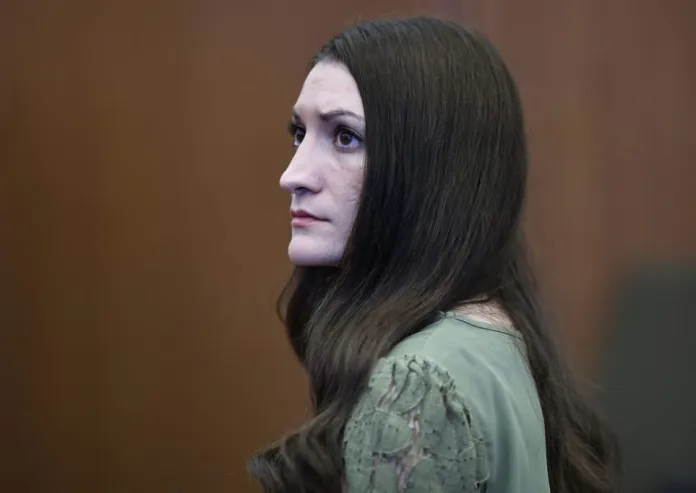
On Sept. 4, a Massachusetts judge declared a mistrial after the jury in Clancy’s murder case deadlocked, with 11 of 12 jurors reportedly ready to find her not criminally responsible for strangling her three children in January 2023. At the first hearing since, on Sept. 29, prosecutors said they had not decided whether to retry her, her lawyer argued the evidence was insufficient, and the judge set another hearing for Nov. 2.
The trial has become a Rorschach test. Prosecutors see intent. The defense sees postpartum psychosis. Critics of psychiatry see “polypharmacy on trial.” The medical record supports none of these tidy stories, and it points to a more useful lesson.
‘SAME, LINDSAY’ ISN’T EMPATHY: THE CLANCY MISTRIAL EXPOSED OUR CULTURE’S MORAL ROT
Two questions in two languages
As the neurosurgeon Marc Arginteanu wrote, the law asks whether she knew the act was wrong and could stop herself, while medicine asks whether her grip on reality had slipped so far that ordinary judgment no longer applied. He also flagged the prosecution’s strongest point. Postpartum psychosis is rare, with one or two cases per 1,000 births, and usually strikes within weeks of delivery. Clancy’s youngest child was eight months old. That makes a psychosis defense harder to prove, but not biologically impossible — the literature documents late-onset cases, and the diagnostic manual still gives the condition no standalone entry.
What the record shows
A Boston Globe timeline drawn from court records shows Clancy was prescribed 13 psychiatric drugs, across more than 30 prescriptions, in about four months: antidepressants, an antipsychotic, three benzodiazepines, a mood stabilizer, and sedatives, from an outpatient psychiatrist, a nurse practitioner, two inpatient programs, and several emergency physicians. Her own civil complaint alleges that clinicians missed a bipolar vulnerability and that “polypharmacy and the involvement of multiple prescribers” obscured an accurate diagnosis. Those are unproven allegations, but the mechanism is textbook. Postpartum psychosis is closely tied to bipolar disorder, and an antidepressant alone can destabilize a patient with unrecognized bipolar vulnerability. That is why the obstetricians’ 2023 guideline calls for bipolar screening before medication is started.
The clinicians who treated her testified that they saw no psychosis, including her outpatient psychiatrist, across 14 telehealth visits. That is exactly the pattern specialists warn about: a condition one leading researcher calls “massively missed” because few doctors are trained to spot it.
Once recognized, postpartum psychosis is highly treatable. In a Dutch study of 64 women, a stepwise protocol ending in lithium brought 98% into complete remission. What fails is rarely the drug. It is the diagnosis and the coordination.
Where the pill skeptics have a point
None of this makes psychiatric medication the villain. Once psychosis appears, withholding treatment is dangerous. But the critics are right that a regimen assembled piecemeal by several prescribers, none of whom sees the whole picture, is a hazard in any branch of medicine. We would not accept it for blood thinners or chemotherapy. We should not accept it for a sleep-deprived mother cycling through thirteen psychoactive drugs in four months.
What Would Actually Help
Pharmacogenomic testing is often proposed as the answer, but a 2025 review found its benefits modest and short-lived, and no gene panel can detect an unrecognized bipolar history. Better answers are simpler. Every perinatal patient on psychiatric medication should have one accountable prescriber and one reconciled medication list. For the far more common cases of mild-to-moderate depression and anxiety, which go untreated about three-quarters of the time, I believe psychotherapy should be the first rung, as the U.S. Preventive Services Task Force’s counseling recommendation supports; psychosis is different and demands prompt medication. And the country needs beds.
THE LINDSAY CLANCY TRIAL JUST EXPOSED A MAJOR PRO-LIFE BLIND SPOT
The United Kingdom runs 22 mother and baby units that admit mother and infant together. The United States has five perinatal psychiatric units, and none keep the baby overnight.
The law will settle its own question about Lindsay Clancy. Medicine should settle ours. A country with about 3.6 million births a year has no psychiatric unit built to keep a mother in crisis together with her baby. That is not a verdict on psychiatry. It is a verdict on how seriously we take it. If someone you love is unraveling after a birth, treat it as an emergency, not a character flaw: call or text 988 or the maternal mental health hotline at 1-833-TLC-MAMA.
Meda Parameswara Reddy, Ph.D., is the Director of the Reddy Center for Critical and Integrated Thinking. A former R&D executive holding 30 U.S. patents, he specializes in interdisciplinary research and public policy analysis. His writing has appeared in Proc. Natl. Acad. Sci. (PNAS), RealClear platforms, Washington Examiner, The Fulcrum, The Humanist, AFRO American, and South Asia Monitor, where he serves on the editorial board. He also hosts the interview show “SAM Dialogues with Dr. M. P. Reddy.”
Continue reading...
[ H/T Washington Examiner ]