








Guest Post by Martin Armstrong
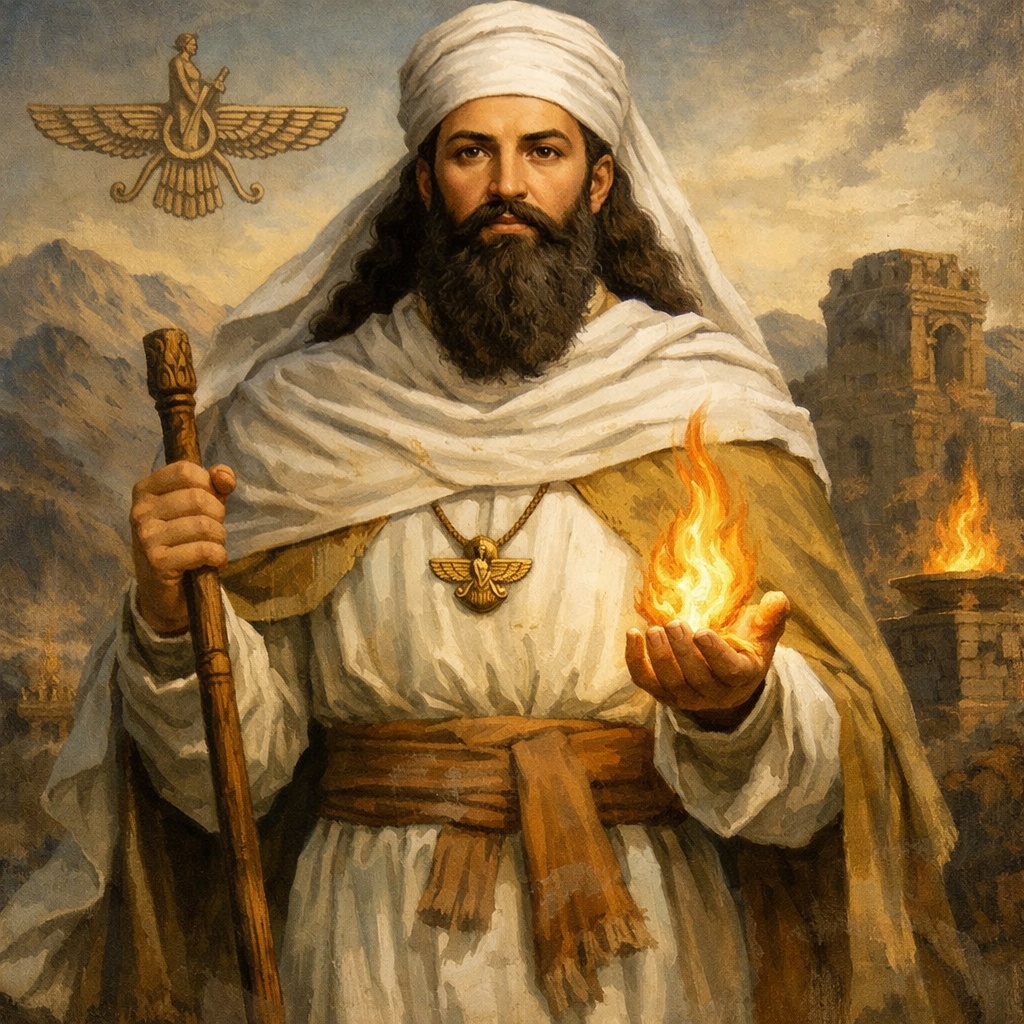 The core concept of a final cosmic battle often known as Armageddon, also has ancient roots. Many historians trace this worldview back to the Persian prophet Zoroaster (around 1500 BC), who spoke of a cosmic struggle between good and evil ending in a perfect new world. This idea deeply influenced Jewish thought during times of great oppression, such as the Babylonian exile and the persecution by Greek rulers. The Book of Daniel (written around 167 BC) is a key text from this period, promising that God would soon overthrow the evil kingdoms oppressing the Jews. Early Christianity emerged from this same apocalyptic Jewish context, with followers believing Jesus’s return was imminent.
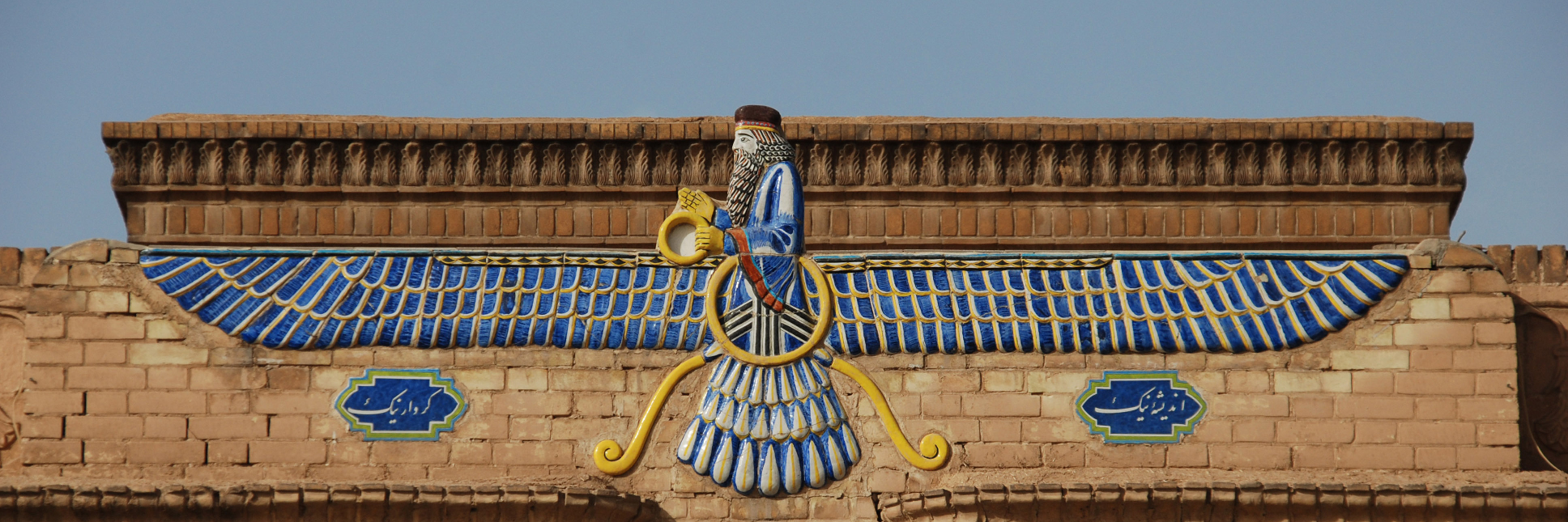
Zoroastrianism is significantly older than Christianity, and the “Three Wise Men” were most likely Zoroastrian priests. Zoroastrianism is one of the world’s oldest revealed religions. Its prophet, Zarathushtra (Zoroaster), is traditionally placed in the late 7th to early 6th centuries BC, though some scholars argue its origins stretch back even further into the 2nd millennium BC. This means it was already a well-established faith centuries before the birth of Jesus. It was the dominant religion of ancient Persia (modern-day Iran) until the 7th century AD.
The Gospel of Matthew calls them “Magi from the East” (Matthew 2:1). The Greek word magoi specifically referred to the priestly caste of ancient Persia, who were renowned for their knowledge of astrology and sacred texts. Most scholars agree these Magi were Zoroastrian priest-astrologers.
Several details support this, including their expertise in reading the stars, a core practice of Zoroastrian priests. The “East” points to Persia or Babylon, regions where Zoroastrianism was influential. The gold, frankincense, and myrrh they brought were traditional Persian royal gifts.
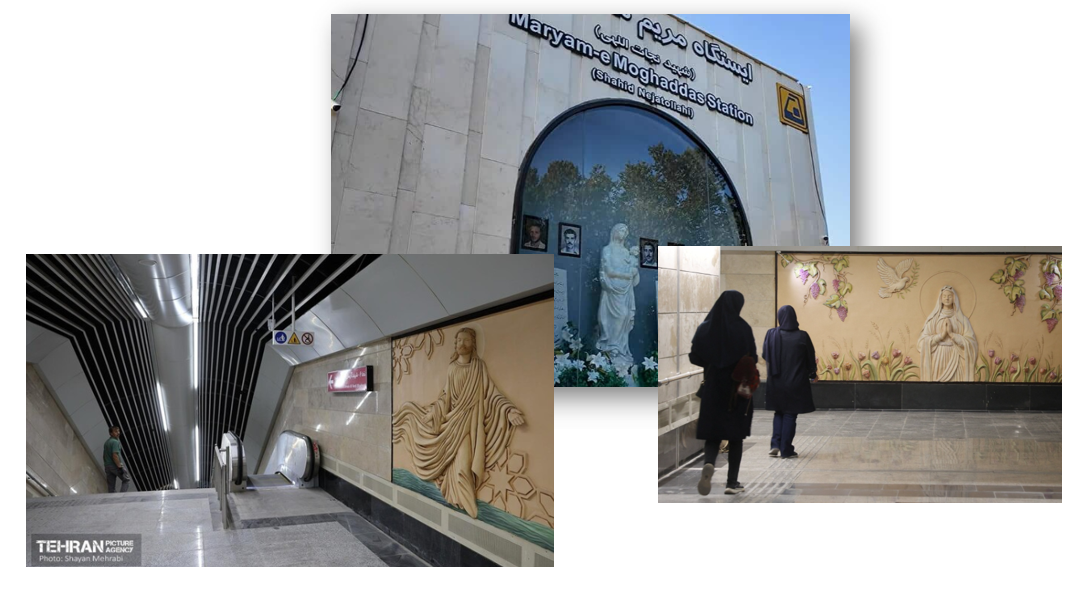
The familiar image of “three kings” comes from later Christian tradition, not the Bible itself. The number three comes from the three gifts, and the idea that they were kings was likely inspired by Old Testament prophecies. Totally shocking to most, is a train station in Tehran is dedicated to the Virgin Mary and Christianity that was opened recently in October 2025.
Many people do fear that a war with Iran could escalate into Armageddon, but the nature of that fear depends entirely on who you ask. A notable segment of the American population, especially among evangelical Christians, interprets a war with Iran as a step toward the biblical end times. For many others, the fear is not about biblical prophecy but about the real-world consequences of a wider war and the impact on energy, the cornerstone of modern civilization.
A June 2025 poll found that a slight majority of Americans (51%) feared the tensions between the U.S. and Iran could lead to a World War III. The fear of an “Armageddon” with Iran is real, but it is driven by two very different worldviews: one that sees it as a catastrophic failure of diplomacy, and another that sees it as the fulfillment of divine will.
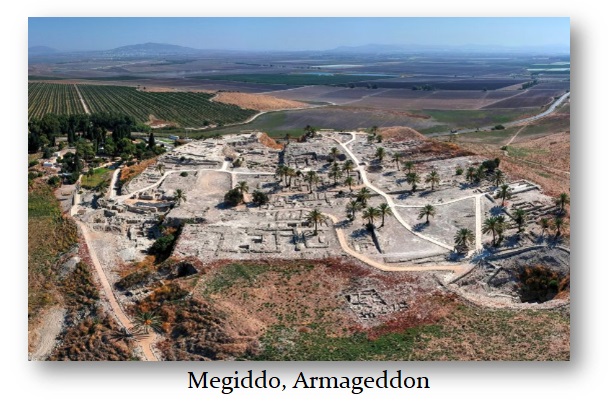
We have zealot Jews and Christians who want to conspire to destroy the Dome of the Rock so they can rebuild the next Temple, ushering in Armageddon. According to the Book of Revelation in the New Testament of the Christian Bible, Armageddon is the prophesied location of a gathering of armies for a battle during the end-of-the-world scenario, interpreted as either a literal or a symbolic location. In Islamic theology, Armageddon is also mentioned in Hadith as the Greatest Armageddon or Al-Malhama Al-Kubra (the great battle).
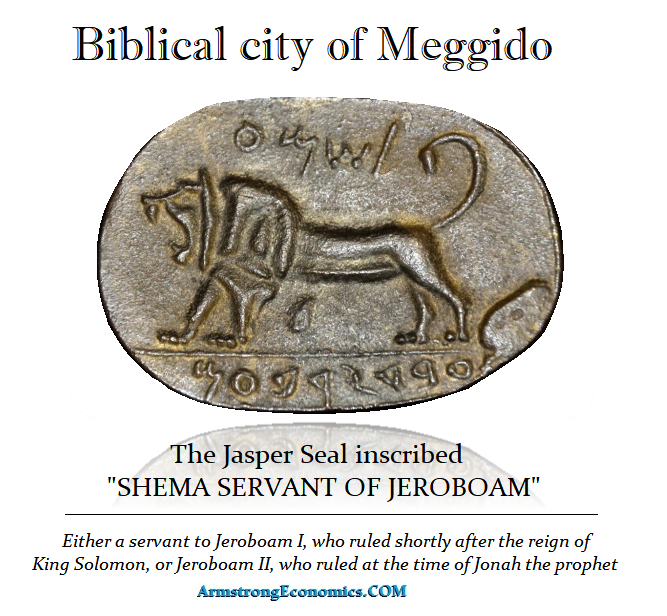
Megiddo is a fascinating site of twenty cities constructed directly on top of one another. It has been inhabited continuously from 3000 to 300 BC and lies at a strategic junction of north-south and east-west roads. Whoever had control of Megiddo had control of one of the major trade routes of antiquity. There were no coins produced by Egypt until the Ptolemy and the conquest by Alexander the Great. Likewise, there was no coinage of Judah. This is a reproduction of a Jasper Seal of Shema discovered at Megiddo in 1903.
Many battles have been fought at Megiddo. One great Battle of Megiddo occurred in 609 BC when Pharaoh Necho II of Egypt joined his allies, involving the Neo-Assyrians and the Neo-Babylonians. This required passing through territory controlled by the Kingdom of Judah. The Judaean king, Josiah, refused to let the Egyptians pass. The Judaean forces battled the Egyptians at Megiddo, resulting in Josiah’s death, and his kingdom then became a vassal state under Egypt. The battle is recorded in the Hebrew Bible, the Greek 1 Esdras, and the writings of Jewish historian Josephus. There is always a chance of losing whenever there is war. This is how the arrogant always fall.
There remains considerable debate about whether this is literally or symbolically a Great Battle to be fought on the plane of Armageddon, overlooked by Megiddo, which made sense in those days since it was a major link between the East and West, or are we looking at that as just symbolic of the world ar large.
In 2024, in his Knesset speech, Netanyahu said: “I’ve been warning about Iran for 30 years.” It was reported on March 3rd, during a visit to a site struck by an Iranian missile, Netanyahu stated: “We read in this week’s Torah portion, ‘Remember what Amalek did to you.’ We remember—and we act.”
In 1 Samuel 15:2-3, God gives King Saul a specific, direct order to carry out this command. The prophet Samuel relays the message:
“This is what the LORD Almighty says: ‘I will punish the Amalekites for what they did to Israel when they waylaid them as they came up from Egypt. Now go, attack the Amalekites and totally destroy all that belongs to them. Do not spare them; put to death men and women, children and infants, cattle and sheep, camels and donkeys. ‘”
The Amalekites were a people group in the Hebrew Bible, presented as the archetypal and perpetual enemy of the Israelites. Their story is less about a distinct archaeological culture and more about a theological symbol of opposition to God’s purposes. According to biblical genealogies, the Amalekites descend from Amalek, kinging them to the Edomites and places them within the extended family of Abraham, making their hostility toward Israel a form of “brotherly” betrayal.
They are described as a semi-nomadic people inhabiting the Negev and Sinai regions, known for guerrilla-style raids. The Amalekites are defined almost entirely by their hostility to Israel. Over time, Jewish tradition transformed Amalek from a specific nation into a symbol of evil itself. There is no direct archaeological or extra-biblical evidence confirming the Amalekites actually existed as a distinct historical people. Scholars suggest the biblical portrayal is likely “blanket” designation for various hostile desert groups or a literary device to embody the theological concept of opposition to God.
In contemporary political and religious rhetoric, some Israeli leaders, most notably Prime Minister Benjamin Netanyahu, have explicitly compared the Iranian regime to the biblical Amalekites. However, Muhammad and Islam came roughly 2,500 years after Judaism. By no account, can the Iranians be the fabeled Islam, which did not emerge until the 7th century AD, long after the codification of the Hebrew Bible and the development of rabbinic Judaism.
Tweet
Continue reading...
[ H/T The Burning Platform ]
The core concept of a final cosmic battle often known as Armageddon, also has ancient roots. Many historians trace this worldview back to the Persian prophet Zoroaster (around 1500 BC), who spoke of a cosmic struggle between good and evil ending in a perfect new world. This idea deeply influenced Jewish thought during times of great oppression, such as the Babylonian exile and the persecution by Greek rulers. The Book of Daniel (written around 167 BC) is a key text from this period, promising that God would soon overthrow the evil kingdoms oppressing the Jews. Early Christianity emerged from this same apocalyptic Jewish context, with followers believing Jesus’s return was imminent.Zoroastrianism is significantly older than Christianity, and the “Three Wise Men” were most likely Zoroastrian priests. Zoroastrianism is one of the world’s oldest revealed religions. Its prophet, Zarathushtra (Zoroaster), is traditionally placed in the late 7th to early 6th centuries BC, though some scholars argue its origins stretch back even further into the 2nd millennium BC. This means it was already a well-established faith centuries before the birth of Jesus. It was the dominant religion of ancient Persia (modern-day Iran) until the 7th century AD.
The Gospel of Matthew calls them “Magi from the East” (Matthew 2:1). The Greek word magoi specifically referred to the priestly caste of ancient Persia, who were renowned for their knowledge of astrology and sacred texts. Most scholars agree these Magi were Zoroastrian priest-astrologers.
Several details support this, including their expertise in reading the stars, a core practice of Zoroastrian priests. The “East” points to Persia or Babylon, regions where Zoroastrianism was influential. The gold, frankincense, and myrrh they brought were traditional Persian royal gifts.
The familiar image of “three kings” comes from later Christian tradition, not the Bible itself. The number three comes from the three gifts, and the idea that they were kings was likely inspired by Old Testament prophecies. Totally shocking to most, is a train station in Tehran is dedicated to the Virgin Mary and Christianity that was opened recently in October 2025.
Many people do fear that a war with Iran could escalate into Armageddon, but the nature of that fear depends entirely on who you ask. A notable segment of the American population, especially among evangelical Christians, interprets a war with Iran as a step toward the biblical end times. For many others, the fear is not about biblical prophecy but about the real-world consequences of a wider war and the impact on energy, the cornerstone of modern civilization.
A June 2025 poll found that a slight majority of Americans (51%) feared the tensions between the U.S. and Iran could lead to a World War III. The fear of an “Armageddon” with Iran is real, but it is driven by two very different worldviews: one that sees it as a catastrophic failure of diplomacy, and another that sees it as the fulfillment of divine will.
We have zealot Jews and Christians who want to conspire to destroy the Dome of the Rock so they can rebuild the next Temple, ushering in Armageddon. According to the Book of Revelation in the New Testament of the Christian Bible, Armageddon is the prophesied location of a gathering of armies for a battle during the end-of-the-world scenario, interpreted as either a literal or a symbolic location. In Islamic theology, Armageddon is also mentioned in Hadith as the Greatest Armageddon or Al-Malhama Al-Kubra (the great battle).
Megiddo is a fascinating site of twenty cities constructed directly on top of one another. It has been inhabited continuously from 3000 to 300 BC and lies at a strategic junction of north-south and east-west roads. Whoever had control of Megiddo had control of one of the major trade routes of antiquity. There were no coins produced by Egypt until the Ptolemy and the conquest by Alexander the Great. Likewise, there was no coinage of Judah. This is a reproduction of a Jasper Seal of Shema discovered at Megiddo in 1903.
Many battles have been fought at Megiddo. One great Battle of Megiddo occurred in 609 BC when Pharaoh Necho II of Egypt joined his allies, involving the Neo-Assyrians and the Neo-Babylonians. This required passing through territory controlled by the Kingdom of Judah. The Judaean king, Josiah, refused to let the Egyptians pass. The Judaean forces battled the Egyptians at Megiddo, resulting in Josiah’s death, and his kingdom then became a vassal state under Egypt. The battle is recorded in the Hebrew Bible, the Greek 1 Esdras, and the writings of Jewish historian Josephus. There is always a chance of losing whenever there is war. This is how the arrogant always fall.
There remains considerable debate about whether this is literally or symbolically a Great Battle to be fought on the plane of Armageddon, overlooked by Megiddo, which made sense in those days since it was a major link between the East and West, or are we looking at that as just symbolic of the world ar large.
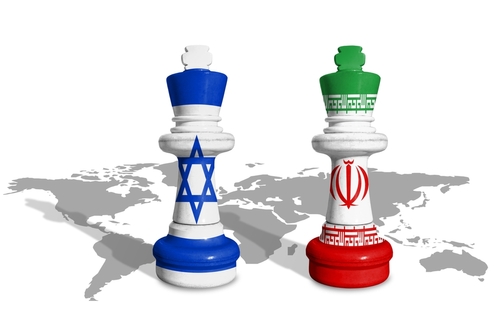
Isarel vs Iran
In 2024, in his Knesset speech, Netanyahu said: “I’ve been warning about Iran for 30 years.” It was reported on March 3rd, during a visit to a site struck by an Iranian missile, Netanyahu stated: “We read in this week’s Torah portion, ‘Remember what Amalek did to you.’ We remember—and we act.”
In 1 Samuel 15:2-3, God gives King Saul a specific, direct order to carry out this command. The prophet Samuel relays the message:
“This is what the LORD Almighty says: ‘I will punish the Amalekites for what they did to Israel when they waylaid them as they came up from Egypt. Now go, attack the Amalekites and totally destroy all that belongs to them. Do not spare them; put to death men and women, children and infants, cattle and sheep, camels and donkeys. ‘”
The Amalekites were a people group in the Hebrew Bible, presented as the archetypal and perpetual enemy of the Israelites. Their story is less about a distinct archaeological culture and more about a theological symbol of opposition to God’s purposes. According to biblical genealogies, the Amalekites descend from Amalek, kinging them to the Edomites and places them within the extended family of Abraham, making their hostility toward Israel a form of “brotherly” betrayal.
They are described as a semi-nomadic people inhabiting the Negev and Sinai regions, known for guerrilla-style raids. The Amalekites are defined almost entirely by their hostility to Israel. Over time, Jewish tradition transformed Amalek from a specific nation into a symbol of evil itself. There is no direct archaeological or extra-biblical evidence confirming the Amalekites actually existed as a distinct historical people. Scholars suggest the biblical portrayal is likely “blanket” designation for various hostile desert groups or a literary device to embody the theological concept of opposition to God.
In contemporary political and religious rhetoric, some Israeli leaders, most notably Prime Minister Benjamin Netanyahu, have explicitly compared the Iranian regime to the biblical Amalekites. However, Muhammad and Islam came roughly 2,500 years after Judaism. By no account, can the Iranians be the fabeled Islam, which did not emerge until the 7th century AD, long after the codification of the Hebrew Bible and the development of rabbinic Judaism.
Tweet
Continue reading...
[ H/T The Burning Platform ]