




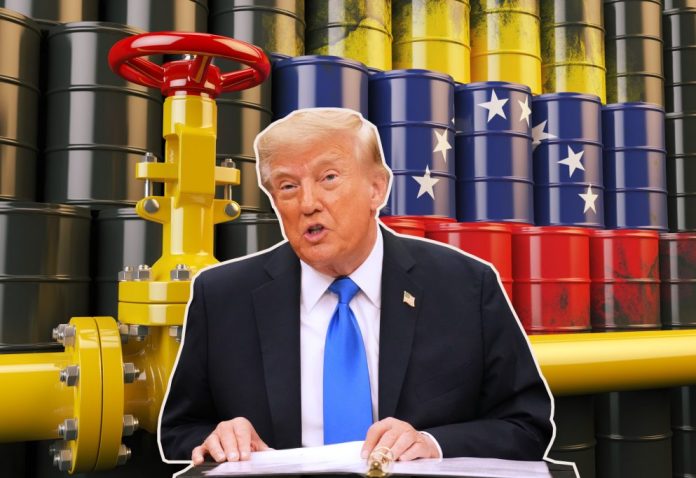
President Donald Trump has made American energy dominance and lower costs national priorities. He recently announced an agreement giving the United States majority control over more than 65 billion barrels of Venezuela’s proven crude reserves and brought refinery executives to the White House with a practical question: How can America increase refining capacity and turn abundant crude into the gasoline, diesel, jet fuel, and other products families and businesses use every day?
When refining capacity is tight, the public pays more to drive to work, move freight, and fly. Adding real refining capacity is one of the most direct ways to take pressure off those daily costs. Part of the answer is already on American soil.
In the U.S. Virgin Islands, on St. Croix, stands a refinery that was once the world’s largest. Built in 1966, the former Hess plant grew rapidly. For a period in the 1970s, it was the world’s largest refinery, with capacity exceeding 650,000 barrels per day. After the west-side crude units were later shut down, official capacity was 360,000 barrels per day. A 2021 restart was configured for roughly 200,000 barrels per day before the Environmental Protection Agency ordered operations paused because of public-health concerns. Today, the plant produces zero.
This is an existing American refinery, not a greenfield project. The tanks, docks, process units, and industrial backbone are already there. Building a comparable plant from scratch would take years and billions of dollars — if it could get through the maze of federal, state, and local permitting. The U.S. has 128 fewer refineries than it did in the early 1980s. The newest U.S. refinery with significant downstream processing capacity came online nearly 50 years ago.
More crude from Venezuela, Guyana, or the Gulf Coast does not, by itself, produce more gasoline, diesel, or jet fuel. America also needs the capacity to refine it. When a major plant unexpectedly goes offline, already-tight regional markets face more supply pressure and higher prices. Restarting St. Croix means putting existing infrastructure back to work, as soon as it can be done safely and practically, and producing as much fuel as the market needs and the facility can responsibly support.
St. Croix will not close America’s refining gap by itself. But a large idle American refinery is a national asset, not a local nostalgia project. Use what the country already has rather than waiting on a new plant that may never be built. The Virgin Islands sit close to Western Hemisphere crude oil supplies, including Venezuela and Guyana. This refinery was built to process Venezuelan heavy crude. Process that crude on American soil and supply American and Caribbean consumers who now depend on imported finished products.
I worked at this refinery earlier in my career. When it runs well, it means skilled jobs, contractor work, and revenue for schools, infrastructure, retirees, and public services. When it does not run, St. Croix loses that industrial muscle. When it is run badly, neighbors pay in public health and lost trust. A new effort needs capital, modern environmental and safety practices, experienced operators, reliable crude and offtake, and a commercial structure that can survive commodity cycles. Learn from what went wrong.
AMERICA’S NEXT OIL BOOM IS FLOATING IN THIN AIR
Washington should treat this as a national capacity project. The White House should designate a team and convene the territorial government, the refinery’s owners and operators, and the federal agencies responsible for energy, environmental compliance, territorial affairs, and national defense. The objective should be a coordinated pathway that identifies what a safe restart requires and which existing federal tools can appropriately support financing of a qualified project.
We are not asking Washington to waive environmental standards or guarantee a private investment. We are asking it to use the authorities it already has: put the agencies at one table, set clear requirements, evaluate available support, and reach decisions. The Virgin Islands are part of the U.S. This is an American refinery. Our workers are American workers. That option deserves a federal path — not another year of drift.
Albert Bryan Jr. is the governor of the U.S. Virgin Islands.
Continue reading...
[ H/T Washington Examiner ]