



If your only window into the American soul is the nightly cable news broadcast, you would assume we are a nation completely irreconcilable, locked in a permanent cultural cold war. But if you actually talk to people in our local community groups, fire departments, and civic associations, you discover a very different truth. The profound hostility radiated from our capital does not represent the temperament of the average American household. People are simply exhausted by the permanent campaign cycle.
Historical data from the Gallup Most Important Problem Trends routinely registers that “unifying the country” and public exhaustion with political factionalism rank as top-tier noneconomic worries for regular people. However, the diagnosis of, and solution to, this gridlock depends entirely on which side of the political aisle you ask.
According to conservative critiques, this cultural and political friction is a natural reaction to an aggressive, top-down federal push that attempts to override local traditions and constitutional boundaries. From this perspective, the solution lies in revitalizing local autonomy and respecting federalism, allowing different communities to govern themselves rather than forcing a one-size-fits-all uniformity from a centralized authority.
Conversely, progressive viewpoints argue that the national stagnation is caused by outmoded institutional rules that allow a minority party to block legislation commanding broad national support. The Pew Research Center Public Trust in Government studies document the severe toll that federal gridlock takes on public confidence in basic governance, proving how institutional stagnation erodes faith in the democratic process. For progressives, the solution centers on reforming legislative procedures, altering filibuster rules, and restructuring the system to allow clear majorities to act effectively on pressing public needs.
Yet, if we look past the dominant media narratives, we find that the script of absolute polarization is already being rewritten by lawmakers determined to find a better way. In Washington, the evenly divided House Problem Solvers Caucus has repeatedly crossed the aisle to build consensus on critical legislation, while actively organizing to soften political rhetoric and lower the national temperature.
This impulse is even stronger outside of Washington. Networks such as the Future Caucus, led by millennials and Generation Z, bring together thousands of young state legislators from across the country to intentionally bypass partisan gridlock. In fact, comprehensive data from the National Conference of State Legislatures reveal a heartening reality that rarely makes the evening news: Across heavily polarized states, a vast majority of all legislative bills continue to pass with bipartisan backing.
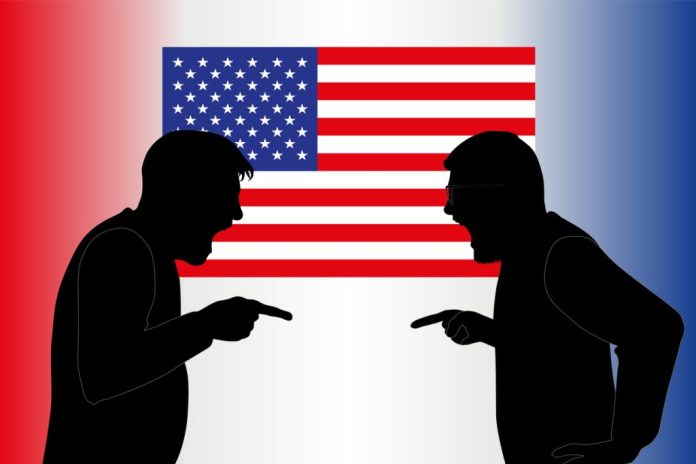
WHEN POLITICS BECOMES YOUR IDENTITY, DISAGREEMENT BECOMES WAR
These efforts remind us of a truth we must never forget: No matter which political party holds power, we are all Americans. We are bound by a shared history, and we still reach for the same foundational American dream of opportunity, liberty, and community.
To bridge our remaining divides, we must remember that compromise is not a betrayal of principle — it is the foundational mechanic of a constitutional republic. True unity does not require us to agree on every single policy point — it requires us to share a common respect for the rules of our republic and a commitment to solving problems rather than demonizing our neighbors.
Eric Wargotz is a physician, businessman, former Senate nominee, and the former elected president of the Queen Anne’s County, Maryland, Board of County Commissioners, where he worked across political lines to deliver practical community governance. Views are his own.
Continue reading...
[ H/T Washington Examiner ]