









Guest Post by Martin Armstrong
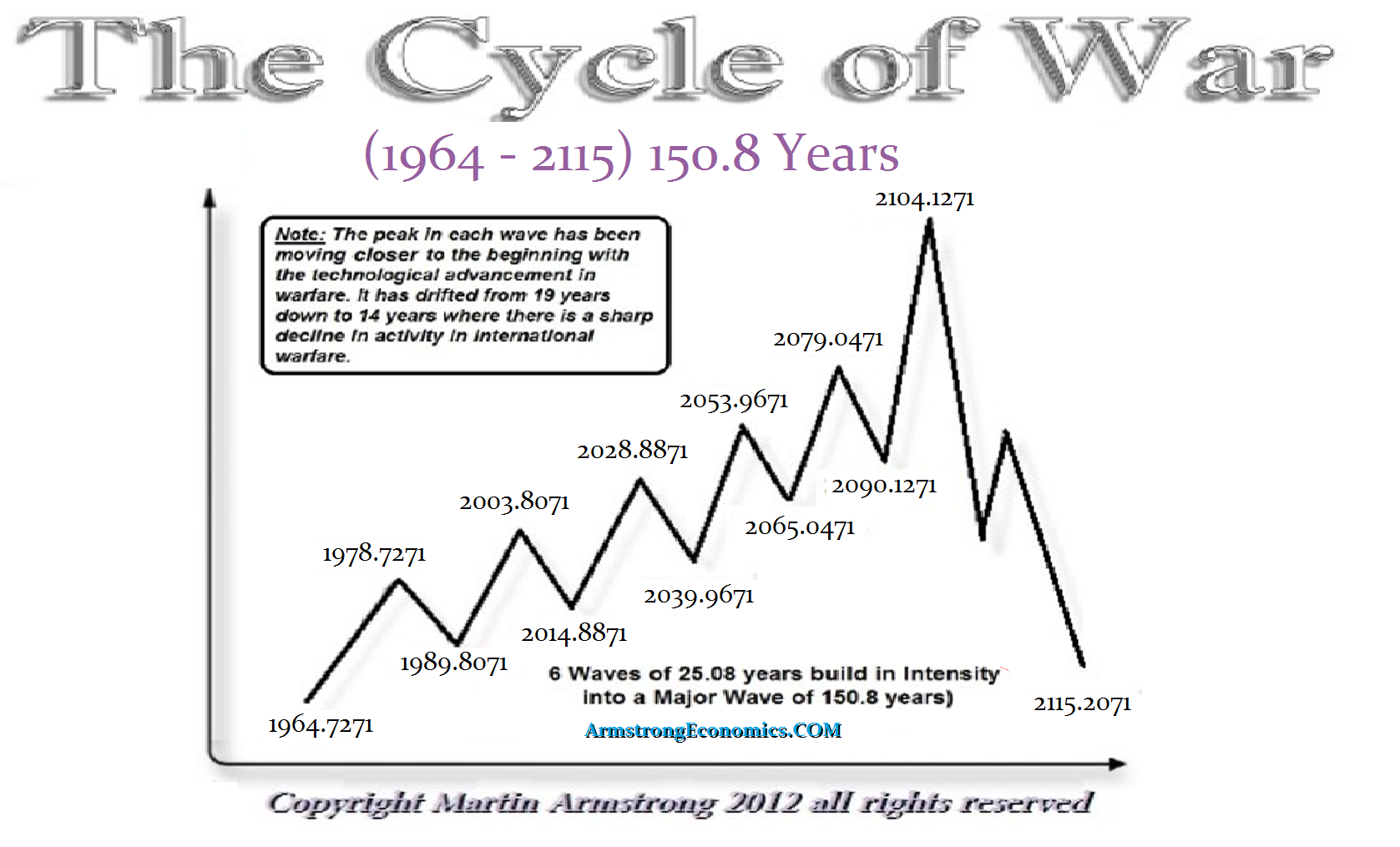
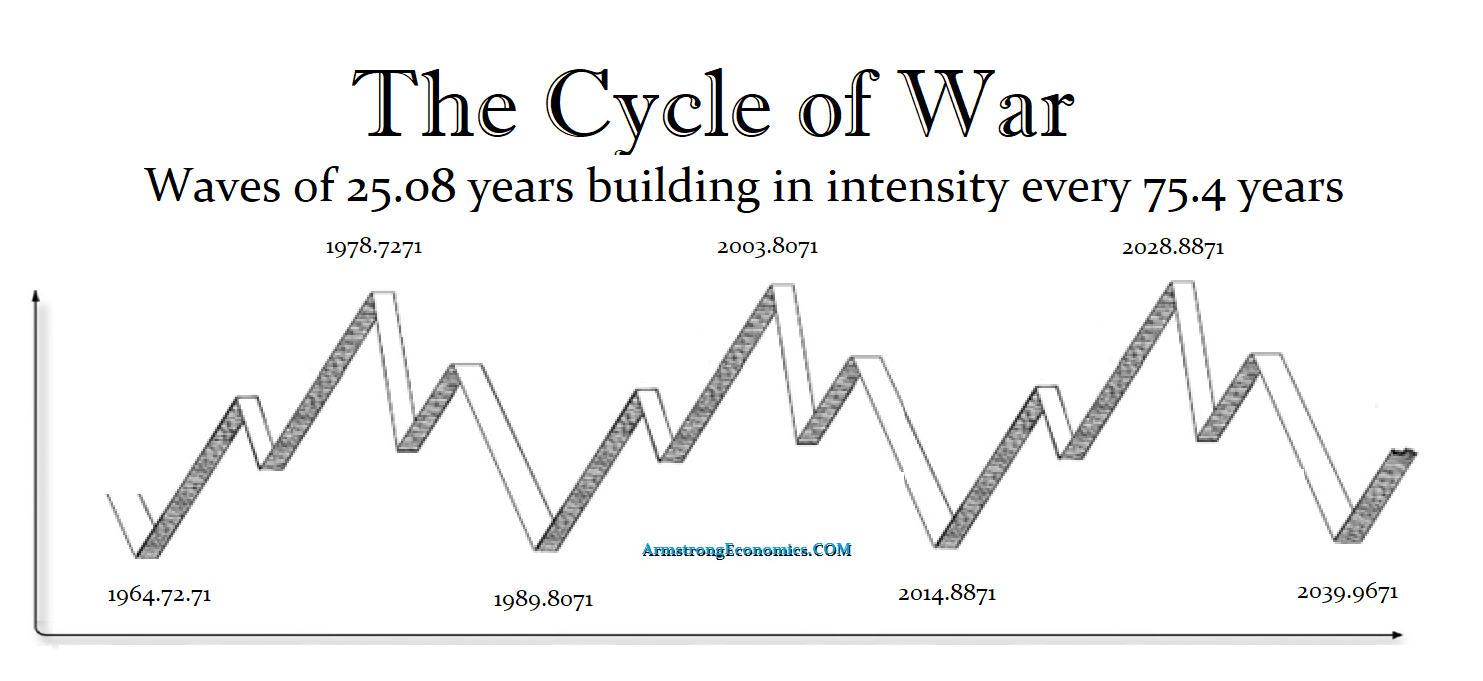 We have been watching October 5 on the War Cycle, and what has unfolded around that date deserves attention. This is no longer simply Russia and Ukraine trading artillery across a battlefield. The geographical footprint of this war is expanding, commercial shipping is being hit in the Black Sea, NATO aircraft are being scrambled, air defense is being moved closer to the front, and Europe is openly discussing nuclear deterrence. Nobody needs to invent World War III or exaggerate every drone that crosses a radar screen. What matters is the trend, and the trend is moving in precisely the wrong direction.
On October 5, a commercial vessel caught fire and sank outside Romanian territorial waters after leaving the Ukrainian port of Izmail. Two people died. Zelensky attributed the event to “a horrific strike by two Russian drones on a civilian vessel,” although Romanian authorities did not confirm the cause. Then on October 6, two more commercial vessels were attacked by drones inside Bulgaria’s exclusive economic zone. One sank and another caught fire, forcing the evacuation of 18 crew members, two of whom were seriously injured. Bulgaria has NOT established where those drones came from. These attacks cannot honestly be called deliberate Russian attacks on NATO territory based on the evidence presently available. Nevertheless, civilian shipping is now being dragged directly into the military confrontation around NATO’s Black Sea flank.
“This is an unacceptable attack in Bulgaria’s exclusive economic zone. It is a blatant violation of international law and maritime law,” Prime Minister Rumen Radev said.
At the same time, NATO aircraft are being forced into action. Two Spanish F-18s stationed in Romania under NATO command were scrambled after radar detected aerial targets operating in Ukrainian airspace close to the Romanian border. They did not enter Romanian airspace and there was no interception, but Romanian authorities issued warnings to civilians because of the danger of falling objects. These incidents are becoming routine, and that is precisely the problem. Wars expand through mistakes, miscalculations, and reactions to events that politicians insist nobody intended.
Ukraine has meanwhile launched an extraordinary drone assault deep into Russia. Russian authorities claim nearly 900 Ukrainian drones were intercepted overnight across Russia, occupied Crimea, and the Sea of Azov. Moscow’s mayor said 650 drones were directed toward the capital region overnight, followed by dozens more during the day. Two people were killed, while reports emerged that a major fuel installation in the Moscow region was burning. The fuel strike has not been independently confirmed. Zelensky is now warning that intelligence indicates Russia is preparing a massive retaliatory aerial attack. Each side responds to the last attack with something larger, and eventually somebody crosses a line that cannot be uncrossed.
Sweden announced that it will send Patriot air-defense systems and roughly 100 troops to Poland to protect the Rzeszow logistics hub, the primary artery through which Western military aid reaches Ukraine. Lithuania has now advanced a constitutional amendment that would remove its prohibition against nuclear weapons and foreign military bases. Lithuania borders both Belarus and Russia’s Kaliningrad exclave. This does NOT mean American nuclear weapons are suddenly being stationed in Lithuania, and another parliamentary vote is required. But Moscow has already warned that moving NATO military infrastructure and potentially nuclear weapons closer to Russia will be regarded as escalation.
Then France test-fired its new M51.3 submarine-launched ballistic missile on October 6. The missile carried no nuclear warhead, and the test was part of the certification of France’s strategic deterrent, so this should not be falsely portrayed as France preparing to attack Russia. Europe is increasingly talking about deterrence, nuclear capability, military readiness, and preparing populations for confrontation rather than negotiating an end to this madness.
Wars do not require somebody sitting in a room deciding that Tuesday morning would be a wonderful time to start World War III. The First World War emerged from alliances and mobilizations that transformed a regional crisis into a continental catastrophe. Politicians create commitments they believe will deter the other side, the other side responds with commitments of its own, and eventually everyone becomes trapped by the very deterrence system they created.
There is much concern over recent developments in the Black Sea. Commercial shipping cannot continually be attacked without consequences. Romania and Bulgaria are NATO members. Poland is becoming increasingly fortified as the principal logistics corridor supporting Ukraine. Lithuania is reconsidering restrictions on nuclear deterrence. Europe is pulling every move to prepare for war.
The War Cycle was never about predicting that politicians would formally declare World War III on a particular day. Cycles identify periods when geopolitical pressure and the probability of conflict rise. What has emerged around October 5 is therefore worth watching very closely. We have commercial vessels sinking, an unprecedented drone assault aimed deep into Russia, NATO fighters launching in response to approaching aerial targets, Patriot batteries moving into Poland, Lithuania opening the door to expanded NATO deterrence, and Russia warning that the continued movement of Western military infrastructure toward its borders will have consequences.
Watch the Black Sea. Watch Poland and Lithuania. And above all, watch what Russia does in response to this enormous Ukrainian drone attack. If the next retaliation spills deliberately onto NATO territory or kills NATO personnel, we will have moved into an entirely different phase of this war.
Tweet
Continue reading...
[ H/T The Burning Platform ]
We have been watching October 5 on the War Cycle, and what has unfolded around that date deserves attention. This is no longer simply Russia and Ukraine trading artillery across a battlefield. The geographical footprint of this war is expanding, commercial shipping is being hit in the Black Sea, NATO aircraft are being scrambled, air defense is being moved closer to the front, and Europe is openly discussing nuclear deterrence. Nobody needs to invent World War III or exaggerate every drone that crosses a radar screen. What matters is the trend, and the trend is moving in precisely the wrong direction.On October 5, a commercial vessel caught fire and sank outside Romanian territorial waters after leaving the Ukrainian port of Izmail. Two people died. Zelensky attributed the event to “a horrific strike by two Russian drones on a civilian vessel,” although Romanian authorities did not confirm the cause. Then on October 6, two more commercial vessels were attacked by drones inside Bulgaria’s exclusive economic zone. One sank and another caught fire, forcing the evacuation of 18 crew members, two of whom were seriously injured. Bulgaria has NOT established where those drones came from. These attacks cannot honestly be called deliberate Russian attacks on NATO territory based on the evidence presently available. Nevertheless, civilian shipping is now being dragged directly into the military confrontation around NATO’s Black Sea flank.
“This is an unacceptable attack in Bulgaria’s exclusive economic zone. It is a blatant violation of international law and maritime law,” Prime Minister Rumen Radev said.
At the same time, NATO aircraft are being forced into action. Two Spanish F-18s stationed in Romania under NATO command were scrambled after radar detected aerial targets operating in Ukrainian airspace close to the Romanian border. They did not enter Romanian airspace and there was no interception, but Romanian authorities issued warnings to civilians because of the danger of falling objects. These incidents are becoming routine, and that is precisely the problem. Wars expand through mistakes, miscalculations, and reactions to events that politicians insist nobody intended.
Ukraine has meanwhile launched an extraordinary drone assault deep into Russia. Russian authorities claim nearly 900 Ukrainian drones were intercepted overnight across Russia, occupied Crimea, and the Sea of Azov. Moscow’s mayor said 650 drones were directed toward the capital region overnight, followed by dozens more during the day. Two people were killed, while reports emerged that a major fuel installation in the Moscow region was burning. The fuel strike has not been independently confirmed. Zelensky is now warning that intelligence indicates Russia is preparing a massive retaliatory aerial attack. Each side responds to the last attack with something larger, and eventually somebody crosses a line that cannot be uncrossed.
Sweden announced that it will send Patriot air-defense systems and roughly 100 troops to Poland to protect the Rzeszow logistics hub, the primary artery through which Western military aid reaches Ukraine. Lithuania has now advanced a constitutional amendment that would remove its prohibition against nuclear weapons and foreign military bases. Lithuania borders both Belarus and Russia’s Kaliningrad exclave. This does NOT mean American nuclear weapons are suddenly being stationed in Lithuania, and another parliamentary vote is required. But Moscow has already warned that moving NATO military infrastructure and potentially nuclear weapons closer to Russia will be regarded as escalation.
Then France test-fired its new M51.3 submarine-launched ballistic missile on October 6. The missile carried no nuclear warhead, and the test was part of the certification of France’s strategic deterrent, so this should not be falsely portrayed as France preparing to attack Russia. Europe is increasingly talking about deterrence, nuclear capability, military readiness, and preparing populations for confrontation rather than negotiating an end to this madness.
Wars do not require somebody sitting in a room deciding that Tuesday morning would be a wonderful time to start World War III. The First World War emerged from alliances and mobilizations that transformed a regional crisis into a continental catastrophe. Politicians create commitments they believe will deter the other side, the other side responds with commitments of its own, and eventually everyone becomes trapped by the very deterrence system they created.
There is much concern over recent developments in the Black Sea. Commercial shipping cannot continually be attacked without consequences. Romania and Bulgaria are NATO members. Poland is becoming increasingly fortified as the principal logistics corridor supporting Ukraine. Lithuania is reconsidering restrictions on nuclear deterrence. Europe is pulling every move to prepare for war.
The War Cycle was never about predicting that politicians would formally declare World War III on a particular day. Cycles identify periods when geopolitical pressure and the probability of conflict rise. What has emerged around October 5 is therefore worth watching very closely. We have commercial vessels sinking, an unprecedented drone assault aimed deep into Russia, NATO fighters launching in response to approaching aerial targets, Patriot batteries moving into Poland, Lithuania opening the door to expanded NATO deterrence, and Russia warning that the continued movement of Western military infrastructure toward its borders will have consequences.
Watch the Black Sea. Watch Poland and Lithuania. And above all, watch what Russia does in response to this enormous Ukrainian drone attack. If the next retaliation spills deliberately onto NATO territory or kills NATO personnel, we will have moved into an entirely different phase of this war.
Tweet
Continue reading...
[ H/T The Burning Platform ]