





A year ago, my sister Lishay and I spent Oct. 7 doing what had become our routine for two years: speaking for her husband Omri Miran because he could not speak for himself. He was still in Gaza, 731 days into a captivity that would ultimately last seven more days. On Oct. 13, 2025, Omri finally came home.
I began the week of that anniversary in New York City alongside hostage families and captivity survivors, commemorating the Oct. 7, 2023, massacre in Central Park. The park became a weekly meeting point over those two painful years for New Yorkers who rallied with us, and we again called for the release of those still held. From there, I traveled to Washington for congressional and diplomatic meetings, interviews, and advocacy events.
Omri was abducted on the holiday of Simchat Torah, in the final days of the Sukkot season, a time when we build a booth and eat outside with our family and friends. On Oct. 7 of last year, again during Sukkot, and in Washington, supporters built what they called the “Sukkah of Hope.” Members of the Trump administration joined us at the Sukkah of Hope for a vigil marking two years since the attacks.
Everywhere we went, the purpose was fundamentally the same: Omri could not walk into those rooms, explain what had happened to him, or remind decision-makers that behind the word “hostage” stood a husband, a father, and a human being. We had to do that for him and be his voice.
This year, the reversal was extraordinary. Instead of Lishay or me preparing another speech on his behalf, Omri traveled to Strasbourg, France, where he addressed a special Oct. 7 commemoration at the European Parliament. A year earlier, we had carried his photograph into halls of power and justice and tried to make others understand who he was. This year, he stood inside one of those institutions as a free man and told them himself: “I am here because I survived and because people refused to forget me.”
Omri has long considered himself a Stoic and often turns to Marcus Aurelius, whose philosophy centers on preserving command over the self when the world beyond it cannot be controlled. It felt fitting, then, to see a man who had been denied control over almost every aspect of his life reclaim the one thing no one else could permanently speak for: his own voice.
That contrast captures something essential about the international campaign to bring the hostages home. It was, of course, a diplomatic and political effort, but it was also a struggle against abstraction.
Over more than two years, I worked internationally alongside hostage families, captivity survivors, and an extraordinary network of volunteers, representing them for much of that time as their chosen envoy in the United States.
We repeated the same stories in rooms across different countries, not because we lacked new arguments, but because public attention is fragile and political crises turn human beings into categories.
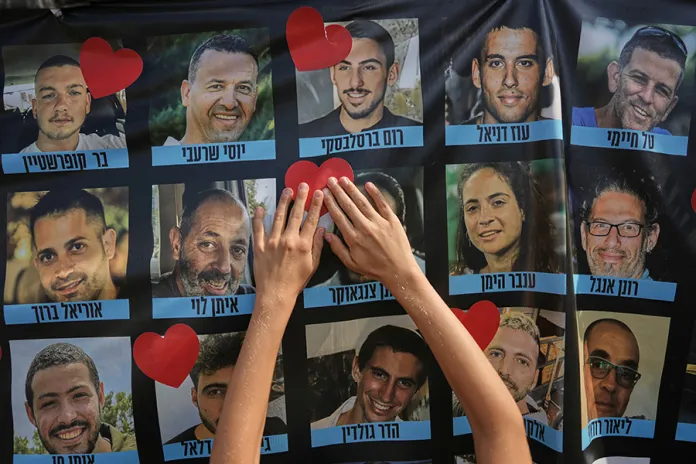
We saw that happen constantly. Hostage posters were torn down. Their captivity was relativized or rationalized. At times, people appeared willing to discuss Omri only after first litigating every question about Israel, Zionism, Gaza, or the war, as though recognition of his humanity required a political precondition. We still see it happening, with politicians marking the Oct. 7 attack this year with longer paragraphs about the society that produced the murderers than the society that suffered from the monstrous atrocities of that day.
Omri could become “an Israeli,” then a stand-in for a government, then an argument about a conflict, until the person himself almost vanished beneath the labels. Our task was to reverse that process, over and over again: to restore the father whose daughters were waiting for him, the husband my sister wanted back, the man whose life could not be reduced to somebody else’s political theory.
We were not always successful. But we also discovered how much could happen when people in positions of power chose to listen.
The Biden administration maintained sustained engagement with hostage families, and we encountered officials who gave us their time and understood that the hostage question could not simply be subordinated to everything else happening in the region. Under President Donald Trump, that engagement became even more immediate: families developed close relationships with senior officials, debated ideas, and never accepted failed approaches as the end of the road.
No serious history of the hostage crisis will attribute its outcome to a single government, person, or strategy, but our family, and all other hostage families, remain especially grateful to Trump and the officials around him, including Secretary of State Marco Rubio and special envoy Steve Witkoff, who stayed intensely involved through the final stages and kept searching for a way forward until the mission was completed.
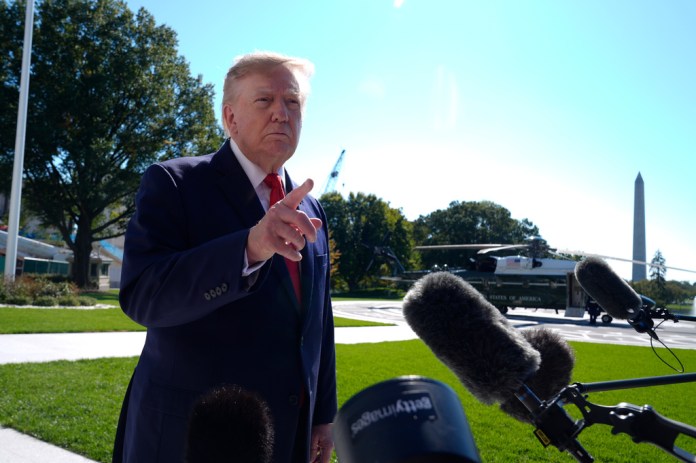
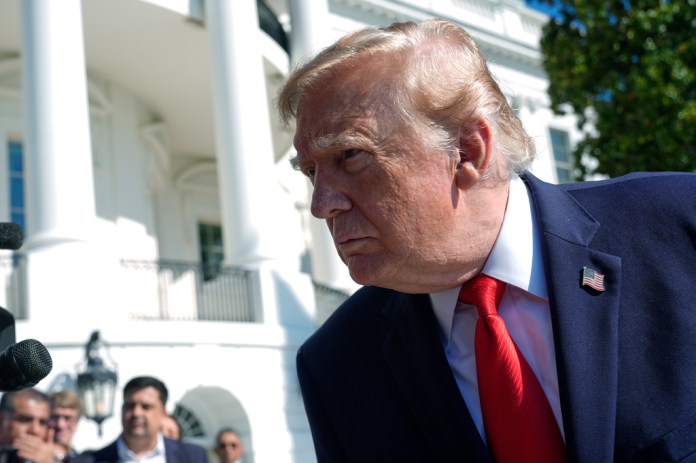
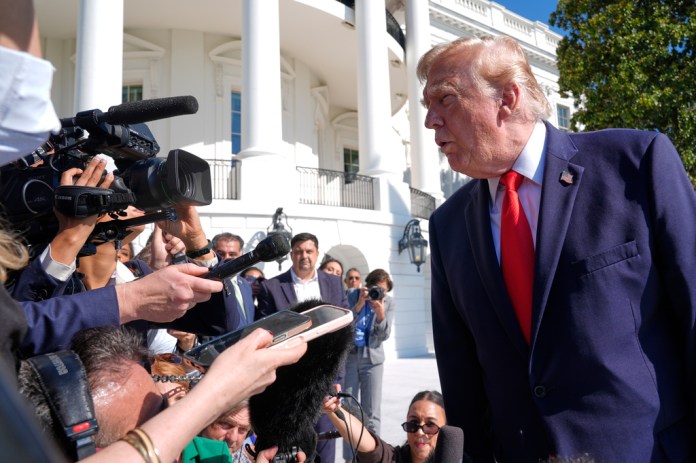
On Oct. 7, 2025, members of the administration stood with us in Washington. The next day, as reports of an agreement began to emerge, the uncertainty of two years started to give way to something none of us quite knew how to process. Later, Trump called and confirmed that the hostages would be coming home. Five days later, Omri returned to Israel.
The past two years taught me that advocacy often begins before policy. It begins with whether someone is willing to look at another human being closely enough to resist turning him into an abstraction.
OPINION — SOME ANGER SHOULD NEVER DIE: STOP TELLING US TO ‘MOVE ON’ FROM OCT. 7
Last year, Omri needed us to do that for him. This year, in Strasbourg, he no longer did.
For 738 days, we carried his voice into rooms he could not enter. The real measure of success is that he has taken it back.
Moshe Emilio Lavi is a native of Sderot, Israel. He is a former captain of the Israeli military and now works as a management consultant in New York City. His brother-in-law, Omri Miran, was taken hostage by Hamas on Oct. 7, 2023, and released on Oct. 13, 2025.
Continue reading...
[ H/T Washington Examiner ]