

It is unfortunate for Republicans that it won’t pass until after the November elections, but the bipartisan permitting reform deal announced hours before the Senate adjourned this week could be the most historic and consequential legislative accomplishment of Donald Trump’s presidency.
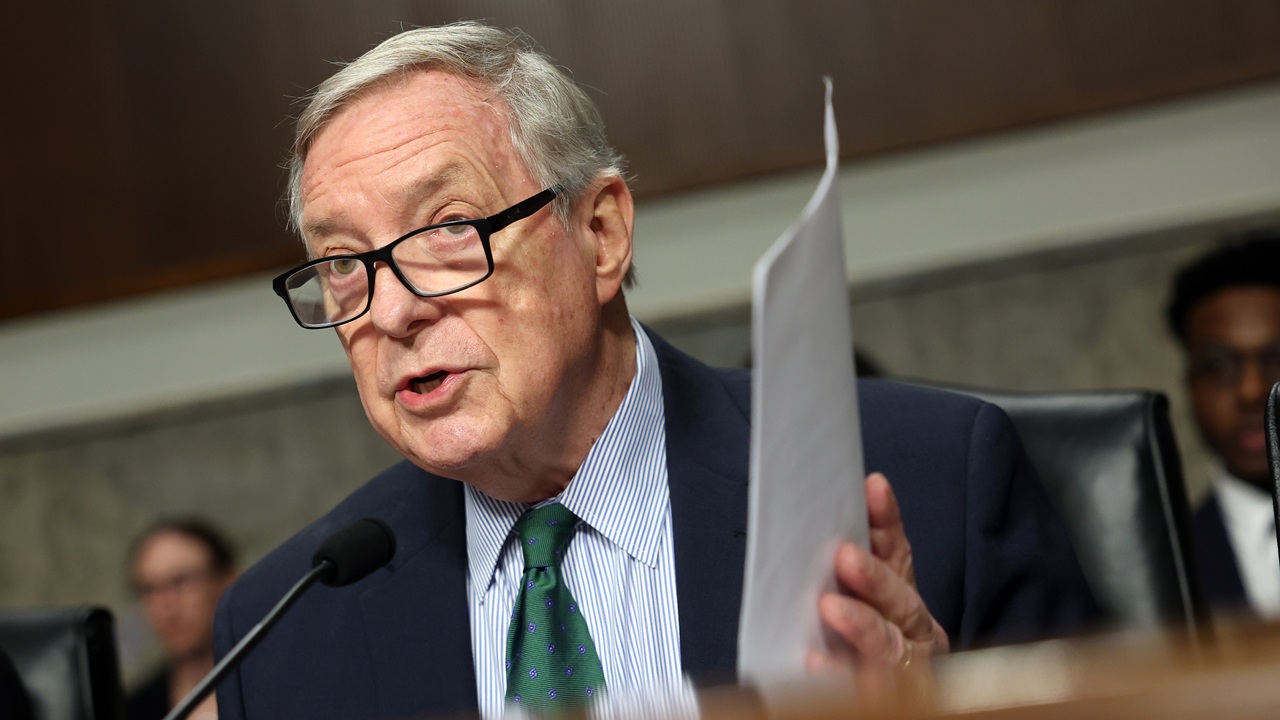
“We once built projects like the Hoover Dam, the Golden Gate Bridge, and the Empire State Building in years, not decades,” Senate Energy and Natural Resources Committee Chairman Mike Lee (R-UT) said in a release announcing the deal. “America still has the resources and the talent, but what too often stands in the way is a permitting system that takes too long and costs too much.”
Working with the committee’s ranking member, Martin Heinrich (D-NM), as well as Senate Environment and Public Works Committee Chairwoman Shelley Moore Capito (R-WV) and Ranking Member Sheldon Whitehouse (D-RI), Lee has helped produce the Bipartisan American Affordability and Jobs Act of 2026, a 417-page bill that includes major reforms to the federal government’s most powerful energy and environmental laws, including the Federal Power Act, the National Environmental Policy Act, the Clean Water Act, and even the Endangered Species Act.
The political horse-trading driving this rare bipartisan compromise is this: Democrats get sought-after changes to the Federal Power Act that make it easier to build transmission lines and connect wind and solar projects to the grid, while Republicans get limits on environmental reviews and lawsuits that have delayed pipelines, mines, and other infrastructure. Both sides get an opportunity to increase energy supplies and lower costs.
Specifically, the National Environmental Policy Act reforms would exempt many routine repairs and upgrades from lengthy environmental reviews and generally stop federal loans or grants from automatically triggering them. Activists would have just 150 days to sue, and they would need to show how the proposed project would directly harm them. Most significantly, courts could require agencies to fix their environmental reviews, but could no longer halt construction over NEPA violations alone.
The Clean Water Act changes would make states focus on water pollution when reviewing projects, limiting their ability to block pipelines or power lines for unrelated reasons. States denying approval would have to show that changes to the project could not bring it into compliance. The bill would also extend certain general permits from five years to 10 and prevent the Environmental Protection Agency from vetoing dredging and filling permits after they have been issued.
The changes to the Endangered Species Act are more modest. States could take over reviews of how federal projects affect protected wildlife, though developers could still opt for federal review. The usual formal consultation period would shrink from 90 days to 60, and opponents would have 150 days to challenge the resulting wildlife assessment in court.
The Federal Power Act changes would make it easier to build the transmission lines that carry electricity from wind and solar farms to customers. Federal regulators could approve qualifying interstate lines when states reject them or fail to act, and neighboring grid regions would have to work together to plan new connections. Developers would also get clearer information about where they can connect and what it will cost, while a streamlined review process would help projects move through the waiting list for grid access.
PRESERVING DUE PROCESS ON COLLEGE CAMPUSES
Much of the language in the Senate bill builds on the hard work of the House Natural Resources Committee Chairman Bruce Westerman (R-AR) and Rep. Jared Golden (D-ME). Reps. Adam Gray (D-CA) and Scott Peters (D-CA) also contributed to major portions of the measure. As a result of these bipartisan and bicameral efforts, the legislation appears to have the support of both Senate Majority Leader John Thune (R-SD) and House Speaker Mike Johnson (R-LA).
Congress will have much on its plate when it returns after the November elections, including the little matter of funding the government past Dec. 11, when the current continuing resolution expires. But if both chambers are able to push this legislation through, they will do far more than keep Washington running. They will make it easier for Americans to build homes, factories, power plants, and transmission lines that create jobs and lower costs. That is an accomplishment worth putting partisan differences aside to deliver.
Continue reading...
[ H/T Washington Examiner ]