


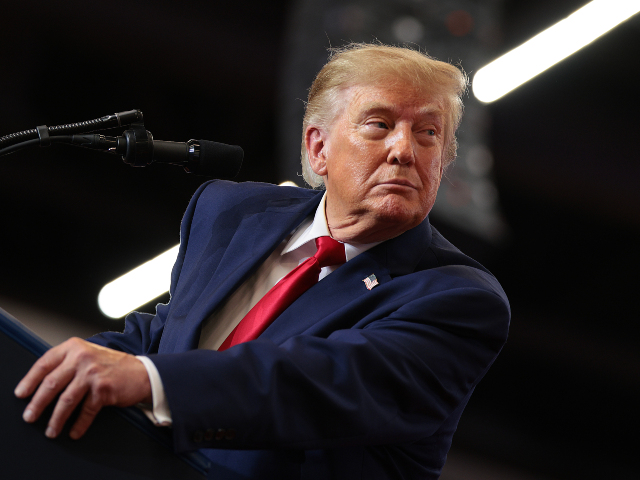



3 Midterm Outcomes & How They'd Move Stocks
Submitted by QTR's Fringe Finance
With the midterm elections now here, I wanted to quickly lay out the three potential scenarios I see unfolding, and how I think the stock market could react to each. Most of my readers are already familiar with my first, and what I think could happen to markets as a result: Could Democrats Crash This Market?
As I’ve been prattling on about for month, I believe the market is already sitting on a powder keg of excessive valuations, artificial intelligence speculation, questionable accounting, and an almost unprecedented period of regulatory “accommodation” from Washington.
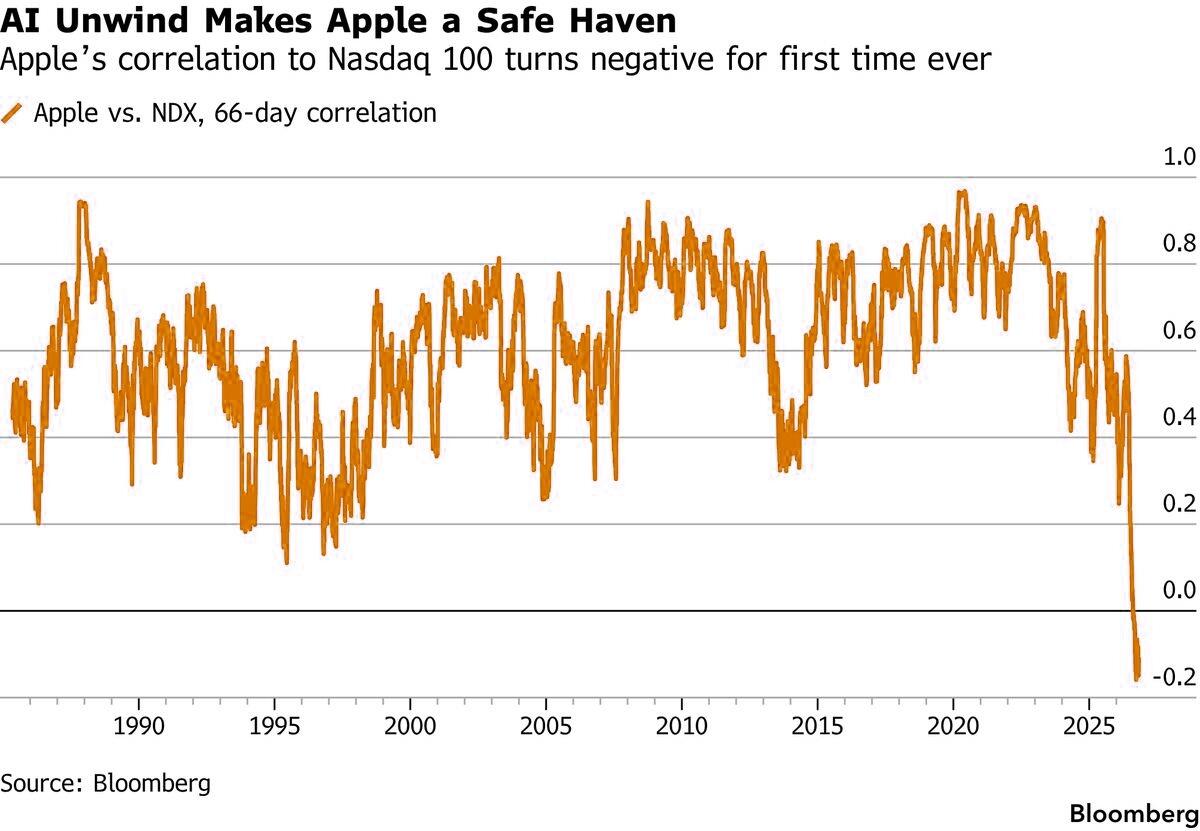
Over the last several trading sessions, we’ve started to see some of that enthusiasm crack. AI spending is coming under scrutiny, investors are beginning to question valuations, and the bond market continues to remind everyone that the cost of capital is the bedrock that sits underneath all this speculative bilge at the end of the day.

Now we have an election that could potentially change the political calculus underpinning much of the market’s enthusiasm over the last two years. And as we just learned from Brazil, shifting the deck chairs politically can have an outsized effect on how investment in viewed in a country.
I see three main possible outcomes. And while I have my own suspicions about which is most likely, I thought I’d lay out the three I was thinking about this weekend.
This is the most likely scenario I’ve been writing about extensively over the last several months, most recently in my piece examining the industries that could be most vulnerable to a Democratic takeover of Congress.
The premise is simple: Wall Street has spent the last two years operating in an extraordinarily permissive regulatory environment (read: free-for-fucking-all), and I don’t think investors appreciate how much of the rally has depended on that environment continuing.
A Democratic victory, particularly one that delivers control of both chambers of Congress, could change that almost overnight.
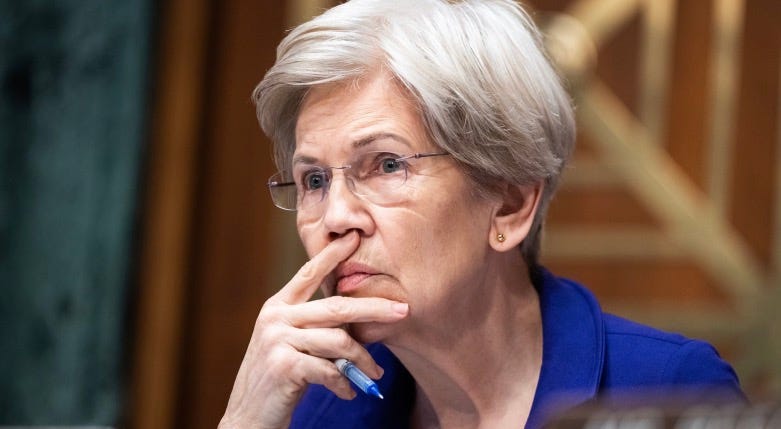
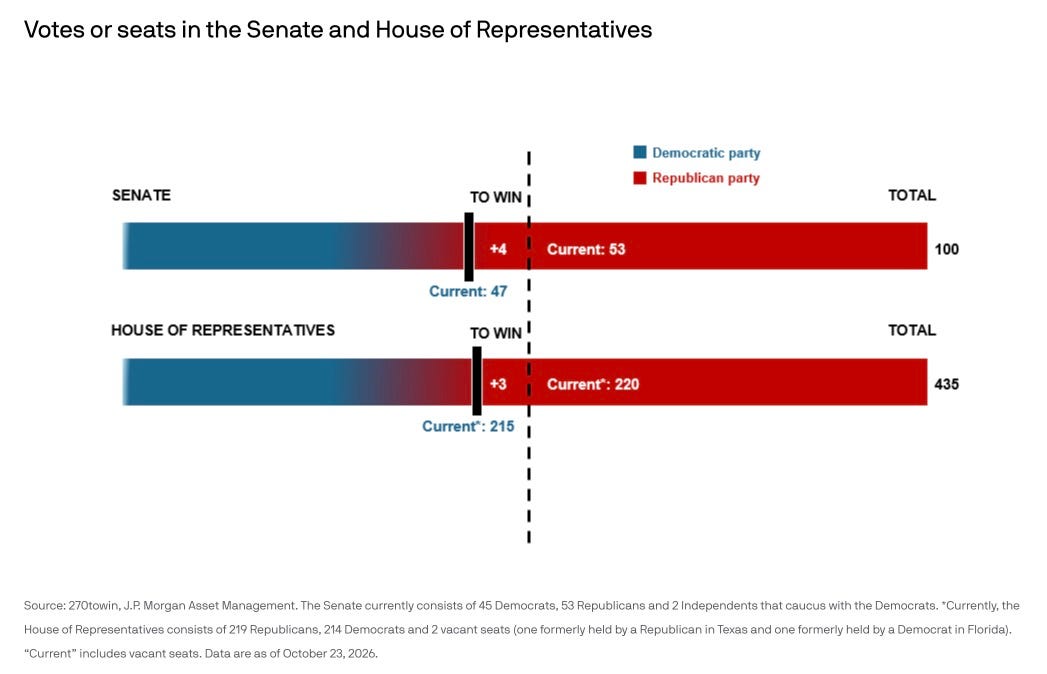
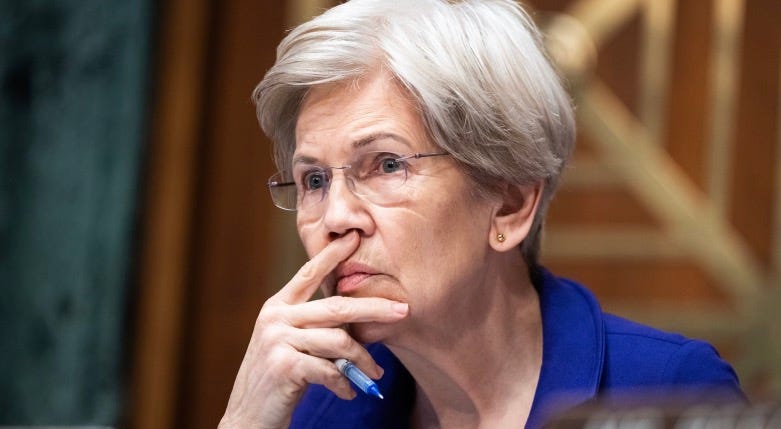
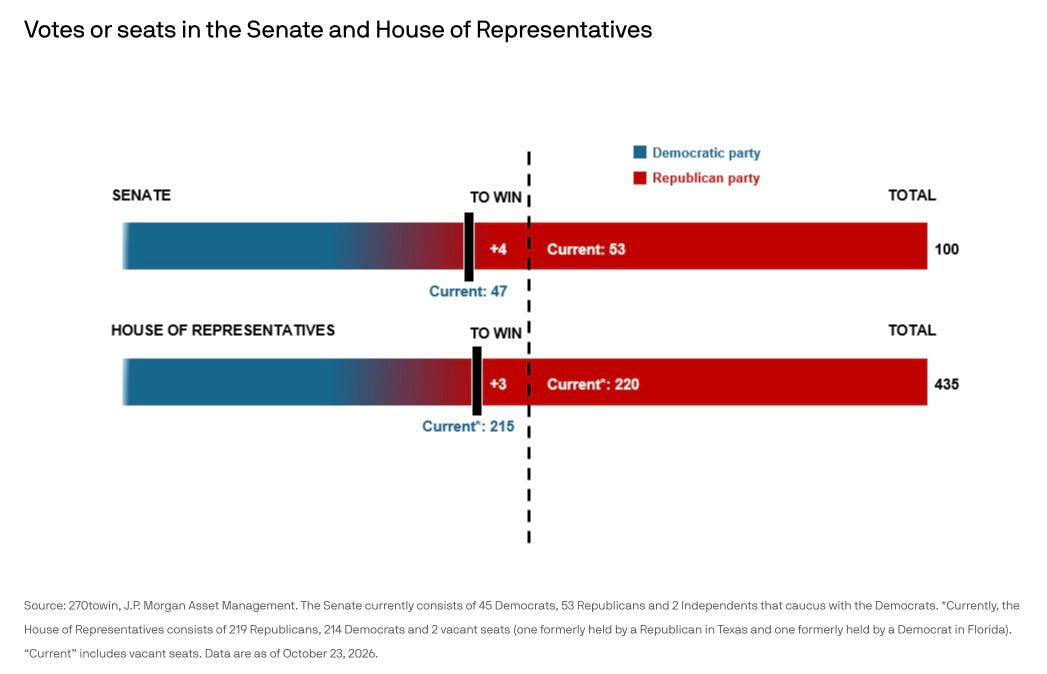
Even winning just the House would give Democrats control of important congressional committees, subpoena power, and the ability to launch investigations into industries that have benefited enormously from the Trump administration’s regulatory philosophy.
Cryptocurrency, currently under massive scrutiny due to some intern at Binance leaving his laptop open while getting up to order another a croissant at a San Francisco coffee shop using public Wi-Fi, would be near the top of my list.
Exchanges, stablecoin issuers, corporate bitcoin treasury companies, and politically connected crypto ventures could suddenly find themselves answering questions about conflicts of interest, market manipulation, political donations, and their relationships with Washington.
These questions would come about at a time when outside observers are starting to quit on the sector…

…and are starting to ask pointed questions, like this one from an FT comment on crypto over the weekend:

Additionally, banks and private-credit firms could face renewed scrutiny over capital requirements, lending practices, leverage, opaque valuations, and the risks accumulating in private markets.
Big Tech and AI companies could be hauled before Congress to explain their enormous infrastructure commitments, circular financing arrangements, antitrust practices, and accounting assumptions.
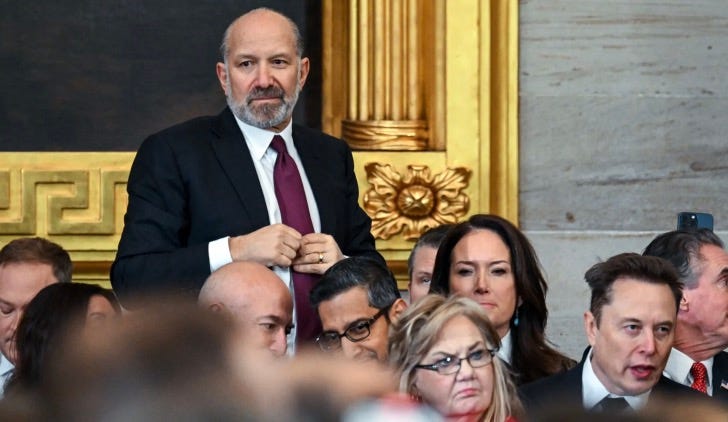
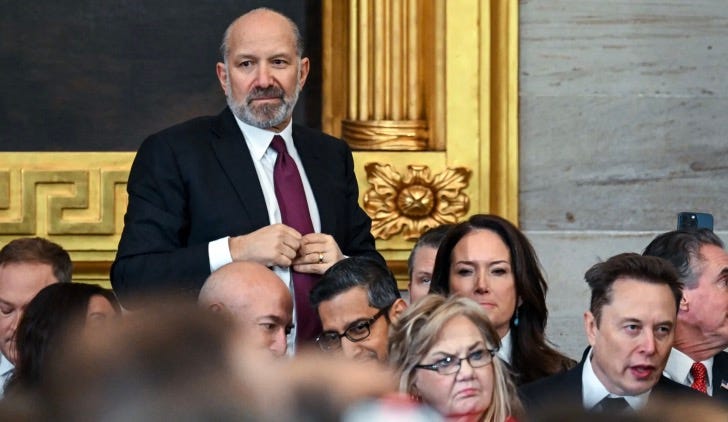
Companies and executives closely associated with the administration, including Elon Musk and his various businesses, could face additional political scrutiny involving government contracts, subsidies, conflicts of interest, and regulatory treatment.
And energy companies could begin confronting renewed uncertainty about permitting, environmental regulations, and the longer-term direction of federal policy.
None of this requires Democrats to pass sweeping new legislation. In fact, much of it could begin with nothing more than congressional hearings and subpoenas.
If Democrats take both chambers, the administration could also find itself facing a legislative blockade, difficult spending negotiations, and two years of political trench warfare.
The point is that investors might have to start assigning a price to regulatory and political risks they’ve spent two years largely ignoring. And in a market where certain companies are trading at extraordinary multiples, that repricing could be substantial.
I also think a Democratic victory could accelerate a rotation into renewable energy, biotechnology, and selected electrification businesses as investors begin anticipating a potential Democratic presidential victory in 2028, as I wrote here: 6 Market Shocks I Predict If Democrats Win Midterms
My suspicion is that this scenario could produce a meaningful selloff, particularly in crypto, financials, speculative technology, and companies whose valuations depend heavily on Washington’s continued accommodation.
J.P. Morgan predicts that a divided Congress could limit further deficit expansion by making additional spending packages more difficult to pass, potentially offering some relief to an already strained bond market.
However, Trump would retain considerable executive authority over tariffs, trade and foreign policy regardless of which party controls Congress. The bigger risk, according to the bank, could be renewed government shutdowns and debt-ceiling standoffs in 2027 and 2028, rather than sweeping changes to economic policy.
This is also a possibility that deserves serious consideration, especially given the weakness we’ve seen in equities over the last several trading sessions and the fact that it would mean my initial take was wrong…and I’m often wrong.
What if the market has already started pricing in a Democratic victory? We’ve seen stocks struggle as investors question the AI narrative, reassess valuations, and contend with higher rates and tightening financial conditions.
It’s entirely possible that some portion of the recent selling also reflects investors quietly adjusting their expectations for the midterms. Markets are forward-looking, after all. They don’t wait for election results to begin discounting them.

Under this scenario, Democrats win, but the result produces a relatively muted reaction because much of the anticipated political uncertainty has already been reflected in prices.
We might even see a relief rally as investors who hedged against a Democratic victory unwind those positions once the uncertainty disappears.
And there’s a historical argument supporting this possibility. Divided government hasn’t necessarily been bad for stocks. The S&P 500 gained roughly 26% in 1995 after Republicans took control of Congress under Bill Clinton, rose approximately 13% in 2011 despite a Republican House confronting Barack Obama, and surged 29% in 2019 with Democrats controlling the House under Donald Trump.
Markets also rallied during the divided-government years of the late 1990s, when gridlock coincided with strong economic growth and a booming stock market. The logic is straightforward: Wall Street often prefers political paralysis to sweeping policy changes, particularly when gridlock makes major tax increases, regulatory overhauls or disruptive spending legislation less likely.
For perspective, J.P. Morgan’s historical analysis finds that stocks have averaged 9.4% annually under Republican presidents facing divided Congresses since 1937, although economic conditions matter far more than political control.
But here’s where I remain skeptical: I simply don’t see much evidence that the most politically sensitive corners of this market are fully priced for a meaningful Democratic victory.
I don’t think crypto is properly priced for two years of aggressive congressional scrutiny, and I’ve written about how it could be a “one-two” punch with AI on markets on the way down.
I also don’t think banks and private-credit managers are fully accounting for a potential reversal in regulatory sentiment. And I certainly don’t think the businesses most closely associated with Trump, Musk, and the current administration are necessarily priced for a political environment that becomes substantially more hostile.
Could some of this be reflected in the recent market weakness? Sure…but my guess is that if Democrats win decisively, there is still plenty of room for investors to reassess what they’re willing to pay for businesses that have enjoyed two years of extraordinarily favorable political conditions.
The distinction here is between a Democratic victory being expected and its full economic consequences being priced in. Meaning, its possible Dems win and we don’t see the “crash” I’ve speculated about.
Now for the scenario that I think could produce the most immediately bullish market reaction and an outright economic free-for-all.
What if Republicans outperform the polls, surprise the political establishment, and retain control of both chambers of Congress?
In my opinion, stocks could move decidedly higher, and potentially violently so, particularly in the sectors that have benefited most from the administration’s policies.
Crypto could explode higher. Banks and private-credit firms could rally. Companies closely associated with the administration could enjoy a renewed speculative bid.

Investors would suddenly be looking at two more years of Republican control, a continuation of the deregulatory agenda, and far fewer congressional obstacles standing in the administration’s way.
And I think what comes next could make the last two years look tame.
I’ve been arguing for some time that the regulatory environment in the United States has become dangerously permissive. In my opinion, the combination of political favoritism, regulatory retreat, speculative excess, and corporate influence over Washington has created conditions that invite abuse. If Republicans retain Congress, I suspect those conditions could intensify dramatically.
There would be every incentive for politically connected businesses and executives to take advantage of the remaining two years of unified Republican government before the 2028 presidential election potentially changes the landscape.
I could envision an absolute mad dash to secure favorable regulatory treatment, government contracts, subsidies, tax advantages, merger approvals, and whatever other benefits businesses can extract from Washington while the opportunity exists.
I think corporate lobbying and the exchange of political access for favorable treatment could become even more brazen. And I suspect the questionable accounting practices, poor reporting, financial engineering, and speculative excess we’ve already seen across parts of the AI and private-market ecosystems would continue facing far too little scrutiny.
To be clear, I’m not suggesting that every company benefiting from deregulation is committing fraud, or that political contributions automatically constitute bribery. I’m saying that the incentives for corruption, conflicts of interest, and financial misconduct become more dangerous when meaningful oversight is weakened.
And if Republicans interpret an unexpected midterm victory as a public mandate to accelerate deregulation, I think those incentives could become even stronger. In my view, it could become a smash-and-grab mentality among some of the most politically connected corners of corporate America: take what you can, secure every advantage available, and worry about the consequences later.
From a market perspective, however, that could be extraordinarily bullish in the short term. But what is good for stock prices over the next six months is not necessarily good for the economy, the integrity of financial markets, or investors over the next decade.
85% OFF FOREVER IF YOU SUBSCRIBE TODAY: I am again offering an 85% discount to anyone that wants to become a Fringe Finance annual subscriber today. It’s a discount you can keep and stays applied for as long as you wish to remain a subscriber: Get 85% off forever
And there’s one additional potential catalyst worth considering. If Republicans retain Congress and the Iran conflict subsequently moves toward a durable resolution, the combination of continued deregulation, reduced geopolitical uncertainty, and potentially lower energy-risk premiums could create an extremely powerful relief rally.
For anyone betting on stocks going higher, that may be the most favorable political outcome imaginable, but it would also leave me more concerned than ever about the eventual consequences of an environment in which speculation, financial engineering, and regulatory complacency are allowed to run unchecked.
Ultimately, I think investors need to distinguish between the immediate market reaction to the election and the longer-term consequences of its outcome.
A Democratic victory that catches Wall Street off guard could produce a sharp repricing of politically sensitive assets.
A Democratic victory that has already been discounted could produce little reaction at all, or even a relief rally.
And a surprise Republican victory could ignite another speculative surge as investors begin anticipating two more years of favorable regulatory conditions.
But…none of these outcomes changes the fundamental concerns I’ve been writing about for months. None of them lower interest rates. None of them stops token prices from plunging. None of them magically put a bid under private credit or commercial real estate. It’s Official: The AI Emperor Has No Clothes
AI companies still need to justify their enormous capital expenditures. Earnings still need to translate into sustainable cash flow. Private-credit losses don’t disappear because Republicans win an election. Excessive valuations don’t suddenly become reasonable because Washington decides to look the other way.
And the bond market doesn’t care which political party controls Congress. That’s why, even if Republicans pull off a surprise victory and stocks explode higher, I would be reluctant to interpret that as evidence that the market’s underlying problems have been resolved.
It might simply mean the speculative party gets to continue a little longer. Conversely, a Democratic victory could serve as the catalyst that finally forces investors to confront risks they’ve been comfortable ignoring.
The most important question isn’t necessarily who wins on election night. It’s how much of the outcome is already reflected in prices, and whether the result forces Wall Street to reconsider the assumptions supporting today’s valuations.
My suspicion remains that markets are far more vulnerable to a Democratic victory than many investors appreciate…but if Republicans manage to retain control, I wouldn’t underestimate just how aggressively the market could celebrate.
The election is arriving at a moment when the market’s margin for error already looks dangerously thin…and this is what makes the next several days so interesting.
I’d love to hear your thoughts in the comments below…

QTR’s Disclaimer: Please read my full legal disclaimer on my About page here.
Tyler Durden Mon, 11/02/2026 - 13:20
Continue reading...
[ H/T ZeroHedge ]
Submitted by QTR's Fringe Finance
With the midterm elections now here, I wanted to quickly lay out the three potential scenarios I see unfolding, and how I think the stock market could react to each. Most of my readers are already familiar with my first, and what I think could happen to markets as a result: Could Democrats Crash This Market?
As I’ve been prattling on about for month, I believe the market is already sitting on a powder keg of excessive valuations, artificial intelligence speculation, questionable accounting, and an almost unprecedented period of regulatory “accommodation” from Washington.
Over the last several trading sessions, we’ve started to see some of that enthusiasm crack. AI spending is coming under scrutiny, investors are beginning to question valuations, and the bond market continues to remind everyone that the cost of capital is the bedrock that sits underneath all this speculative bilge at the end of the day.

Now we have an election that could potentially change the political calculus underpinning much of the market’s enthusiasm over the last two years. And as we just learned from Brazil, shifting the deck chairs politically can have an outsized effect on how investment in viewed in a country.
I see three main possible outcomes. And while I have my own suspicions about which is most likely, I thought I’d lay out the three I was thinking about this weekend.
Democrats Win & The Market Hasn’t Priced It In
This is the most likely scenario I’ve been writing about extensively over the last several months, most recently in my piece examining the industries that could be most vulnerable to a Democratic takeover of Congress.
The premise is simple: Wall Street has spent the last two years operating in an extraordinarily permissive regulatory environment (read: free-for-fucking-all), and I don’t think investors appreciate how much of the rally has depended on that environment continuing.
A Democratic victory, particularly one that delivers control of both chambers of Congress, could change that almost overnight.
Even winning just the House would give Democrats control of important congressional committees, subpoena power, and the ability to launch investigations into industries that have benefited enormously from the Trump administration’s regulatory philosophy.
Cryptocurrency, currently under massive scrutiny due to some intern at Binance leaving his laptop open while getting up to order another a croissant at a San Francisco coffee shop using public Wi-Fi, would be near the top of my list.
Exchanges, stablecoin issuers, corporate bitcoin treasury companies, and politically connected crypto ventures could suddenly find themselves answering questions about conflicts of interest, market manipulation, political donations, and their relationships with Washington.
These questions would come about at a time when outside observers are starting to quit on the sector…
…and are starting to ask pointed questions, like this one from an FT comment on crypto over the weekend:

Additionally, banks and private-credit firms could face renewed scrutiny over capital requirements, lending practices, leverage, opaque valuations, and the risks accumulating in private markets.
Big Tech and AI companies could be hauled before Congress to explain their enormous infrastructure commitments, circular financing arrangements, antitrust practices, and accounting assumptions.
Companies and executives closely associated with the administration, including Elon Musk and his various businesses, could face additional political scrutiny involving government contracts, subsidies, conflicts of interest, and regulatory treatment.
And energy companies could begin confronting renewed uncertainty about permitting, environmental regulations, and the longer-term direction of federal policy.
None of this requires Democrats to pass sweeping new legislation. In fact, much of it could begin with nothing more than congressional hearings and subpoenas.
If Democrats take both chambers, the administration could also find itself facing a legislative blockade, difficult spending negotiations, and two years of political trench warfare.
The point is that investors might have to start assigning a price to regulatory and political risks they’ve spent two years largely ignoring. And in a market where certain companies are trading at extraordinary multiples, that repricing could be substantial.
I also think a Democratic victory could accelerate a rotation into renewable energy, biotechnology, and selected electrification businesses as investors begin anticipating a potential Democratic presidential victory in 2028, as I wrote here: 6 Market Shocks I Predict If Democrats Win Midterms
My suspicion is that this scenario could produce a meaningful selloff, particularly in crypto, financials, speculative technology, and companies whose valuations depend heavily on Washington’s continued accommodation.
J.P. Morgan predicts that a divided Congress could limit further deficit expansion by making additional spending packages more difficult to pass, potentially offering some relief to an already strained bond market.
However, Trump would retain considerable executive authority over tariffs, trade and foreign policy regardless of which party controls Congress. The bigger risk, according to the bank, could be renewed government shutdowns and debt-ceiling standoffs in 2027 and 2028, rather than sweeping changes to economic policy.
Democrats Win & The Market Has Priced It In
This is also a possibility that deserves serious consideration, especially given the weakness we’ve seen in equities over the last several trading sessions and the fact that it would mean my initial take was wrong…and I’m often wrong.
What if the market has already started pricing in a Democratic victory? We’ve seen stocks struggle as investors question the AI narrative, reassess valuations, and contend with higher rates and tightening financial conditions.
It’s entirely possible that some portion of the recent selling also reflects investors quietly adjusting their expectations for the midterms. Markets are forward-looking, after all. They don’t wait for election results to begin discounting them.

Under this scenario, Democrats win, but the result produces a relatively muted reaction because much of the anticipated political uncertainty has already been reflected in prices.
We might even see a relief rally as investors who hedged against a Democratic victory unwind those positions once the uncertainty disappears.
And there’s a historical argument supporting this possibility. Divided government hasn’t necessarily been bad for stocks. The S&P 500 gained roughly 26% in 1995 after Republicans took control of Congress under Bill Clinton, rose approximately 13% in 2011 despite a Republican House confronting Barack Obama, and surged 29% in 2019 with Democrats controlling the House under Donald Trump.
Markets also rallied during the divided-government years of the late 1990s, when gridlock coincided with strong economic growth and a booming stock market. The logic is straightforward: Wall Street often prefers political paralysis to sweeping policy changes, particularly when gridlock makes major tax increases, regulatory overhauls or disruptive spending legislation less likely.
For perspective, J.P. Morgan’s historical analysis finds that stocks have averaged 9.4% annually under Republican presidents facing divided Congresses since 1937, although economic conditions matter far more than political control.
But here’s where I remain skeptical: I simply don’t see much evidence that the most politically sensitive corners of this market are fully priced for a meaningful Democratic victory.
I don’t think crypto is properly priced for two years of aggressive congressional scrutiny, and I’ve written about how it could be a “one-two” punch with AI on markets on the way down.
I also don’t think banks and private-credit managers are fully accounting for a potential reversal in regulatory sentiment. And I certainly don’t think the businesses most closely associated with Trump, Musk, and the current administration are necessarily priced for a political environment that becomes substantially more hostile.
Could some of this be reflected in the recent market weakness? Sure…but my guess is that if Democrats win decisively, there is still plenty of room for investors to reassess what they’re willing to pay for businesses that have enjoyed two years of extraordinarily favorable political conditions.
The distinction here is between a Democratic victory being expected and its full economic consequences being priced in. Meaning, its possible Dems win and we don’t see the “crash” I’ve speculated about.
Republicans Shock The World
Now for the scenario that I think could produce the most immediately bullish market reaction and an outright economic free-for-all.
What if Republicans outperform the polls, surprise the political establishment, and retain control of both chambers of Congress?
In my opinion, stocks could move decidedly higher, and potentially violently so, particularly in the sectors that have benefited most from the administration’s policies.
Crypto could explode higher. Banks and private-credit firms could rally. Companies closely associated with the administration could enjoy a renewed speculative bid.

Investors would suddenly be looking at two more years of Republican control, a continuation of the deregulatory agenda, and far fewer congressional obstacles standing in the administration’s way.
And I think what comes next could make the last two years look tame.
I’ve been arguing for some time that the regulatory environment in the United States has become dangerously permissive. In my opinion, the combination of political favoritism, regulatory retreat, speculative excess, and corporate influence over Washington has created conditions that invite abuse. If Republicans retain Congress, I suspect those conditions could intensify dramatically.
There would be every incentive for politically connected businesses and executives to take advantage of the remaining two years of unified Republican government before the 2028 presidential election potentially changes the landscape.
I could envision an absolute mad dash to secure favorable regulatory treatment, government contracts, subsidies, tax advantages, merger approvals, and whatever other benefits businesses can extract from Washington while the opportunity exists.
I think corporate lobbying and the exchange of political access for favorable treatment could become even more brazen. And I suspect the questionable accounting practices, poor reporting, financial engineering, and speculative excess we’ve already seen across parts of the AI and private-market ecosystems would continue facing far too little scrutiny.
To be clear, I’m not suggesting that every company benefiting from deregulation is committing fraud, or that political contributions automatically constitute bribery. I’m saying that the incentives for corruption, conflicts of interest, and financial misconduct become more dangerous when meaningful oversight is weakened.
And if Republicans interpret an unexpected midterm victory as a public mandate to accelerate deregulation, I think those incentives could become even stronger. In my view, it could become a smash-and-grab mentality among some of the most politically connected corners of corporate America: take what you can, secure every advantage available, and worry about the consequences later.
From a market perspective, however, that could be extraordinarily bullish in the short term. But what is good for stock prices over the next six months is not necessarily good for the economy, the integrity of financial markets, or investors over the next decade.
85% OFF FOREVER IF YOU SUBSCRIBE TODAY: I am again offering an 85% discount to anyone that wants to become a Fringe Finance annual subscriber today. It’s a discount you can keep and stays applied for as long as you wish to remain a subscriber: Get 85% off forever
And there’s one additional potential catalyst worth considering. If Republicans retain Congress and the Iran conflict subsequently moves toward a durable resolution, the combination of continued deregulation, reduced geopolitical uncertainty, and potentially lower energy-risk premiums could create an extremely powerful relief rally.
For anyone betting on stocks going higher, that may be the most favorable political outcome imaginable, but it would also leave me more concerned than ever about the eventual consequences of an environment in which speculation, financial engineering, and regulatory complacency are allowed to run unchecked.
We Can Change Narrative, But Not Fundamentals
Ultimately, I think investors need to distinguish between the immediate market reaction to the election and the longer-term consequences of its outcome.
A Democratic victory that catches Wall Street off guard could produce a sharp repricing of politically sensitive assets.
A Democratic victory that has already been discounted could produce little reaction at all, or even a relief rally.
And a surprise Republican victory could ignite another speculative surge as investors begin anticipating two more years of favorable regulatory conditions.
But…none of these outcomes changes the fundamental concerns I’ve been writing about for months. None of them lower interest rates. None of them stops token prices from plunging. None of them magically put a bid under private credit or commercial real estate. It’s Official: The AI Emperor Has No Clothes
AI companies still need to justify their enormous capital expenditures. Earnings still need to translate into sustainable cash flow. Private-credit losses don’t disappear because Republicans win an election. Excessive valuations don’t suddenly become reasonable because Washington decides to look the other way.
And the bond market doesn’t care which political party controls Congress. That’s why, even if Republicans pull off a surprise victory and stocks explode higher, I would be reluctant to interpret that as evidence that the market’s underlying problems have been resolved.
It might simply mean the speculative party gets to continue a little longer. Conversely, a Democratic victory could serve as the catalyst that finally forces investors to confront risks they’ve been comfortable ignoring.
The most important question isn’t necessarily who wins on election night. It’s how much of the outcome is already reflected in prices, and whether the result forces Wall Street to reconsider the assumptions supporting today’s valuations.
My suspicion remains that markets are far more vulnerable to a Democratic victory than many investors appreciate…but if Republicans manage to retain control, I wouldn’t underestimate just how aggressively the market could celebrate.
The election is arriving at a moment when the market’s margin for error already looks dangerously thin…and this is what makes the next several days so interesting.
I’d love to hear your thoughts in the comments below…
QTR’s Disclaimer: Please read my full legal disclaimer on my About page here.
Tyler Durden Mon, 11/02/2026 - 13:20
Continue reading...
[ H/T ZeroHedge ]