




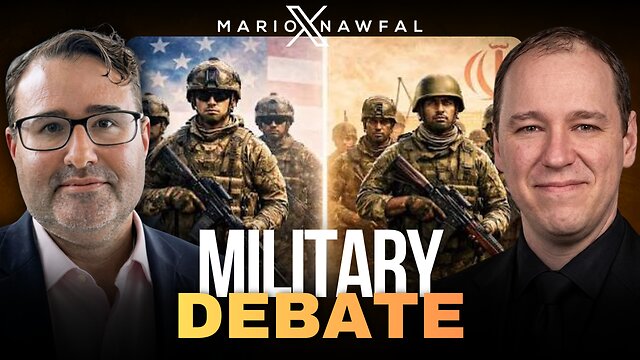


On Wednesday, President Donald Trump predicted that the Iran war would end “immediately after” the November election. On Monday, Iran and Gulf states are due to meet in Oman over passage through the Strait of Hormuz, while the Houthis have pushed to the edge of another maritime chokepoint at Bab al-Mandeb. The calendar is backward. Assuming Tehran will break on Washington’s timetable is a wager that no new front, market shock, or allied request will arrive first. Diplomacy should not be what finishes this war after the midterm elections. It should be how Trump reaches the midterm elections with the war moving toward an end.
Oman has produced something more useful than another appeal for calm. Iranian Foreign Minister Abbas Araghchi said last week that Tehran and Muscat had made “significant progress” on a temporary transit route through Hormuz. Earlier discussions included a joint corridor and mine-clearing. Iran now says the arrangement would not reopen the strait immediately, and major disputes remain. That makes it an opening to test, not a breakthrough to celebrate. Only Washington can exchange calibrated relief from sanctions or blockade for measurable Iranian performance.
The alternative is visible across the Arabian Peninsula. After missile and drone attacks wounded 73 people in southern Saudi Arabia, the Houthis took Mocha. As they advanced toward Bab al Mandeb, Crown Prince Mohammed bin Salman asked Trump for direct U.S. military help. Trump declined for now, offering intelligence instead. The Houthis then reached Perim Island, positioning themselves to threaten the strait; Saudi Arabia reported two more people wounded by a Houthi projectile near Jazan on Sunday.
That was prudent. It was also a warning. A limited war acquires unlimited geography when every regional emergency becomes an American obligation. Today, it is tanker protection in Hormuz. Tomorrow, it may be air defense for Saudi infrastructure, strikes in Yemen, escorts in the Red Sea, and another drain on ships, interceptors, intelligence, and presidential attention.
War is now multiplying American obligations faster than it is improving American bargaining power. Washington should therefore help turn the Oman channel into a reciprocal maritime arrangement: Verified safe passage, coordinated mine-clearing, a halt to attacks on shipping, a direct incident-management line, and narrowly limited, reversible American economic or maritime concessions. Any violation should automatically restore pressure. The maritime deal should then feed negotiations toward defined nuclear and regional-security terms.
The objection is serious. Tehran has violated commitments and obstructed inspectors; it may use negotiations to gain time. Premature concessions could reward escalation. The answer is not trust. It is verification, reciprocity, sequencing, and automatic consequences. Give Iran nothing irreversible for a promise, and give it only what can be withdrawn when inspectors or ships are blocked.
WHAT DON CORLEONE KNEW ABOUT POWER — AND HOW IRAN USES IT TODAY
This also matters before November. Republicans say America’s decisive political contest is at home: affordability, immigration, the power of government, cultural politics, and an increasingly assertive democratic-socialist wing of the Democratic Party. If they believe that, allowing a conventionally weaker adversary thousands of miles away to consume military resources, political capital, and household purchasing power before the midterm elections makes little strategic sense. Nearly half of registered voters call the cost of living their leading electoral concern; oil above $100 does not stay overseas.
Iran is dangerous, and force may again be necessary. But Iran should not set America’s political calendar or multiply America’s missions. America First statecraft means recognizing when military leverage is sufficient to negotiate an achievable outcome, not waiting for total capitulation before diplomacy is permitted.
Travis Lynch is an international relations graduate and independent journalist. His writing focuses on U.S. foreign policy and national security.
Continue reading...
[ H/T Washington Examiner ]