


In January 1955, Congress answered Mao Zedong’s bombardment of Kinmen by passing the historic “Formosa Resolution.” This crucial legislation authorized President Dwight Eisenhower to defend Taiwan and its offshore islands with American military force. When Beijing tested that pledge in August 1958 by shelling the garrison and attempting a starvation blockade, the U.S. Navy escorted Nationalist resupply ships directly to the beaches, breaking the siege and forcing a Chinese retreat. Today, Washington faces a test of resolve, yet policymakers seem blind to the historical stakes.
Chinese dictator Xi Jinping (better known in his country as “Winnie the Pooh”) recently ordered the People’s Liberation Army to field a successful Taiwan invasion capability by 2027. While the Office of the Director of National Intelligence timidly asserts that Beijing has no fixed timeline, the Pentagon rightly judges that Chinese leadership demands war readiness by that centenary. A customs quarantine offers Beijing a low-risk, high-reward opening salvo; therefore, Chinese planners expect to close the Taiwan Strait, choke the island, and simply wait for a hesitant Washington to blink.
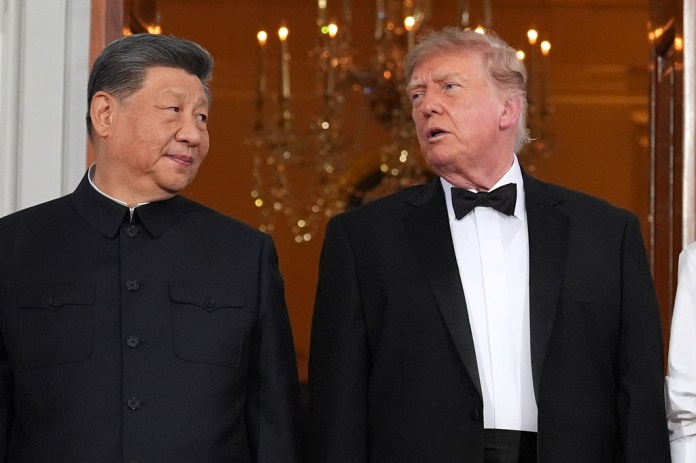
Beijing has already absorbed dangerous lessons from the Middle East. Following American and Israeli counterstrikes in early 2026, Iran has effectively choked off the Strait of Hormuz for more than seven months. By leveraging this, Tehran has shown America’s adversaries that a regional rogue power can sustain a prolonged chokepoint before Washington musters the political will to deploy decisive force. Meanwhile, President Donald Trump praises his “personal relationship” with Xi while demanding that Taiwan spend an unrealistic 10% of its GDP on defense. Taipei’s actual blueprints — 3.3% this year, scaling to 5% by 2030 — are grounded in economic reality; forcing a 10% levy would simply bankrupt a trading island dependent on maritime commerce.
The economic fallout from a cross-strait conflict would be globally catastrophic. Bloomberg Economics models a yearlong blockade slashing global output by 5%. Worse, a full-scale U.S.-China war over the island would cost a staggering $10.6 trillion in the first year alone — erasing nearly 10% of total global wealth. Crucially, Taiwan fabricates roughly 92% of the world’s most advanced logic chips, while Taiwan’s Semiconductor Manufacturing Company commands 70% of the global pure-play foundry market. Tech designers cannot simply relocate these highly specialized, multibillion-dollar fabrication facilities in a matter of weeks. Ultimately, closing the strategic Taiwan Strait would trigger a global industrial supply shock that would make the economic wreckage of the Middle East chokepoint crisis look minor by comparison.
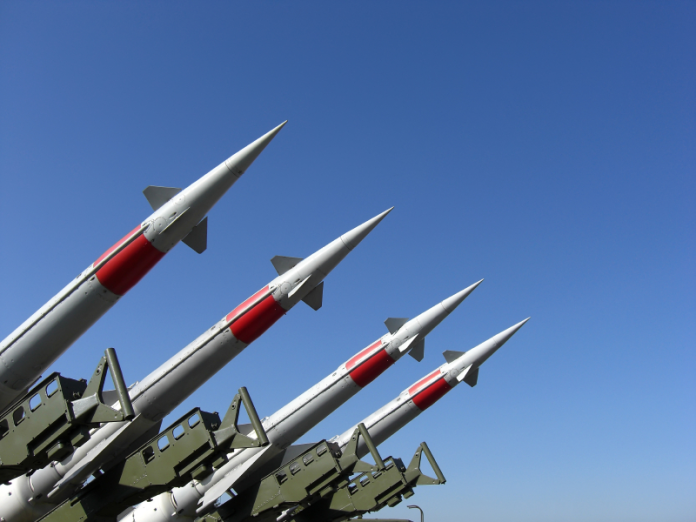
Beijing is already waging a proxy war against Washington and Jerusalem through Tehran. Iranian customs records reveal that Chinese entities channeled 1,300 shipments of dual-use drone and missile components to Iran’s Defense Ministry in the first half of 2026 alone. Shamelessly, China actively arms the radical, bloody Islamic regime firing on Israel while, in parallel, building the amphibious force meant to seize Taiwan. Consequently, Jerusalem must immediately transfer combat data on layered air defense, counter-drone tactics, and civil resilience to Taipei before the critical 2027 milestone.
OPINION — TRUMP GOT TWO PANDAS, XI GOT THE PACIFIC: HOW AMERICA GOT FLEECED AT THE WHITE HOUSE
In tandem, Washington must counter Beijing with three immediate countermoves. First, the Pentagon must pre-position a dedicated Formosa Arsenal within forward logistics nodes in Japan and the Philippines, packed with anti-ship missiles and counter-drone systems. Second, allied Western intelligence agencies must publish a shared quarantine-indicator framework paired with a Free Formosa Pact affirming Taiwan’s self-determination — triggering automatic sanctions and convoy rights the moment Beijing declares a blockade. Finally, Congress must fund an emergency transfer authority to surge secure communications infrastructure to Taiwan within weeks.
Only absolute strategic clarity, backed by overwhelming military readiness and unwavering historical resolve, can avert a catastrophic general war in the Indo-Pacific. Thus, America must act now and prevent a new Berlin.
Jose Lev Alvarez is an American–Israeli scholar specializing in international security policy. A multilingual veteran of the Israeli special forces and the U.S. Army, he holds three master’s degrees and is completing a doctorate in intelligence and global security in the Washington, D.C., area.
Continue reading...
[ H/T Washington Examiner ]