


Barack Obama was handed the Nobel Peace Prize in 2009 for promising to change the world.
Obama had been president for less than eight months. He had ended no major wars, negotiated no historic peace settlements, and delivered little beyond soaring rhetoric about international cooperation.
None of that stopped the Norwegian Nobel Committee from awarding him the world’s most prestigious peace prize.
The committee celebrated Obama’s vision of a world without nuclear weapons, his embrace of the United Nations, and his ability to inspire hope for a better future.
Hope was apparently enough.
Trump, by contrast, has spent his second term proving what the international diplomatic establishment has long resisted: Peace is not secured through speeches, declarations, or endless negotiations. It requires power, and no nation possesses more of it than the United States.
Rather than surrendering American leadership to international institutions, Trump has wielded military and economic might to confront adversaries, force concessions, and reshape the global order.
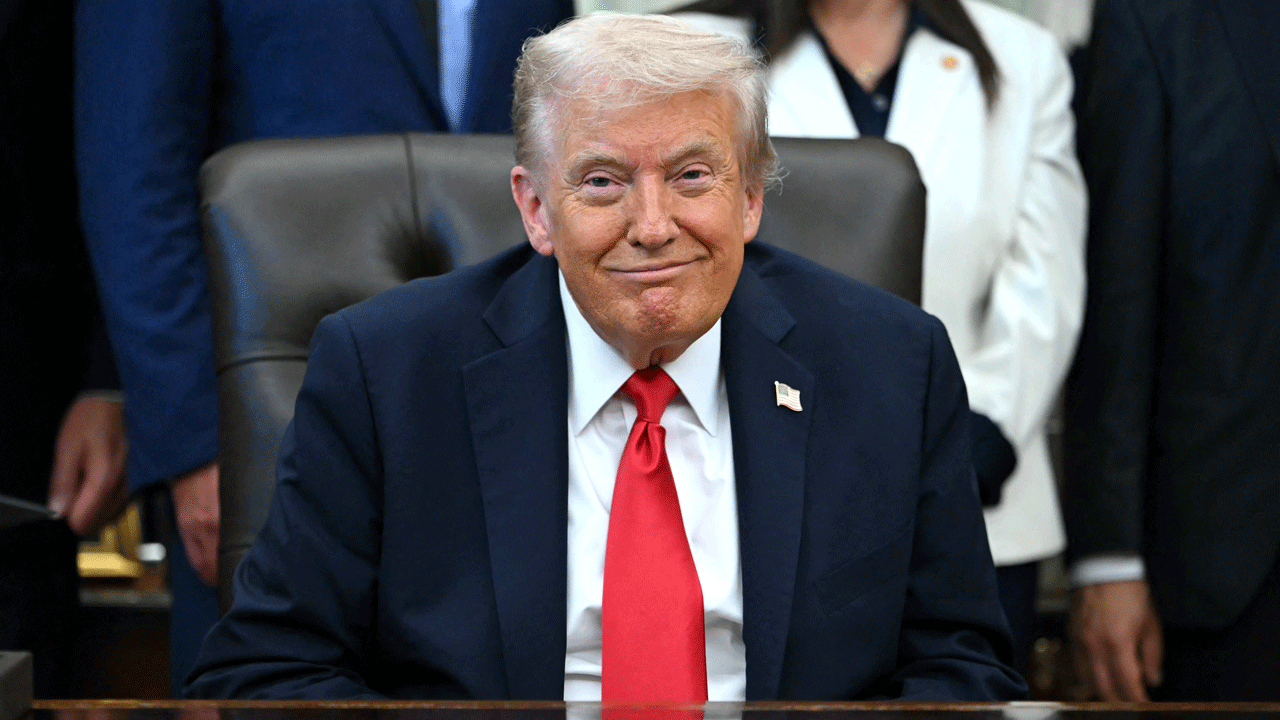
Obama received the prize for what he might accomplish. Trump, by contrast, has challenged the committee to recognize what he has already done.
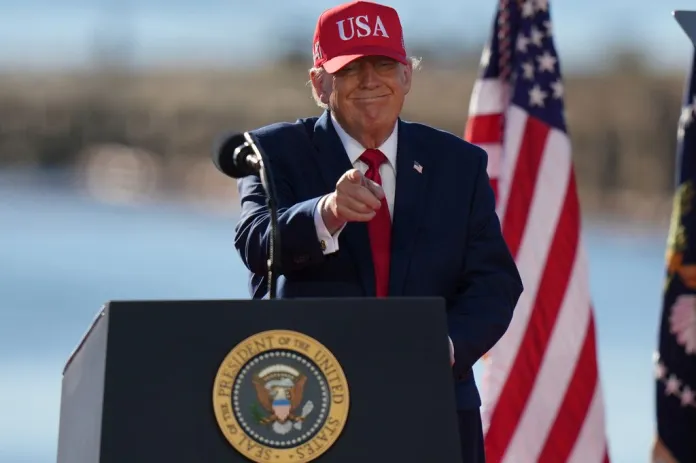
“They have a reputation for maybe not giving it to people like me, but I, whether I get it or not, I’ve done far more, and I think it would be a great discredit to them,” Trump said.
“Look, Obama got it, and he didn’t do anything,” the president said. “He still doesn’t know what he got it for. He got it when he got elected, right at the beginning, and he had no idea why he got it.”
The Norwegian Nobel Committee has the opportunity to honor a president who has brokered ceasefires, secured the return of hostages, pressured America’s allies to shoulder more of their own defense, and used American power to challenge the geopolitical status quo.
2025 FLASHBACK: THE CASE FOR TRUMP TO WIN THE NOBEL PEACE PRIZE
Peace through strength with Iran
On paper, a president embroiled in a regional war after promising “no new wars” on the campaign trail would appear an unlikely candidate for the Nobel Peace Prize. But the argument for Trump begins with a question traditional diplomacy has failed to answer: How can the Middle East achieve lasting peace while Iran retains the ability to threaten its neighbors, finance terrorism, and hold international commerce hostage?
Successive American administrations tried sanctions, negotiations, diplomatic pressure, and occasional military strikes. Iran remained a powerful, destabilizing force.
Trump chose confrontation.
The war has inflicted substantial damage on Iran’s military capabilities and economy, even as Tehran has retaliated against international shipping and targets across the Persian Gulf. But the war has also exposed a deeper vulnerability in Iran’s regional position.
Tehran’s attacks have threatened Gulf states that spent decades attempting to balance their economic ambitions against the danger of antagonizing the Islamic Republic. Those governments now confront the reality that maintaining diplomatic and commercial ties with Iran does not necessarily protect them.
The implications extend far beyond the battlefield. Dubai has spent decades transforming itself into an international financial and tourism capital. Doha has pursued similar ambitions to those of a commercial and diplomatic hub. Neither city can thrive under the threat of Iran’s rockets and drones.
Gulf state governments now have reasons to view Tehran not simply as an adversary to be managed, but as a direct threat to their economic survival. That shift could become one of the most significant consequences of the war.
The argument is not that war itself constitutes peace. It is that dismantling the foundations of a hostile regime’s regional power could create conditions for a more durable peace than another agreement the regime has little incentive to honor.
If the ultimate result is an Iran less capable of intimidating its neighbors, the war will have accomplished what years of conventional diplomacy failed to deliver.
As Trump himself said, the war is a “small price to pay” to keep the U.S. and the world safe.
Bringing Syria in from the cold
Trump’s approach to Syria illustrates the other side of peace.
After the fall of Bashar al Assad, Syria faced the prospect of renewed instability, international isolation, and domination by Islamic extremists. The country’s new leader, Ahmed al Sharaa, had a jihadist past. Its economy was shattered. Its future was uncertain.
Trump could have maintained the status quo, leaving Syria under sweeping sanctions and diplomatically isolated. Instead, he extended a hand.
It was a bold calculation: Give Syria’s new leadership a reason to pursue reconstruction, regional cooperation, and closer relationships with American partners rather than return to isolation.
Now Damascus is even exploring security cooperation with Saudi Arabia against Iran-backed Houthi forces.
The transformation remains fragile. Syria is far from stable, and its new leadership has much to prove.
But the diplomatic opening has created possibilities that scarcely existed when Assad fell.
Trump has sought to change the country’s trajectory not with a massive nation-building project, but with the promise of economic opportunity and the strategic weight of American recognition.
Bringing the hostages home
Then there is Gaza, where Trump’s diplomatic achievement can be measured not in communiqués or declarations, but in lives.
Under the October 2025 peace agreement, Hamas released the final 20 living hostages held in Gaza. The remains of another 28 were subsequently returned or recovered, including two Americans, Omer Neutra and Itay Chen.
Among those finally brought home was Israeli Lt. Hadar Goldin, who was killed and abducted by Hamas during the 2014 Gaza war.
Goldin’s family had spent more than 11 years fighting for the chance to bring their son home. They knew he was likely dead. All they wanted was the dignity of giving him a proper burial.
For the hostage families, Trump’s diplomatic achievement was not some abstract geopolitical accomplishment. It helped end a nightmare that, in some cases, had lasted more than a decade.
Questions remain about whether Hamas will disarm and whether the ceasefire will hold. But those uncertainties cannot erase the return of the hostages.
No Nobel committee was necessary to tell families such as the Goldins what that meant.
European self-sufficiency
Trump’s willingness to challenge long-standing assumptions has reshaped America’s relationship with its European allies.
For decades, presidents of both parties complained that European governments were dependents rather than partners, relying on American taxpayers to guarantee their security while neglecting their own militaries.
The complaints produced limited results. Trump made the issue impossible to ignore.
At the 2025 NATO summit, the member nations committed to spending 5% of their GDP on defense by 2035, a dramatic increase from the previous benchmark.
Trump has also changed the equation in Ukraine.
Rather than expect American taxpayers to shoulder the financial burden indefinitely, his administration has backed an arrangement allowing European governments to purchase American weapons for Ukraine.
The war in Ukraine continues, but Trump’s pressure has accelerated a fundamental change in the trans-Atlantic alliance. European governments are investing more in their militaries, taking greater responsibility for their security, and helping finance Ukraine’s resistance.
Russia’s invasion had already pushed Europe toward rearmament. Trump has pressed its leaders to turn that urgency into lasting commitments.
The result is an alliance increasingly built around shared responsibility rather than dependence on Washington.
And that is the logic of peace through strength: A Europe capable of defending itself is a Europe better equipped to deter the next war.
A safer America
Not only is Trump stopping the killing abroad, he’s doing it at home, too.
The president has made restoring law and order a central priority of his domestic agenda, even deploying federal law enforcement resources and National Guard troops to Washington, D.C., and Memphis to confront violent crime.
The results have coincided with dramatic declines in homicides.
Across 66 major U.S. communities, homicides fell 17.2% during the first half of 2026 compared to the same period last year, according to the Major Cities Chiefs Association.
The declines have been particularly pronounced in cities targeted by Trump’s federal interventions.
In Memphis, homicides fell 43.7% during the first six months of the year. Washington experienced a nearly identical decline over the same period.
The administration has claimed credit for those improvements, although the national decline in violent crime began before Trump’s return to office, and the effects of individual federal deployments remain disputed by Democrats.
Nevertheless, the interventions reflect a consistent governing philosophy: National security means little if the public cannot feel secure in its own communities.
For Trump, restoring order at home and asserting American strength abroad are part of the same “America First” agenda.
A prize for achievements, not aspirations
There are still chapters of Trump’s record waiting to be written. Iran’s future remains uncertain. The ceasefire in Gaza is fragile. And Europe’s newfound commitment to its own defense will face tests long after Trump leaves the White House.
But the Nobel committee never demanded a finished record from Barack Obama.
It awarded him the Peace Prize for the hope of a more peaceful world, before he had demonstrated that his vision could deliver one.
Trump’s record presents a different proposition. His agreements can be examined. His diplomatic breakthroughs can be measured. The families of the hostages he helped bring home can testify to what those efforts accomplished.
The committee has every right to judge the durability of those achievements and the consequences of his use of military force. But those standards deserve to be applied consistently.
Trump has made clear that he wants the Nobel Peace Prize. He made his case for it earlier this week. That case is strong.
Yet the significance of his presidency will not be decided by five people in Oslo.
Obama received a medal for the promise of changing the world. Trump’s legacy will be measured by the changes his policies actually leave behind.
The Nobel committee can award the prize. It cannot award a place in history.
Continue reading...
[ H/T Washington Examiner ]