






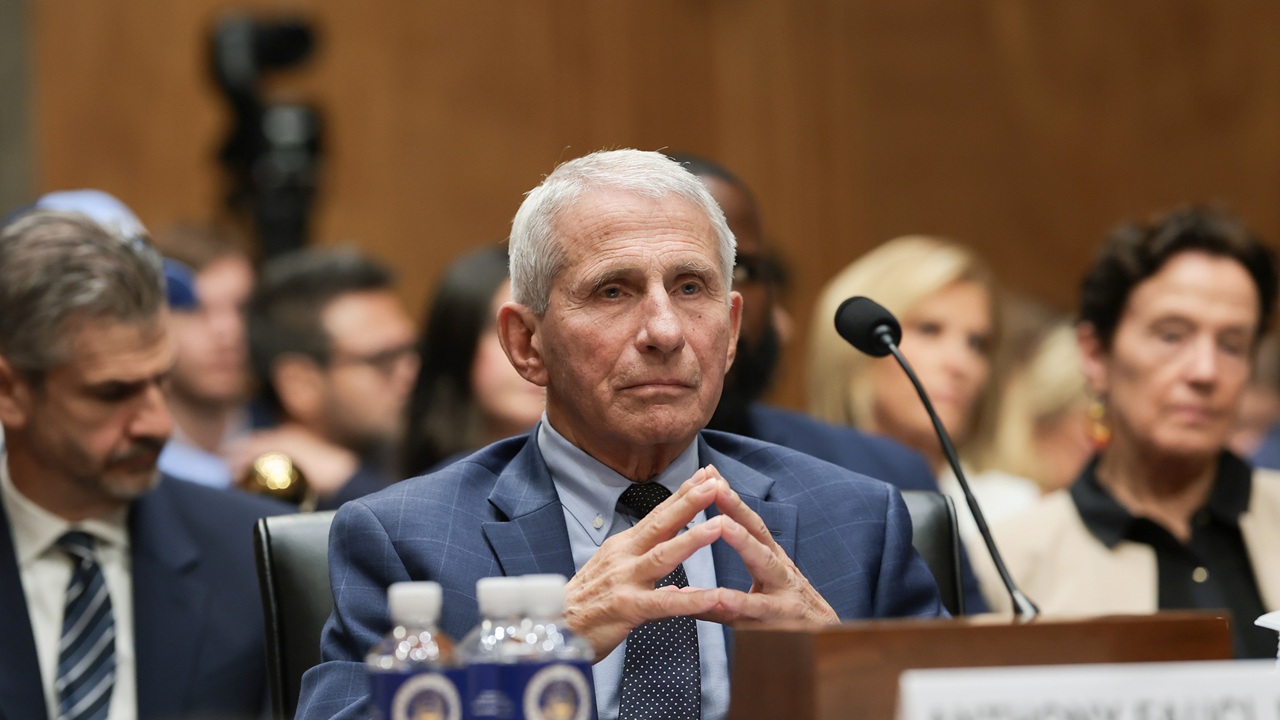
On Nov. 15, 2021, Anthony Fauci wrote a decision about COVID-19 booster shots in his private diary.
Push the booster on every adult in America. Do it, he wrote, “no matter what the ACIP says”—that is the Advisory Committee on Immunization Practices, the independent panel of outside experts that votes on who should get which vaccines. The panel had not voted yet.
Do it “despite the fact that there was concern about myocarditis in younger men.” Do it because otherwise, “the message of who should get boosted is ambiguous.”
There is the whole scandal in a single entry. A known risk to young men’s hearts, named by Fauci himself, in the same breath as the decision—and then set aside. Not on the evidence, but because it muddied the message.
Four days later, the government expanded booster eligibility to every adult in America, including young men.
This was not the first time something like this happened. Ten months earlier, Fauci and the two officials about to take over the Centers for Disease Control and Prevention and the surgeon general’s office had discussed, among themselves, whether a second dose might carry a first-trimester miscarriage risk. Fauci raised the issue, and his colleagues agreed it was a good point. Then the government didn’t say anything about red flags to pregnant women considering the shot.
Same man. Same move. Ten months apart. Name the risk in private. Give the public the message.
This is an ethical collapse on a grand scale, and I lay it all out in my new book “Why Fauci MUST Rot in Prison.”
Take the young men.
That the mRNA vaccines can inflame the heart muscle is no fringe allegation—the Food and Drug Administration revised its vaccine fact sheets in 2021 to reflect the data. The CDC’s advisory committee met publicly on June 23, 2021, to review the signal. The only thing that remained contested was the magnitude of the danger. The agencies themselves recognized that those most at risk were adolescent and young-adult males in the days after a dose.
COVID-19 was never an equal-opportunity killer; its danger fell steeply with youth. The myocarditis signal, on the other hand, appeared to rise in young men. When the risk of a disease and the risk of the intervention point in opposite directions across the age curve, a single national answer—one schedule for the 80-year-old woman and the 19-year-old man alike—is hardly a triumph of science.
Weighing the risks of the third dose in September 2021, Fauci recorded, “A lack of a lot of data for safety among young individuals particularly in the context of myocarditis.” In the same passage, he wrote that the White House chief of staff was “very much intense [sic] on getting this approval through.”
Consider what the machine chose not to find out. When the question was whether the virus itself damaged young hearts, American medicine spared nothing. The Big Ten built a cardiac registry and ran MRI scans on 1,597 infected college athletes; the results, published in JAMA Cardiology, found myocarditis in 2.3%—and on symptoms alone, the study notes, only five of the 37 cases would ever have been found.
Was there similar energy at the time to research—in a transparent way—the potential risks of COVID-19 vaccines and boosters?
Then there’s the issue of dangers to pregnant women and their children, where the failures were even starker. In late January 2021, Fauci, newly installed CDC Director Rochelle Walensky, and incoming Surgeon General Vivek Murthy discussed vaccination in pregnancy. Pregnant women had been excluded from the pivotal trials, so there was very little direct evidence and next to none by trimester.
Fauci asked around and came back with a concern: The fever and cytokine response after a second dose could, he wrote, “theoretically” be “associated with miscarriage in the 1st trimester.” Fauci said that Walensky recognized that it was “definitely a good point, esp after dose two,” and that Murthy called it “a really good point.”
It didn’t matter. Pregnant women were expected to get the jab—sometimes with the threat of job loss if they didn’t.
Both mothers and young men were entitled to know the risks and the limits of the data. Then each of them, with the help of a doctor, should have been entrusted to decide for themselves. That is medicine. Anything less is Orwellian compliance.
We publish a variety of perspectives. Nothing written here is to be construed as representing the views of the Daily Signal.
Continue reading...
[ H/T The Daily Signal ]