


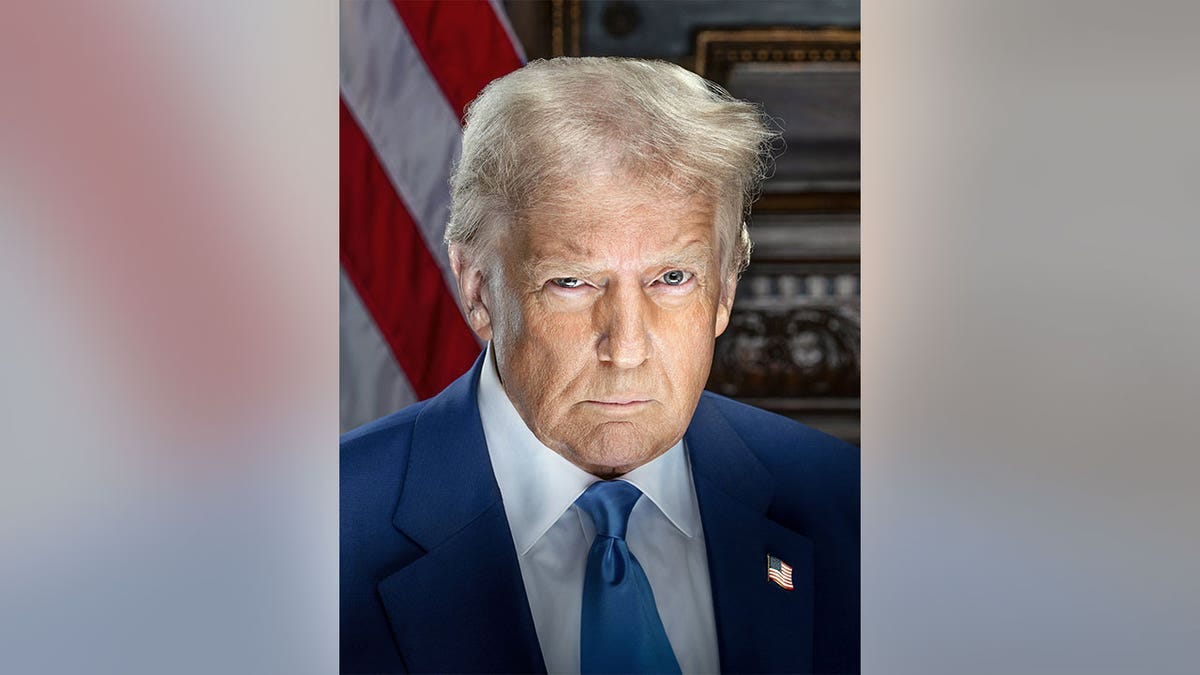



Outside the White House and in front of the press, President Donald Trump’s convocation of artificial intelligence industry leaders seemed to have finally unified the frontier. The smiling CEOs all signed on to the White House Accord on Super Intelligence, establishing four layers of AI oversight and control.
But the guardrails, Trump explained, are “self-policing” and voluntary. Most notably, even Anthropic founder Dario Amodei, who has spent months in a war of words with the White House as he claimed that AI poses an existential risk to humanity, declared that “if we do this right, we work with the president and everyone here, we can win safely!”
Inside the White House was a different story.
Amodei, who has spent weeks demanding that “we” must “pace the frontier” via “regulation that targets all US frontier AI companies, as that covers even those who are unwilling to cooperate voluntarily,” effectively lost his crusade. As did his pro-regulatory peers at Google and OpenAI.
Dario Amodei, CEO and co-founder of Anthropic, left, with a graphic of AI computing around in various line formations overtop of the Capitol Building. (Washington Examiner illustration; AP photo; Getty Images)
" data-large-file="https://www.washingtonexaminer.com/.../Tiana_Biz_Column_AA-e1790891436762.jpg?w=696" src="https://www.washingtonexaminer.com/.../Tiana_Biz_Column_AA-e1790891436762.jpg?w=696" alt="Dario Amodei, CEO and co-founder of Anthropic, left, with a graphic of AI computing around in various line formations overtop of the Capitol Building." class="wp-image-4750515" style="aspect-ratio:1.533103093541039;width:396px;height:auto" srcset="https://www.washingtonexaminer.com/wp-content/uploads/2026/10/Tiana_Biz_Column_AA-e1790891436762.jpg 1024w, https://www.washingtonexaminer.com/...z_Column_AA-e1790891436762.jpg?resize=300,196 300w, https://www.washingtonexaminer.com/...z_Column_AA-e1790891436762.jpg?resize=768,502 768w, https://www.washingtonexaminer.com/...iz_Column_AA-e1790891436762.jpg?resize=150,98 150w, https://www.washingtonexaminer.com/...z_Column_AA-e1790891436762.jpg?resize=696,455 696w" sizes="(max-width: 1024px) 100vw, 1024px">
Dario Amodei, CEO and co-founder of Anthropic. (Washington Examiner illustration; AP photo; Getty Images)
During the White House lunch of leaders, Amodei’s attempts to reiterate safety concerns were reportedly steamrolled by Meta’s Mark Zuckerberg, who simply insisted that they all defer to the voluntary principles outlined by the accord. Jensen Huang of Nvidia reportedly laid into Amodei after lunch, pressing him as to why the Anthropic leader had been so apocalyptic in his rhetoric. Amodei’s fears over AI risks, especially from open-source models, weren’t just minimized. The open-source models were outright exempted from the accord’s safety standards.
Huang, Zuckerberg, and the rest of the faction that wants open competition and limited novel government regulation have won, for now. And now let’s move from the White House to look inside Anthropic to understand the stakes for Amodei.
In an incredibly strategic leak by the closed-source AI firm, OpenAI’s IPO prospectus landed in the hands of Reuters. The newswire reported that Anthropic generated $4.6 billion in revenue last year but posted a net loss of $42 billion and an operating loss of $8.06 billion. Anthropic spent $7.33 billion on compute and infrastructure in 2025, three times as much as it had in the year prior and nearly double last year’s revenue. That revenue grew 12-fold from 2024.
But the prospectus says that nearly a quarter of that revenue came from just two customers last year, who are not locked into long-term contracts with the firm. Anthropic plans to spend half a trillion dollars on future cloud, compute, and infrastructure.
Anthropic’s operating margin has indeed improved because its revenue has increased faster than its spending. Yet, that improvement looks like a -772% operating margin in 2024 to a -176% operating margin in 2025. The blockbuster figure is that Anthropic is gunning for a $2 trillion valuation on the Nasdaq, even though the firm was valued at less than half as much just five months ago.
Now, if your product were really going to end humanity, it is unlikely that you’d go public to raise $100 billion in just one month. But as the prospectus itself illustrates, Amodei’s declarations that AI will doom us all are likely less due to earnest fears for humankind but rather fears of competition.
As the numbers lay bare, unless Anthropic can continue its radical acceleration in revenue, it cannot afford for AI to lose its effective oligopoly.
At a $2 trillion valuation, Anthropic is committing more than a quarter of its proposed IPO valuation to compute, a massive gamble that frontier compute will remain in low supply and sky-high demand. Anthropic’s prospectus says that the frontier will remain constrained “principally by the availability of compute.” Anthropic’s valuation is based on projections that it will generate some $200 billion of revenue by 2028. This is a figure only plausible if the costs of training and running models remain as high as Anthropic plans to sink on its own development.
And that simply won’t happen if open source models advance and begin to eat into Anthropic’s current market share.
PROGRESSIVES STEER DEMOCRATIC PARTY TOWARD HEAVY REGULATION OF AI
If technological advances lower the cost of training and running models, Anthropic needs the government to do what the market cannot and artificially inflate the cost of doing business. If open-source models, especially ones from startups, can suddenly train at a fraction of Anthropic’s sunk costs, Anthropic would require the government to impose new testing, licensing, permitting, and so on in order to keep the market barrier to entry high.
This explains why Amodei, a lifelong Trump hater and Democratic donor, went to the White House on bended knee: He can’t afford not to.
Tiana Lowe Doescher (@TianaTheFirst) is an economics columnist for the Washington Examiner.
Continue reading...
[ H/T Washington Examiner ]