
Dominican security forces recently exposed a catastrophic regional failure during “Operación Armada,” a multi-city raid that seized 200 firearms and 40,000 unmarked rounds. This massive crackdown triggered six chaotic days of lethal shootouts, leaving 17 suspected gunmen dead and shattering the diplomatic fiction of a “secure border” with Haiti.
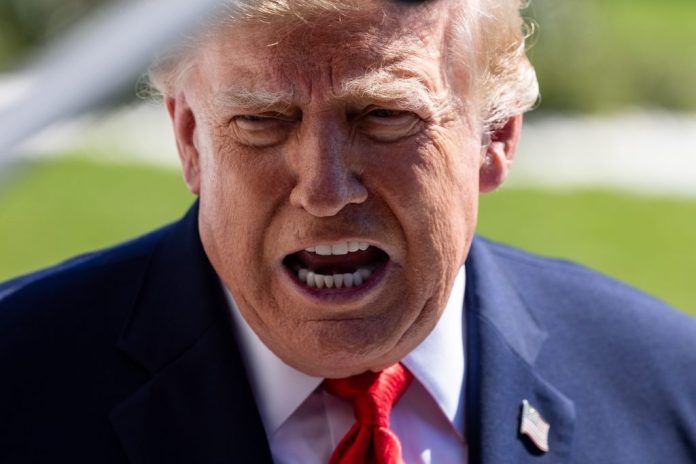
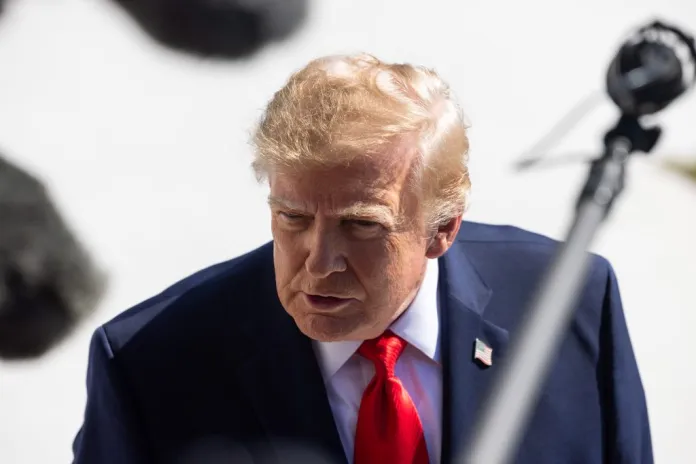
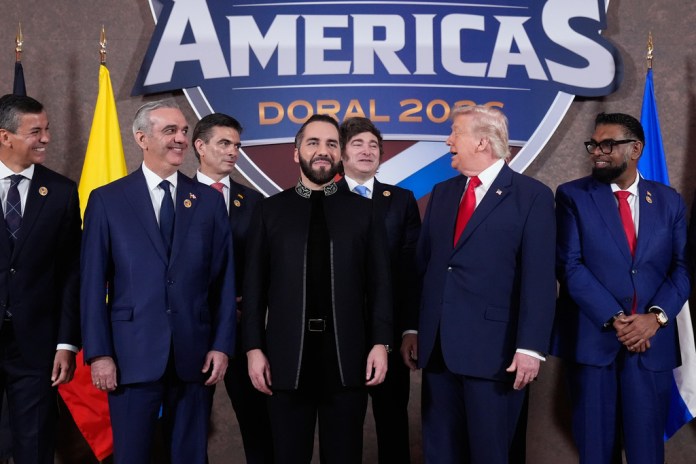
Among the casualties was operative José Manuel San Luis, whose recovered Haitian ID proves that civilian sectors offer zero insulation from the spreading anarchy. Driving this bloodshed is a roaring black-market bazaar: Haitian warlords traffic rifles west across the Artibonite River, while Dominican syndicates trade motorcycles east as mobile currency. This spiraling lawlessness now directly threatens the “Shield of the Americas” pact signed this March by Dominican President Luis Abinader and President Donald Trump. Ultimately, an open border on the coalition’s Caribbean keystone transforms this high-profile alliance into a severe American liability.
Over a century ago, Admiral William Caperton mapped this exact transnational vulnerability. When Desiderio Arias seized Santo Domingo in May 1916, he funneled government rifles to Haitian insurgents who were actively killing U.S. Marines. Washington’s subsequent eight-year occupation proved a fundamental reality: insecurity on one half of the Hispaniola inherently imperils the other. Fast forward to late 2024, and ‘Operación Pandora’ exposed identical systemic corruption when a police colonel and nine officers diverted over 900,000 state rounds to Haitian warlords. Dominican claims of a lower homicide rate (7.39 per 100,000) mean nothing next to Armum’s unmarked ammunition and recent street battles, which prove the statistics mask a raging black-market arsenal. Thus, U.S. Southern Command cannot treat Santo Domingo as a reliable regional anchor while corrupt capital officials and a porous 243-mile frontier actively feed the enemy pipeline.
An unsecured Dominican Republic directly paralyzes American strategy against Cuba and Nicaragua. In Havana, a new 32-antenna Chinese electronic warfare array at Bejucal actively monitors vital U.S. sea lanes feeding Dominican ports. In Managua, entrenched Russian forces and predatory Chinese monopolies weaponize billions in gold exports to fund America’s adversaries. Both hostile regimes exploit a chaotic, distracted Hispaniola as a strategic buffer to blunt and neutralize U.S. power. Consequently, Washington cannot isolate Beijing’s spy outposts or dismantle Nicaragua’s dictatorship while its nominal Caribbean ally swaps machine guns for motorbikes. Sealing this Dominican pipeline is the mandatory baseline for aggressive regional rollback.
Against this backdrop, the White House must direct SOUTHCOM to launch a permanent Hispaniola Interdiction Command within 30 days, embedding operational personnel directly in Dajabón and Haina. This command must immediately fuse ATF weapons tracing with Dominican customs, mandate rigorous pre-clearance on Miami shipping containers, and enforce RFID tracking on border-zone motorcycles. To break cartel mobility, impounded smuggling vehicles must be publicly crushed at the root. To secure the skies, persistent American surveillance drones must maintain an unyielding orbit across the entire 243-mile Haiti-Dominican Republic border. Only a locked-down Dominican Republic will stop being an illicit corridor and become the forward operating base — the essential pier, airfield, and intelligence node — needed to project American power against the region’s hostile capitals.
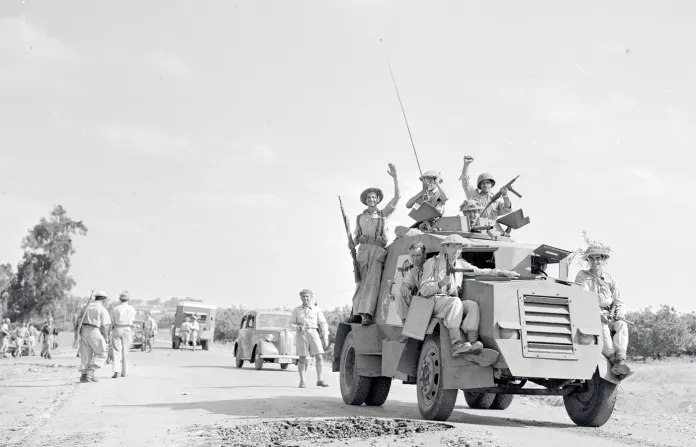
THEY PADDED THE SEATS JUST TO EXIT: THE MANUFACTURED ISOLATION OF ISRAEL
Simultaneously, a fortified Dominican platform must anchor an immediate regime-change operation to dismantle the Ortega-Murillo clan in Nicaragua. Decapitating this dictatorial family will instantly shatter the lucrative transit corridor utilizing Managua as a sovereign sanctuary to finance the networks arming Hispaniola. Furthermore, expropriated Chinese gold concessions must transfer to a U.S.-backed commercial champion with direct Pentagon equity, locking in an unyielding baseline for regional resource denial. Concurrently, Russian military advisers will rapidly abandon their barracks the instant American resolve becomes undeniable. Once cleared of adversaries, an American-led consortium can finally construct the strategic interoceanic canal that Beijing promised but failed to deliver. Ergo, Dominican lawlessness dooms this entire regional rollback strategy if front-line Caribbean ports remain a clearinghouse for hostile syndicates.
Cuba and Nicaragua must be the terminal objectives of American strategy in Latin America. Neutralizing these adversaries requires a locked-down Dominican Republic to sever, for example, the illicit corridors feeding Beijing’s spy infrastructure at Bejucal. Without this decisive rollback, the Shield of the Americas risks losing its strategic credibility entirely.
Jose Lev Alvarez is an American–Israeli scholar specializing in international security policy. A multilingual veteran of the IDF special forces and the U.S. Army, he holds three master’s degrees and is completing a Ph.D. in Intelligence and Global Security in the Washington, D.C., area.
Continue reading...
[ H/T Washington Examiner ]