




The White House on Monday issued a memorandum directing federal agencies to obtain its approval before employees agree to testify before Congress, tightening control over the administration’s response to Democratic investigations after Republicans lost both chambers in the midterm elections.
In a brief one-page memo to agency general counsels, President Donald Trump‘s White House counsel Will Scharf said agencies must notify and obtain approval from both his office and the Office of Legislative Affairs before any employee agrees to appear before a congressional committee. He described it as an “established White House consultation process.”
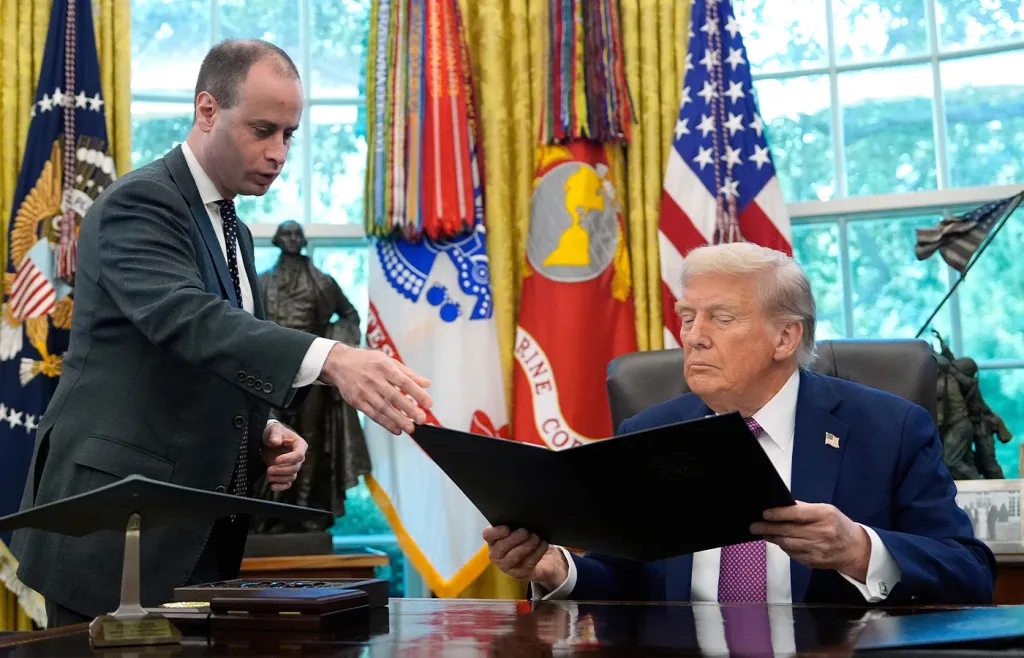
White House staff secretary Will Scharf listens during a meeting to sign an executive order about vaccines, Monday, Aug. 10, 2026, in the Oval Office of the White House in Washington. (AP Photo/Jacquelyn Martin)
" data-large-file="https://www.washingtonexaminer.com/wp-content/uploads/2026/11/AP26222693155884.jpg?w=1024" src="https://www.washingtonexaminer.com/wp-content/uploads/2026/11/AP26222693155884.jpg?w=1024" alt="White House staff secretary Will Scharf looks on during a meeting to sign an executive order about vaccines, Monday, Aug. 10, 2026, in the Oval Office of the White House in Washington." class="wp-image-4804867" srcset="https://www.washingtonexaminer.com/wp-content/uploads/2026/11/AP26222693155884.jpg 1024w, https://www.washingtonexaminer.com/wp-content/uploads/2026/11/AP26222693155884.jpg?resize=300,200 300w, https://www.washingtonexaminer.com/wp-content/uploads/2026/11/AP26222693155884.jpg?resize=768,512 768w" sizes="(max-width: 1024px) 100vw, 1024px">
White House staff secretary Will Scharf listens during a meeting to sign an executive order about vaccines, Monday, Aug. 10, 2026, in the Oval Office of the White House in Washington. (AP Photo/Jacquelyn Martin)
A White House official said the administration was prepared to cooperate with Congress and that the process “ensures reasonable requests are respected.” The official said congressional inquiries must serve a legitimate legislative purpose and accused Democrats of using threats of prosecution and inflammatory rhetoric to intimidate administration officials and divert Cabinet secretaries from their work.
“The Trump Administration will not be extorted, intimidated, or threatened into submission by politically motivated baseless investigations,” the official told the Washington Examiner.
Meanwhile, Scharf told Bloomberg over the weekend that the White House’s attitude toward congressional subpoenas will be prudential, telling the outlet “it depends” when asked if the administration will comply with any requests expected in the next Congress.
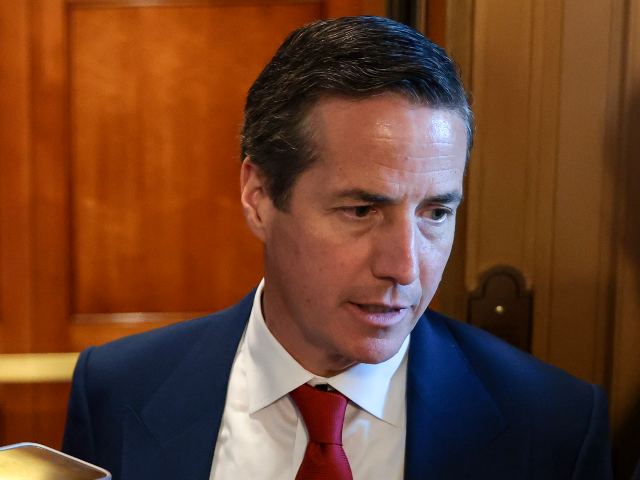
The directive follows a warning Scharf sent last week to Rep. Robert Garcia (D-CA), the incoming House Oversight and Government Reform Committee chairman, after Garcia told administration officials to “lawyer up.” Garcia has pledged public hearings on the Jeffrey Epstein investigation, which he called “the largest White House cover-up in history.” He responded to Scharf that Congress derives its oversight authority from Article I of the Constitution.
Democrats are already seeking records ahead of their January takeover of Congress. Rep. Bennie Thompson (D-MS) asked the Department of Homeland Security for written assurances that it would preserve its records and gave the department until Dec. 2 to turn over previously requested documents. Rep. Bobby Scott (D-VA) sought similar preservation assurances from the Department of Agriculture.
House Natural Resources Democrats’ letters covered official communications on personal devices, including disappearing messages. Rep. Zoe Lofgren (D-CA) sent preservation requests to companies, individuals, and federal agencies.
In August, the Justice Department issued guidance aimed at bolstering protections for people with knowledge or contact with government officials but who are not officially designated as government employees.
An Office of Legal Counsel opinion argued that executive privilege can extend to certain confidential communications with private advisers of the president or his staff, even if those targets of inquiry were never official government employees. The OLC opinion cited Trump v. Mazars, the Supreme Court’s 2020 ruling on congressional subpoenas for Trump’s personal records, eight times, and it was rooted in legal positions dating back to the George W. Bush and Nixon administrations, respectively.
In the Mazars decision, the Supreme Court held that courts reviewing congressional subpoenas for a president’s personal records must weigh separation-of-powers concerns, including whether Congress could get the information elsewhere and whether the demands are broader than reasonably necessary to serve a legislative purpose.
The ultimate success or failure of certain Democratic inquiries could hinge on whether lawmakers receive any tips or documents leaked by administration employees. Requiring White House clearance for testimony could serve as a deterrent for anyone who might consider speaking to future committee investigators without prior authorization.
WHITE HOUSE WARNS HOUSE DEMOCRATS NOT TO HARASS STAFF WITH OVERSIGHT INVESTIGATIONS
The memo leaves informal contacts with congressional investigators unaddressed, though it says “further guidance regarding other engagements with Congress is forthcoming.”
Read the memorandum below:
GC LetterDownload
Continue reading...
[ H/T Washington Examiner ]