



This summer, the Washington Examiner convened a symposium of the Right’s most eminent thinkers, drawn from the movement’s leading think tanks, on immigration and national identity. Like the other installments of Right Way Forward, this series featured essays from across the conservative spectrum, from Claremont Institute’s national conservatives to Cato Institute’s libertarians, with the Heritage Foundation traditionalists, Manhattan Institute reformers, and others in between.
The question at its heart wasn’t about immigration policy itself but the principle beneath it, which had sharply divided the Right throughout President Donald Trump’s second term: is America primarily a creedal nation, rooted in the ideals of the Declaration of Independence? Or is it a nation shaped by a specific cultural and civilizational inheritance?
The breaking point came in late 2025, when the fallout from conservative commentator Tucker Carlson’s interview with right-wing influencer Nick Fuentes forced the movement to ask who, exactly, counts as an American. The term “Heritage American” entered the conservative lexicon, used by some to privilege descendants of the colonial and founding-era stock above newer arrivals and their children, a distinction that put figures such as failed Republican candidate for Ohio governor Vivek Ramaswamy and even second lady Usha Vance on the wrong side of the line.
Traditional conservatives recoiled at the Heritage American framing and took the stance that America is primarily a nation rooted in shared ideals, not blood and soil. Speaking on the Washington Examiner’s Right Way Forward show, American Enterprise Institute president Robert Doar drew the line clearly, saying (emphasis added):
Yet as the symposium unfolded and the conversation carried on in the months that followed, between the factions at the Washington Examiner and elsewhere, a new consensus began to emerge, one that wove creed and culture together rather than forcing a choice between them. The writers themselves disagreed sharply on policy, but beneath their disagreements, the outlines of this synthesis took shape. It was broadly this: creed and culture are not rivals. The creed is what holds Americans together as a political community, but it grew out of a specific cultural inheritance.
As is often the case in families, friendships, and even political movements, the simple act of encountering each other’s opinions demystified the opposing view, lowered the temperature, and let both sides see that their ideas weren’t as incompatible as they first seemed.
That shift in principle has begun to translate into an emerging policy consensus: that America should keep welcoming newcomers, but more selectively, and only on the condition that they embrace both the creed and the culture. That means fidelity to the Constitution and the Declaration, as well as to English, our civic habits, and the shared history that made those principles possible.
Like any workable consensus, it doesn’t satisfy everyone. But it keeps a large enough share of the Right’s coalition intact while speaking to independent voters who have soured significantly on the Trump administration’s handling of immigration.
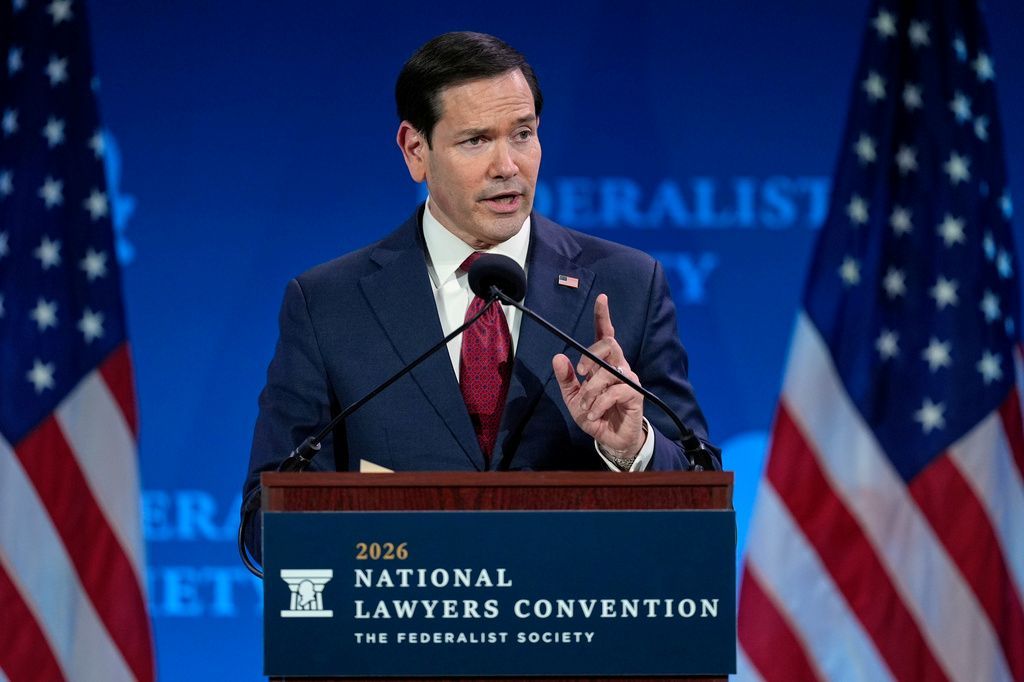
The one thing that consensus needed was a prominent voice. It found one last week in Secretary of State Marco Rubio, the son of Cuban immigrants, who captured its essence in remarks to the Federalist Society (emphasis added):
Call it the Rubio consensus. After two years of infighting over who counts as American, it’s the closest thing the Right has to an answer: one that unites enough of the movement to win elections while honoring both our creed and our cultural inheritance.
Continue reading...
[ H/T Washington Examiner ]