


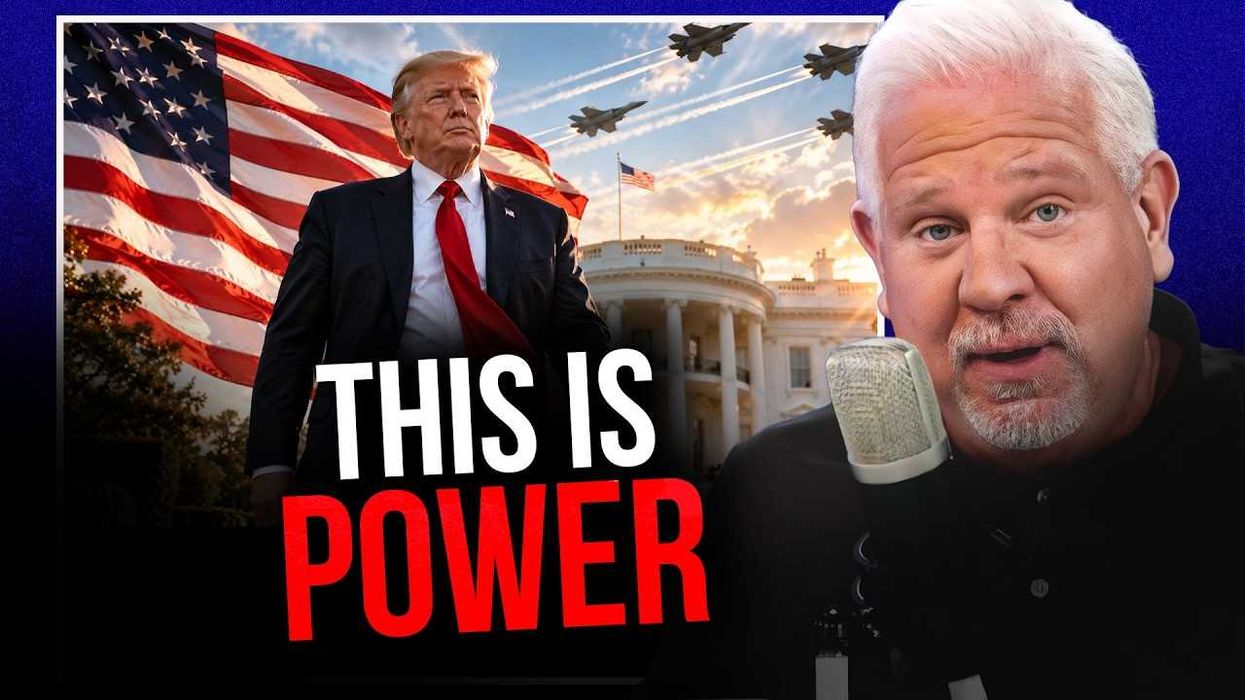

President Trump is staring down a fresh round of outrage from Democrats and the corporate press — this time because his administration aired a patriotic public-service announcement on television.
The 30-second spot celebrates American strength, economic revival, law and order, peace through strength and the country’s rejection of communism. It also features unmistakable images of the president and ends with a disclosure that it was paid for by the United States government.
That disclosure did not satisfy Trump’s critics. It became the centerpiece of their attack.
Reporter Yashar Ali posted the complete advertisement after seeing it air during a Fox News commercial break:
The Washington Post framed the spot as a taxpayer-funded political advertisement and raised the federal prohibition on using appropriated money for unauthorized “publicity or propaganda.” The paper reported that the ad had aired on Newsmax in Chicago and Fox News in Los Angeles, according to ad-monitoring firm AdImpact.
Rep. Jamie Raskin, the ranking Democrat on the House Judiciary Committee, went even further. He suggested on social media that the ad could amount to criminal misuse of government property and raised the Hatch Act, which restricts political activity by federal employees.
Those are serious words. But they do not settle the legal question — and they leave out a great deal of history.
The White House answered the controversy Friday with a blunt defense: the spot is a public-service announcement, President Trump is not on the ballot, and the ad contains no call to vote or other electoral action.
A White House spokesman gave the same explanation when the dispute first erupted:
The White House also supplied the context most of the first wave of coverage omitted. Administrations of both parties have spent public money communicating their policies, defending their records and urging Americans to take action.
George W. Bush’s administration ran a national television campaign explaining its Medicare prescription-drug overhaul and bought Super Bowl airtime for anti-drug and anti-terrorism messages.
Barack Obama’s administration advertised Obamacare subsidies and enrollment. Joe Biden’s administration poured hundreds of millions of dollars into its nationwide “We Can Do This” vaccination campaign across television, radio, print and digital media.
That history does not mean every government ad is automatically lawful. It means the existence of a government-funded message — even a flattering one — is not itself proof of criminal propaganda.
The real standard is more demanding than a newspaper headline.
The Government Accountability Office has explained that federal agencies possess broad discretion to inform the public about their programs, justify administration policy and answer attacks. In a 2004 decision involving Medicare advertising, the GAO concluded that the materials it reviewed were not so partisan as to violate the law, even while criticizing omissions and questioning whether some spending choices were prudent.
The same decision recognized the difficult line between prohibited propaganda and legitimate government communication. Congress never supplied a neat definition of “propaganda,” while federal officials have a longstanding duty to keep citizens informed about public policy.
That distinction matters here.
The Trump spot is aggressive, cinematic and unmistakably favorable to the president. Nobody watching it could miss the administration’s point of view.
But it is also openly attributed to the government, contains no request for campaign donations, names no candidate on the ballot and gives viewers no instruction to vote for Republicans.
In other words, the administration is not hiding who made the message or pretending it came from an independent news source. The disclosure critics keep pointing to is also evidence of transparency.
The White House’s rapid-response team shared Friday’s full rebuttal:
The broader political double standard is difficult to ignore.
When a Democratic administration promotes a health-care law, a vaccination campaign or an environmental rule, the spending is often described as public education. When the Trump administration makes the case for border security, American manufacturing, law enforcement and national pride, the same basic practice is suddenly branded propaganda.
Americans are free to dislike the tone of the ad. Congress is free to demand the agency name, statutory authority and total cost behind it.
The GAO can review whether its content and funding complied with appropriations law. Those are legitimate oversight questions, and the administration should answer them clearly.
But outrage is not a legal opinion, and partisan discomfort is not evidence of a crime.
The central message of the spot is that America is worth defending, prosperity is worth restoring and national strength is not something to apologize for. Democrats may hate seeing President Trump deliver that message, but patriotism does not become propaganda merely because it comes from a president they oppose.
If Washington wants a neutral rule for government communications, it should write one and apply it to every administration. Until then, the loudest critics of this advertisement should explain why their own side’s taxpayer-funded campaigns were “public education” while Trump’s celebration of America is supposedly beyond the pale.
This is a Guest Post from our friends over at WLTReport. View the original article here.
The post White House Fires Back After Critics Brand President Trump’s Patriotic PSAs ‘Propaganda’ appeared first on 100PercentFedUp.com.
Continue reading...
[H/T 100PercentFedUp]


