





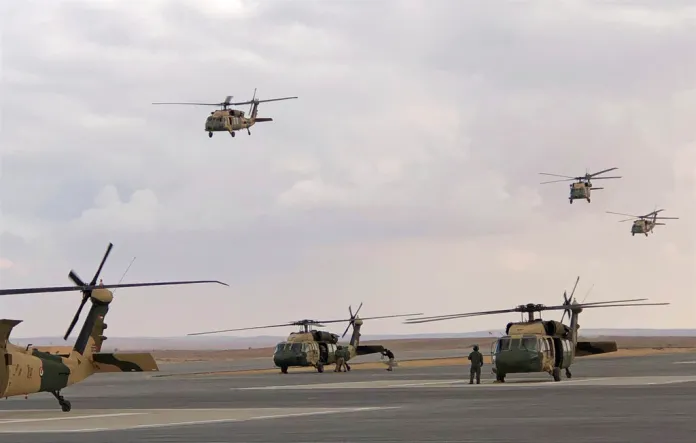
The U.S. military is warning troops against filming the aftermath of Iranian strikes, saying that the videos could be used for damage assessment and gathering intelligence.
A letter to troops dated Tuesday from U.S. Central Command head Adm. Brad Cooper, obtained by Reuters, said Iran was able to assess the success or failure of its attacks through “reactions, photos, and footage from the cellphones of our troops,” published online.
“The direct, unavoidable cost of this open-source intelligence could be measured in the lives of American service members and civilian residents in targeted Gulf countries,” Cooper wrote, ordering troops to “redouble our focus on operational security.”
U.S. Navy Capt. Tim Hawkins, Central Command’s spokesman, confirmed the authenticity of the message to the Washington Examiner, saying, “The message is a general reminder to our service members on the importance of maintaining operational security. This is one of many opportunities Admiral Cooper has used to convey operational priorities.”
A defense official told the Washington Examiner that the letter wasn’t triggered by any specific video or incident.
“Admiral Cooper always prioritizes the safety and well-being of our service members. The message is a general reminder to the force,” the official said.
Two sources familiar with the matter told Reuters that some U.S. troops in Jordan have been told their phones will be confiscated in the coming days. A third source said phone confiscations were being considered but weren’t a certainty.
A defense official told the Washington Examiner, “We won’t discuss specific measures to protect our service members and operational security,” when asked about the phone confiscation plans and the U.S. military’s operational security policies on U.S. bases.
Since the beginning of Operation Epic Fury, some of the most harrowing footage of attacks against U.S. targets throughout the Middle East has been captured on the phones of service members.
A three-minute video posted online by a service member stationed at Muwaffaq Salti Air Base in Jordan, the base where three troops were killed in a July 17 attack, showed the process by which service members leave their posts and take cover at a nearby bomb shelter during a missile attack. The video went viral, and its publication was criticized as a major operational security failure, showing the location where troops take shelter.
IRAN FIRES MISSILES AT US FORCES IN JORDAN, ENDING BRIEF LULL IN ATTACKS
The problems of warfare in the modern age, where personal smartphones are now ubiquitous, have already been shown in conflicts across the world, with personal videos filmed on phones and posted online posing problems for forces in areas ranging from the central Sahel to Syria.
The Russia-Ukraine war, by now the most filmed war in history, has been the worst violator due to the advanced nature of their respective intelligence services. Videos filmed on phones by soldiers on both sides have been used to geolocate and destroy manned positions, while in other cases, tracking cellular data has been used to carry out deadly strikes.
Continue reading...
[ H/T Washington Examiner ]