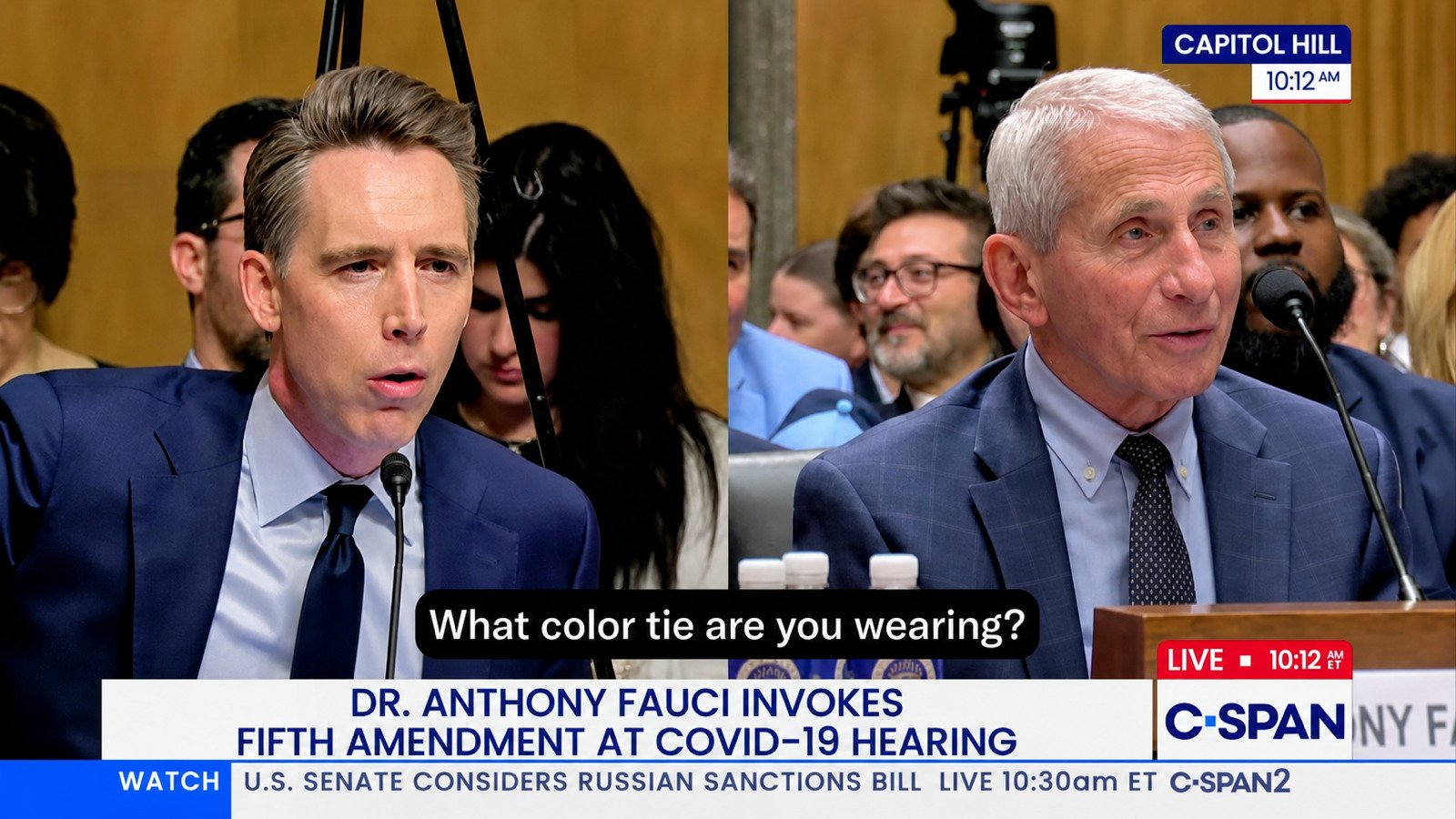




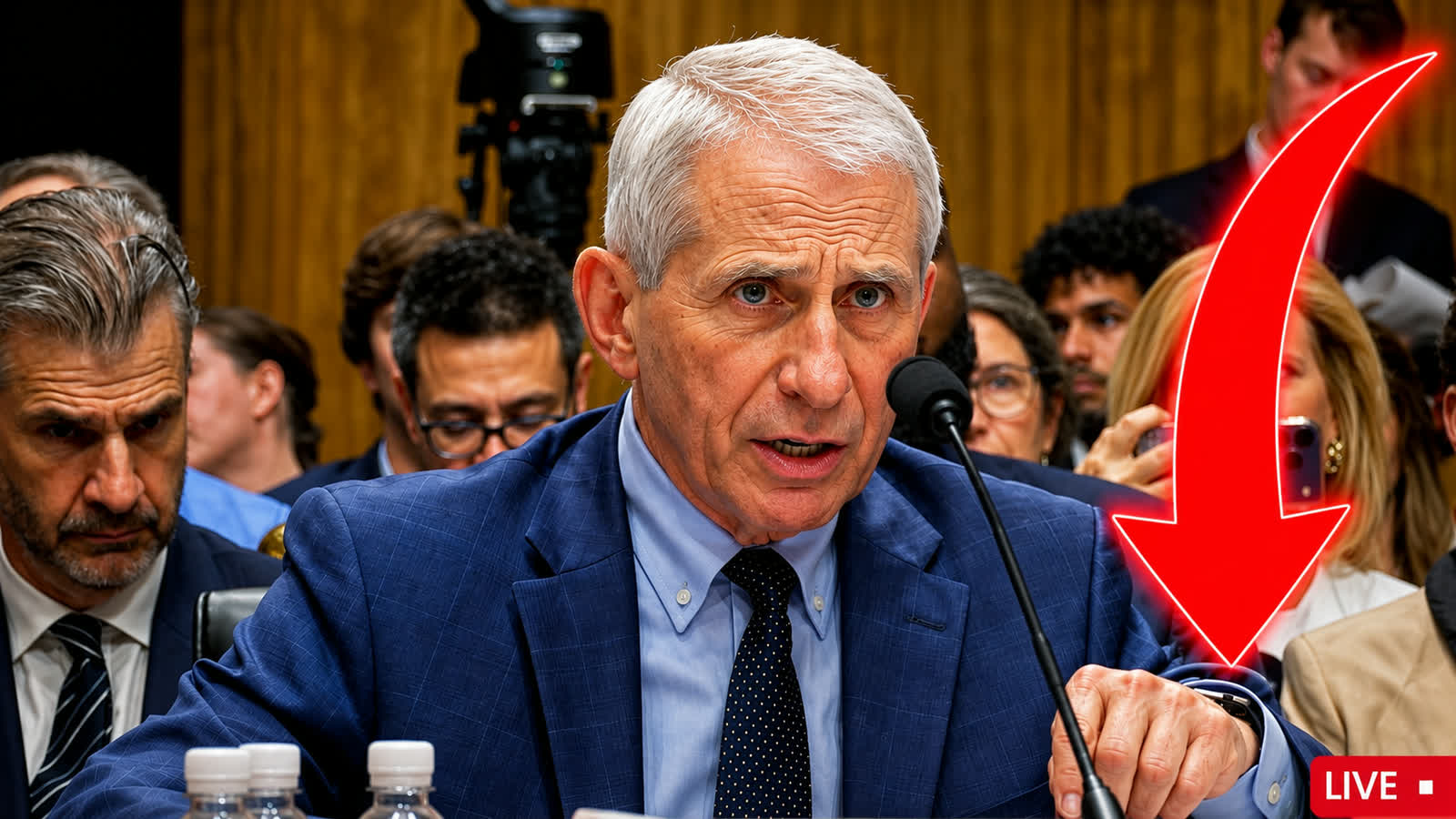
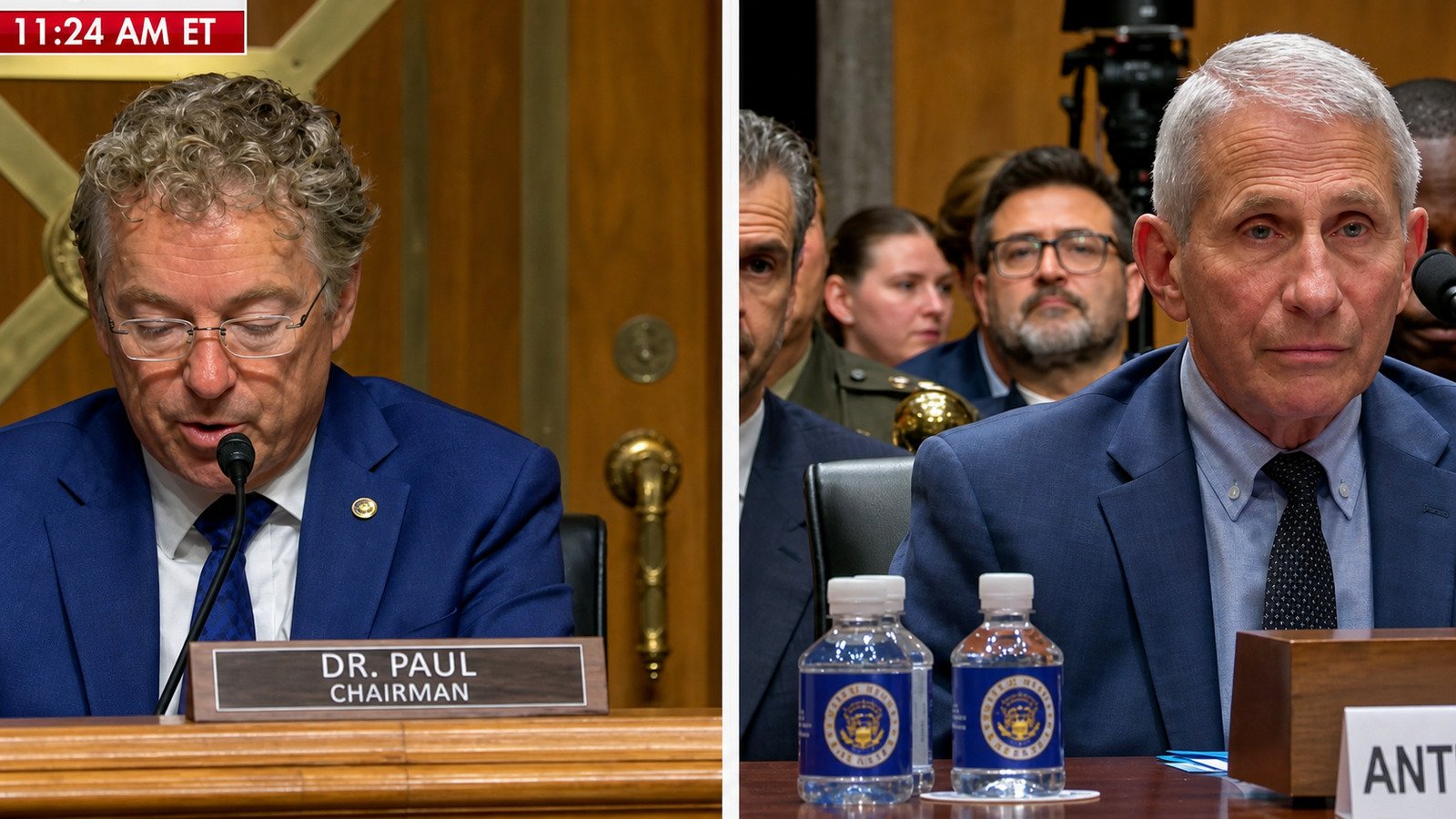
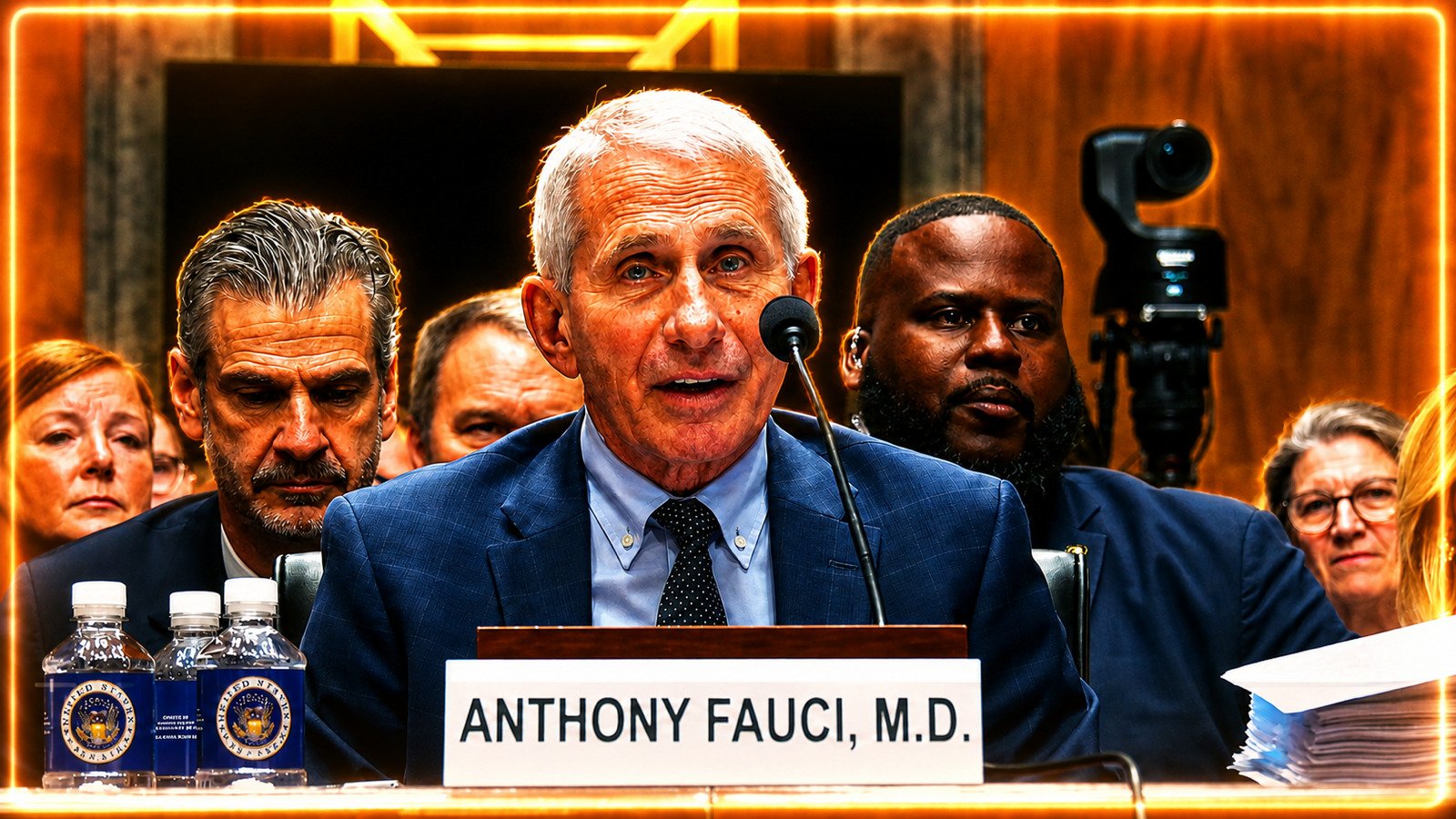
Anthony Fauci spent Wednesday morning refusing to answer question after question before the Senate Homeland Security and Governmental Affairs Committee.
He invoked the Fifth Amendment dozens of times, even when Chairman Rand Paul asked whether a folder was sitting in front of him.
But one fact made the spectacle far more complicated: former President Joe Biden gave Fauci a sweeping federal pardon before leaving office.
That immediately raised a serious legal question. If Fauci cannot be prosecuted for the conduct the committee was examining, could he still claim that answering would incriminate him?
The pardon is not rumor or political shorthand. Its actual scope is enormous.
The Justice Department’s Office of the Pardon Attorney says Biden granted Fauci a “full and unconditional pardon” for any federal offenses he may have committed from January 1, 2014, through January 19, 2025. The official record names Fauci personally and reproduces the precise scope of the clemency warrant.
It covers conduct arising from Fauci’s service as NIAID director, a member of the White House Coronavirus Task Force or COVID-19 Response Team, and chief medical adviser to the president.
The warrant does not list a charge, conviction or specific suspected offense. It reaches any offense against the United States tied “in any manner” to those government roles during the covered period.
That distinction matters. The pardon is federal and backward-looking.
It protects covered conduct before January 19, 2025, but it does not authorize a new crime after that date or erase any separate exposure that might exist under state law.
The Justice Department’s public clemency record lists no sentence because Fauci had not been convicted. Biden issued the protection preemptively.
That language reaches the very government roles at the center of Wednesday’s questions. It also explains why the 2014 start date drew immediate attention online.
The hearing itself was official, subpoenaed and remarkably direct.
The Senate Homeland Security and Governmental Affairs Committee listed Fauci as the sole witness for its July 29 hearing. Senators questioned him about pandemic-era research funding, the Wuhan Institute of Virology, gain-of-function research and prior statements to Congress.
Fauci said Paul’s repeated calls for prosecution made the hearing a trap designed to produce a new criminal case. On advice of counsel, he declined to answer.
Paul continued through a long list of questions so the record would show exactly what Fauci refused to address. The subjects included federal grants, EcoHealth Alliance, research in China and whether Fauci’s past testimony matched what investigators later found in government records.
The confrontation became so broad that Fauci invoked the Fifth when Paul asked whether a folder was sitting in front of him. Paul said the committee could seek a contempt citation and refer the dispute to the Justice Department.
Paul and Senator Josh Hawley argued that the pardon removed the federal jeopardy Fauci claimed to fear. Hawley then accused him of obstructing Congress by refusing to testify.
JUST IN: Sen. Josh Hawley grills the CRAP out of Fauci, saying he has NO RIGHT to obstruct by pleading the 5th
"Your lawyer sitting behind you now shifting nervously in their chairs. They know it!"
"You got RICH while people were DYING…you were using federal employees with… pic.twitter.com/YLUsqPWW5w
— Eric Daugherty (@EricLDaugh) July 29, 2026
There is strong Supreme Court authority behind the senators’ central point.
In Glickstein v. United States, the Supreme Court said government may compel testimony when the witness receives complete immunity equal to the Fifth Amendment’s protection.
The Court also made clear that immunity covers past conduct. It does not give a witness permission to lie under oath, because a new act of perjury remains prosecutable.
A full federal pardon can operate in a similar way for conduct inside its scope: if prosecution for that past conduct is no longer possible, the danger of federal self-incrimination may disappear with it.
Glickstein involved testimony compelled under a federal bankruptcy law, not a presidential pardon or congressional hearing. Still, its rule goes directly to the clash on Capitol Hill: complete protection from prosecution can remove the constitutional basis for silence while leaving the witness fully exposed for any new false statement.
That is why the committee’s argument cannot be dismissed as political theater. If Biden’s pardon is complete protection for every federal offense implicated by a particular question, Fauci may have no federal crime left against which that answer could incriminate him.
That still does not make every invocation automatically “illegal.”
The pardon covers offenses against the United States through January 19, 2025. It does not pardon future crimes, and a presidential pardon cannot erase exposure under state law.
The Supreme Court has also warned against punishing a witness simply for asserting the privilege in good faith. In Maness v. Meyers, a lawyer advised his client not to produce subpoenaed material that could be incriminating.
The Court protected the lawyer’s good-faith advice and explained that forcing production first would destroy the very right the Fifth Amendment was meant to preserve. It also recognized that a witness may risk contempt to obtain judicial review before surrendering the claimed protection.
Maness did not decide that every refusal is valid. It protected the process for testing a serious claim before the potentially incriminating evidence is disclosed and the constitutional protection is lost forever.
That gives Fauci room to assert the privilege first, but it does not guarantee that his assertion will survive once the committee challenges it.
Under Hoffman v. United States, the privilege can reach an answer that would supply only one link in a chain leading to prosecution. The witness does not have to prove the whole criminal case against himself before remaining silent.
Hoffman also requires reasonable cause to fear danger from the answer. That is where Fauci’s pardon becomes decisive: his lawyers would need to identify some genuine criminal exposure that Biden’s federal pardon did not remove.
A generalized fear of hostile questioning would not settle the issue.
So the clean legal answer is this: Fauci’s pardon gives the committee a powerful argument that he had no valid federal Fifth Amendment privilege concerning covered pandemic-era conduct.
But a contempt finding would still require the committee, and potentially a court, to examine the scope of the pardon, the particular questions and any remaining criminal exposure.
What Americans witnessed was not a courtroom ruling that Fauci broke the law. It was a constitutional showdown over whether a man protected by one of the broadest pardons imaginable could still refuse to tell Congress what happened.
And after dozens of invocations, that question may now be headed for a much more serious test.
Continue reading...
[ H/T WLT Report ]