









US Bombing Campaign Effectiveness In Doubt As Iranians Rebuild At Rapid Pace
Neocon war hawks thought that Iran's defense capabilities could be obliterated through shock and awe style heavy bombing raids, such as during the opening days and weeks of Operation Epic Fury, but just like pretty much every other assumption about how things would go in the little Iran "excursion" - they are once again proven wrong.
Several fresh reports from both American and Israeli sources say that Iran is rebuilding damaged and destroyed facilities at much faster-than-expected pace. This is despite the well over 20,000 US-Israeli strikes carried out at the height of the war.
Analyzing the latest satellite imagery assessing the damage, The Wall Street Journal writes that the Islamic Republic has "quickly rebuilt infrastructure damaged during the U.S. and Israeli bombing campaign over recent months, from missile bases nestled deep inside mountains to bridges, ports and production facilities, according to Israeli and Western officials and a review of satellite imagery."
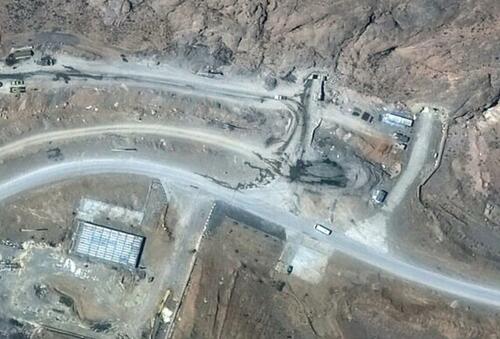
Handout satellite image courtesy of Vantor shows tunnel entrances at a missile complex in Isfahan, in central Iran. via Vantor/AFP
The publication says that this is a significant factor in explaining how the Iranians have managed to maintain their grip on the Strait of Hormuz and thus serious economic and political leverage.
Everything from roads to bridges to tunnel entrances have also be restored at surprising speeds, which also suggests the US bombings have had a rallying effect among civic workers and the broader population in support of the nation and the government.
WSJ offers but one example as follows: "Near Kangavar, in western Iran, satellite imagery from Planet Labs in March showed two tunnel entrances and an access road damaged by airstrikes aimed at blocking access to an Iranian missile base. Within weeks, imagery from Airbus revealed a neatly paved road leading to freshly excavated entrances."
Israeli media too has listed out the following further examples:
This is causing US and Israeli officials to revisit strategy concerning potential future major bombing campaigns over Iran.
It was in April that the US and Israel began ramping up attacks on bridges and rail lines to cripple Iran's national transport network. Israel especially adopted attacks against key civilian infrastructure as a battle tactic, in hopes that eventually there would be a groundswell of anti-Tehran anger domestically, leading to government overthrow. Of course, regime change has never happened, and is proving an illusive Neocon fantasy.
President Trump himself had also at the time repeatedly threatening to bomb bridges, power plants, and other infrastructure to send Iran "back to the Stone Age."
Iranian officials say multiple damaged rail lines and bridges have been restored in record time - sometimes within 40 to 96 hours - using domestic engineering teams. The ceasefire which was declared on April 8, but which is now defunct, was used as a time of rapid rebuilding - something which even US officials have acknowledged.
Tyler Durden Fri, 07/24/2026 - 15:20
Continue reading...
[ H/T ZeroHedge ]
Neocon war hawks thought that Iran's defense capabilities could be obliterated through shock and awe style heavy bombing raids, such as during the opening days and weeks of Operation Epic Fury, but just like pretty much every other assumption about how things would go in the little Iran "excursion" - they are once again proven wrong.
Several fresh reports from both American and Israeli sources say that Iran is rebuilding damaged and destroyed facilities at much faster-than-expected pace. This is despite the well over 20,000 US-Israeli strikes carried out at the height of the war.
Analyzing the latest satellite imagery assessing the damage, The Wall Street Journal writes that the Islamic Republic has "quickly rebuilt infrastructure damaged during the U.S. and Israeli bombing campaign over recent months, from missile bases nestled deep inside mountains to bridges, ports and production facilities, according to Israeli and Western officials and a review of satellite imagery."
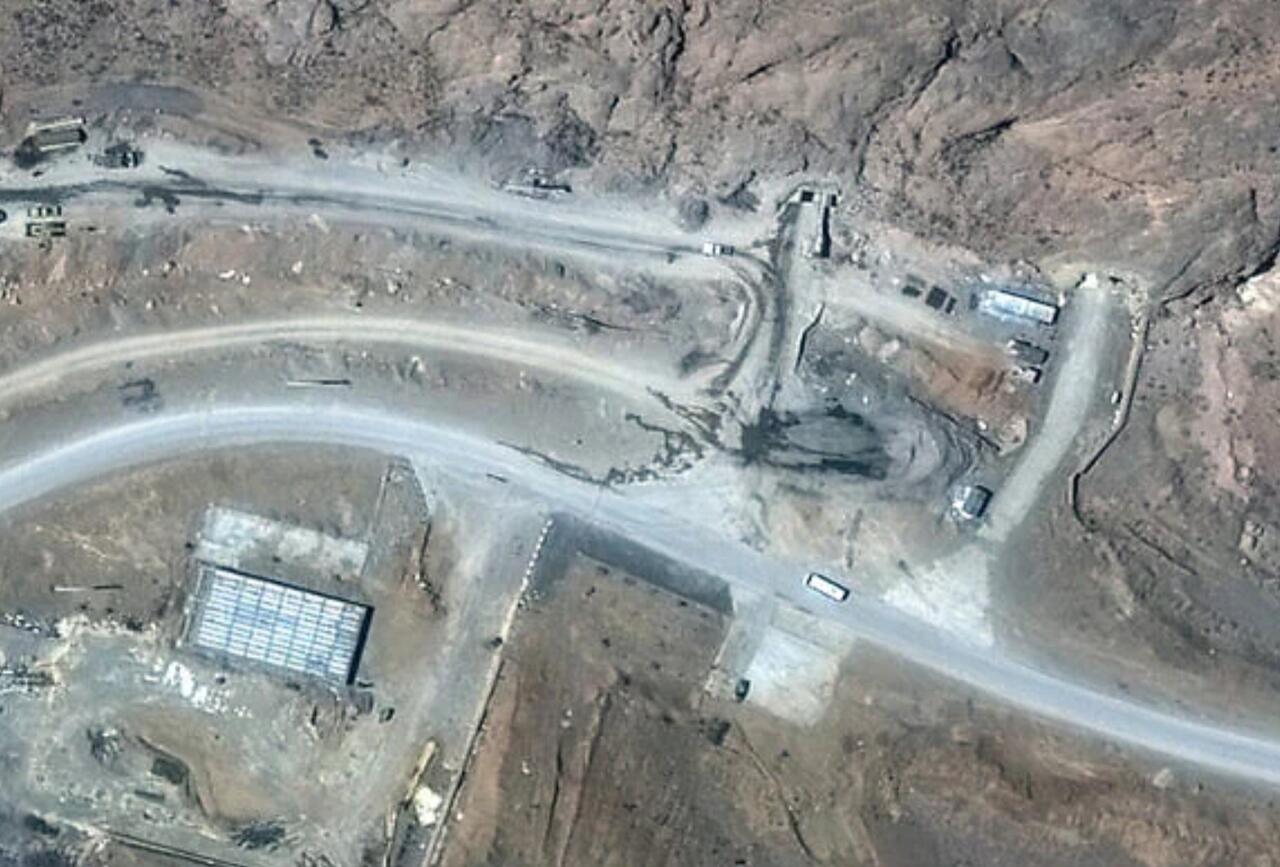
Handout satellite image courtesy of Vantor shows tunnel entrances at a missile complex in Isfahan, in central Iran. via Vantor/AFP
The publication says that this is a significant factor in explaining how the Iranians have managed to maintain their grip on the Strait of Hormuz and thus serious economic and political leverage.
Everything from roads to bridges to tunnel entrances have also be restored at surprising speeds, which also suggests the US bombings have had a rallying effect among civic workers and the broader population in support of the nation and the government.
WSJ offers but one example as follows: "Near Kangavar, in western Iran, satellite imagery from Planet Labs in March showed two tunnel entrances and an access road damaged by airstrikes aimed at blocking access to an Iranian missile base. Within weeks, imagery from Airbus revealed a neatly paved road leading to freshly excavated entrances."
Israeli media too has listed out the following further examples:
This is causing US and Israeli officials to revisit strategy concerning potential future major bombing campaigns over Iran.
It was in April that the US and Israel began ramping up attacks on bridges and rail lines to cripple Iran's national transport network. Israel especially adopted attacks against key civilian infrastructure as a battle tactic, in hopes that eventually there would be a groundswell of anti-Tehran anger domestically, leading to government overthrow. Of course, regime change has never happened, and is proving an illusive Neocon fantasy.
President Trump himself had also at the time repeatedly threatening to bomb bridges, power plants, and other infrastructure to send Iran "back to the Stone Age."
Iranian officials say multiple damaged rail lines and bridges have been restored in record time - sometimes within 40 to 96 hours - using domestic engineering teams. The ceasefire which was declared on April 8, but which is now defunct, was used as a time of rapid rebuilding - something which even US officials have acknowledged.
Tyler Durden Fri, 07/24/2026 - 15:20
Continue reading...
[ H/T ZeroHedge ]