




.jpg)

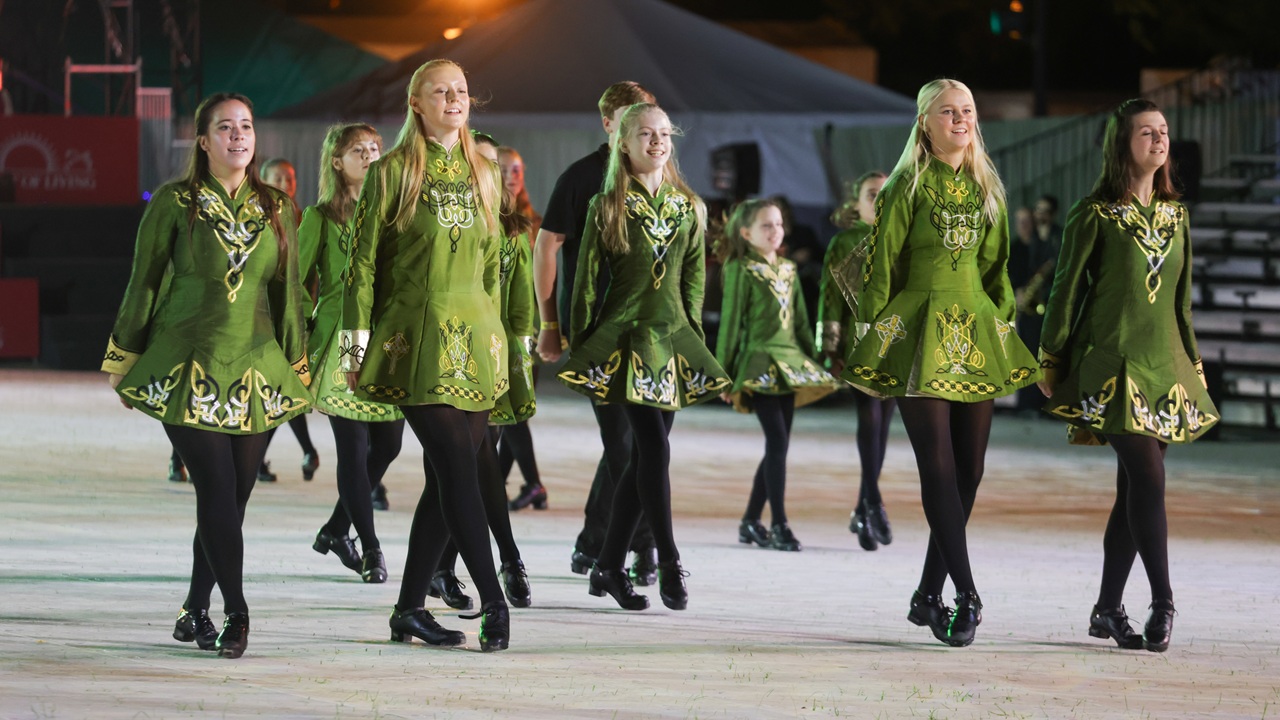
The June 30 Supreme Court ruling defending states’ right to ban trans-identifying men from women’s sports is already paying dividends, including in sports that had previously skirted U.S. law on American soil.
Since 2023, the world’s largest Irish dance organization, An Coimisiún le Rinci Gaelacha (CLRG), together with the Irish Dance Teachers Association of North America (IDTANA), has permitted a young man who identifies as female to compete in girls’ competitions. He now participates in the Girls Under 17 category at the regional, North American, and world levels.
Compared with girls, males possess naturally superior lung capacity, denser bones, and significantly greater muscle mass. The young male dancer’s record reflects this unjust advantage over the girls with whom he competes. He has repeatedly taken regional titles, World Championship qualifications, and extremely high placements at international competitions, including the World and North American Championships.
Even after President Donald Trump’s executive order banned men from women’s sports, CLRG, as an Irish organization, claimed immunity from American law. As a woman who competed up to the World Championship level in Irish dance, one of the authors of this piece has personally witnessed, and taken part in, the widespread response against this injustice.
Thousands of dancers and supporters signed petitions protesting CLRG’s policy. Many of us wrote op-eds. Dance teachers pressed high-level internal dissent. And yet, those defending biological standards of fairness in Irish dance were fighting an uncertain battle.
Until now.
The North American Irish Dance Championships (NAIDC), a world-qualifying opportunity for dancers from North America, has just concluded. Once again, CLRG and IDTANA were fully prepared to deny the Girls Under 17 a fair competition.
But they made one miscalculation: holding the event in Orlando, Florida.
On June 26, Florida Attorney General James Uthmeier issued a letter warning CLRG and IDTANA that their policy comprised an infraction of the Florida Civil Rights Act, which protects women from sex-based discrimination in public spaces.
Thanks to a series of laws passed by the Florida state legislature, the term “woman” and the rights that follow are unambiguous. Uthmeier also argued that the organizations were violating the Florida Deceptive and Unfair Trade Practices Act by advertising, but failing to provide, women’s competitions.
Uthmeier gave CLRG and IDTANA until June 30 to confirm that they would not permit men to compete in women’s categories at the upcoming NAIDC or at any future events held in Florida.
On June 30, the day of Uthmeier’s deadline, the Supreme Court handed down a consolidated ruling in favor of West Virginia and Idaho laws that protect equal opportunity in sports for girls and women. In effect, the Court’s majority opinion recognizes as constitutional not only the laws of West Virginia and Idaho, but also those of the 25 other states that currently protect women’s sports—including Florida.
CLRG and IDTANA made no public response to Attorney General Uthmeier. But to his credit, the young man in question recognized the futility of resisting both Florida and the Supreme Court. He withdrew from the Girls Under 17 competition.
For those dancers from his region, Southern USA, this was the first fair major championship in three years. Talented girls worked hard to earn a World Qualification and a top 10 placement, which would otherwise likely have been stolen from one or more of them.
More importantly, every girl in the competition was accorded the dignity that she deserved. No longer was her womanhood reduced to less than the value of a boy’s emotions. For the hundreds of girls in the Under 17 age group, the long struggle against an unscientific and degrading policy is at last turning in their favor.
And fortunately for them, the next major championship, the Southern Region Oireachtas, will be held in Texas, which also protects women’s sports. With no boys qualifying at either the North American or Regional competition, the girls’ competition at the World Championships will also be fair play.
If this victory for Irish dancers teaches us anything, it’s that a great executive order is not sufficient to fully protect our rights. We need state laws and fair courts, too. It was the state of Florida, backed by a Supreme Court decision, that guaranteed fairness in this competition.
State law can make or break equal opportunity for hundreds—if not thousands—of girls. It is past time for the 23 states that still fail to protect women’s sports to value their girls more than their radically unscientific and unjust ideology.
Continue reading...
[ H/T The Daily Signal ]