





AS OF 11:14 P.M. CENTRAL — TUESDAY, NOVEMBER 3, 2026
This is the final scheduled election-night update, and the map has moved in a major way over the last hour.
Decision Desk HQ now projects Democrats will win control of the House, while the Associated Press reports that Democrats have also secured Senate control after flipping five seats. The actual vote count is still moving in dozens of House districts, so the control dashboards below keep called seats, uncalled seats, current race leaders, and projections in separate lanes.
Here is the cleanest way to read this update: final polling is included only as a pre-election benchmark; the AP Voter Poll is identified as a voter survey; race calls are listed as projections; and reported vote totals remain unofficial until election authorities complete their canvasses and certification.
WHAT CHANGED SINCE THE PRIOR HOURLY UPDATE
The biggest change is the House. DDHQ has now projected Democratic control and shows 218 Democratic seats called to 124 Republican seats called, with 93 races still uncalled.
DDHQ reports 23 Democratic pickups. Its public snapshot did not separately publish a single lead-only total for the remaining uncalled contests, so this article does not manufacture one or add current leaders to the called count.
The Senate picture also hardened. DDHQ shows 52 seats in the Democratic column, including aligned independents, to 40 Republican seats, with eight still uncalled and 51 needed for a majority.
AP reports five Democratic pickups and says Democrats have won control.
The late Senate calls are brutal for Republicans: Texas, South Carolina, North Carolina and Ohio all landed in the Democratic column, while Michigan remained uncalled in the latest verified snapshot used here.
PRE-ELECTION POLLING — NOT VOTE RESULTS
These numbers describe voter intentions measured before the ballots were counted. They are not election returns, race calls or final results.
In Texas, the final Research Co. survey conducted October 31 through November 2 among 450 likely voters showed Democrat James Talarico at 49% and Republican Ken Paxton at 46%, a Talarico lead of three points.
The final poll proved directionally right, but the reported vote margin at 84% reporting was much larger.
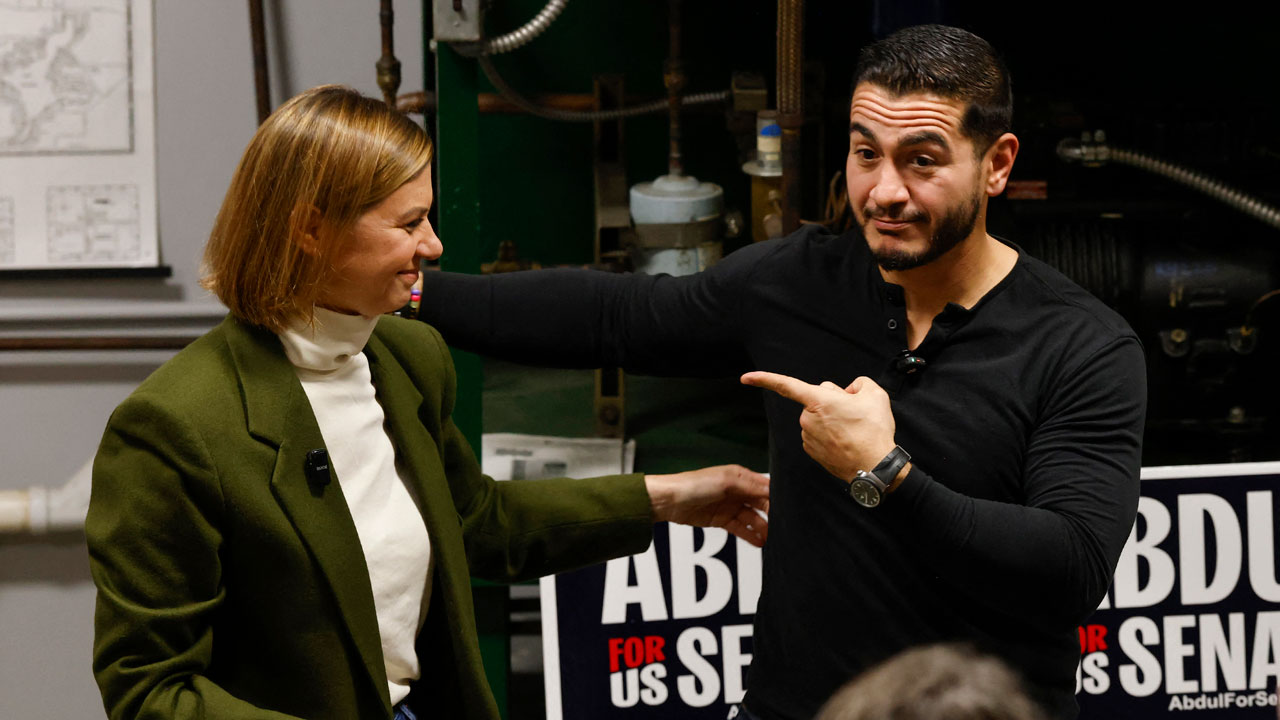
In Michigan, the final 270toWin average of 11 polls put Abdul El-Sayed at 50.8% and Mike Rogers at 44.9%, an El-Sayed advantage of 5.9 points. Individual poll samples varied.
The live count was far tighter: El-Sayed led by barely more than one point with 53% reporting.
In New Hampshire, the final AtlasIntel poll on November 1 surveyed 1,057 likely voters and found Chris Pappas at 52.3% to John Sununu at 44.2%, a Pappas lead of 8.1 points. Pappas was later projected the winner.

270toWin compiled the final Michigan average and listed the underlying late polls, their samples and their final candidate shares. The average had El-Sayed ahead, but the live results demonstrate why a polling average should never be presented as a vote count.
VOTER SURVEY — NOT A VOTE COUNT
No separate traditional exit-poll dataset with a fully published national topline was used in this update. Instead, the available evidence comes from the AP Voter Poll, which is a voter survey conducted by SSRS for AP and a consortium of major news organizations.
The survey combined probability-based and nonprobability interviews with registered voters in all 50 states, fielded October 19 through November 3 in Alaska and October 22 through November 3 elsewhere. AP reported a sampling error of plus or minus 0.6 percentage points for the full sample.
The Associated Press reported that roughly four in ten voters said their congressional vote was intended to express opposition to President Trump, while about six in ten disapproved of his job performance.
Those findings describe attitudes among surveyed voters. They are not ballots, and they are not added to any reported-result total.
The same survey found roughly three quarters of voters angry or dissatisfied with the country’s direction. AP also reported that voters who had President Trump in mind were about twice as likely to be expressing opposition as support, giving the election-night results a clear national backdrop without pretending the survey itself counted a single ballot.
RACE PROJECTIONS AND CALLS — SEPARATE FROM FINAL RESULTS
A call means a results organization has determined that the trailing candidate has no realistic path to victory based on the available vote, the remaining ballot universe and other election data. It does not mean the state has certified a final result.
Texas Senate — PROJECTED/CALLED: DDHQ called the race for James Talarico at 9:14 p.m. Central. At 10:49 p.m. Central, Talarico led Ken Paxton 55.06% to 43.20% with 84% reporting.
South Carolina Senate — PROJECTED/CALLED: DDHQ called Annie Andrews over Darline Graham at 8:54 p.m. Central. At 10:58 p.m. Central, Andrews led 51.14% to 46.87% with 93% reporting.
North Carolina Senate — PROJECTED/CALLED: DDHQ called Roy Cooper over Michael Whatley at 7:23 p.m. Central. At 11:12 p.m. Central, Cooper led 58.63% to 39.13% with more than 95% reporting.
New Hampshire Senate — PROJECTED/CALLED: AP and DDHQ called the race for Chris Pappas. DDHQ’s 10:54 p.m. Central snapshot showed Pappas at 57.33% and John Sununu at 40.86% with 73% reporting.
The AP put its New Hampshire declaration on the record:
Georgia Senate — PROJECTED/CALLED: Jon Ossoff held the Democratic seat against Mike Collins. DDHQ called the race at 6:18 p.m. Central and later showed Ossoff at 59.02% to Collins at 40.98% with more than 95% reporting.
DDHQ’s Georgia call arrived early and removed one of the GOP’s hoped-for pickup opportunities:
Michigan Senate — VOTES REPORTING: This race was not called in the verified snapshot. At 11:12 p.m. Central, Abdul El-Sayed led Mike Rogers 49.65% to 48.44%, with 53% reporting.
The status remains VOTES REPORTING, not projected and not final.
CONFIRMED REPORTED RESULTS — UNOFFICIAL AND NOT CERTIFIED
The totals below are confirmed as reported by DDHQ at the stated timestamps. They remain unofficial reported returns.
A projection badge is shown separately and does not convert these numbers into certified final results.
SENATE CONTROL DASHBOARD
Called seats: 52 Democratic-aligned, 40 Republican. Uncalled: 8.
Majority threshold: 51. Lead-only count: not separately published in the DDHQ snapshot.
Pickups: AP reports five Democratic pickups. Projection: DDHQ and AP say Democrats have won Senate control.

Decision Desk HQ provides the live Senate control count and individual race returns. Texas showed Talarico with 4,609,382 votes to Paxton’s 3,616,142 at 84% reporting.
South Carolina showed Andrews with 1,034,418 to Graham’s 948,133 at 93%. North Carolina showed Cooper with 2,453,913 to Whatley’s 1,637,481 at more than 95%.
Michigan showed El-Sayed with 1,312,652 to Rogers’ 1,280,601 at 53%.
The desk had already called Texas, South Carolina and North Carolina before this snapshot, while Michigan remained uncalled. That distinction matters: the first three panels pair reported returns with a separate call time, while the Michigan panel shows only the live count and reporting level.
DDHQ’s control page also kept eight Senate races in the uncalled column. The 52–40 count therefore records called seats only and does not silently fold the remaining leaders into either party’s total.
HOUSE CONTROL DASHBOARD
Called seats: 218 Democratic, 124 Republican. Uncalled: 93.
Majority threshold: 218. Lead-only count: not separately published in the DDHQ snapshot.
Pickups: 23 Democratic. Projection: DDHQ projects Democratic control.

The Pennsylvania cluster delivered some of the clearest House shocks. In Pennsylvania’s 8th District, Paige Cognetti was projected over Republican Rep. Robert Bresnahan and led 54.37% to 45.63% with 90% reporting.
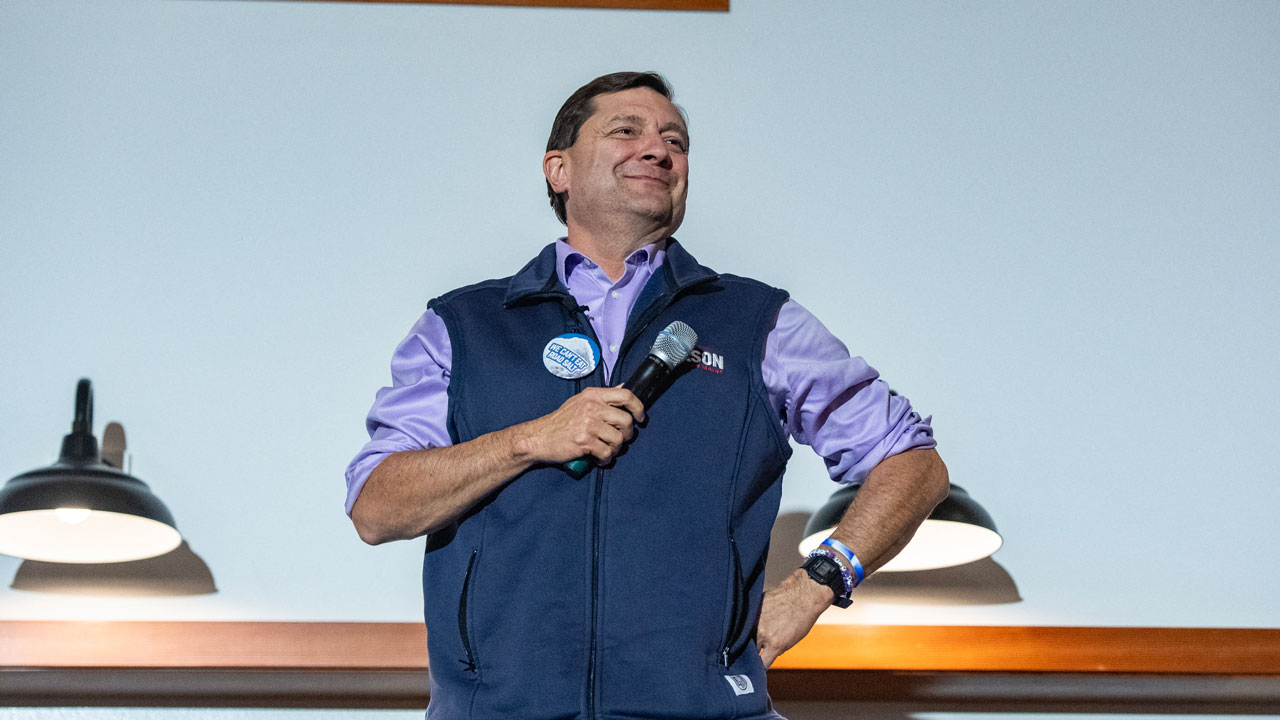
In Pennsylvania’s 10th, Janelle Stelson was projected over Republican Rep. Scott Perry and led 55.03% to 44.97% with 93% reporting.
DDHQ posted the Pennsylvania 8th call with the exact projection time:
Two other consequential districts remained in the VOTES REPORTING category in the snapshot. In New York’s 17th, Cait Conley led Republican Rep. Michael Lawler 52.36% to 47.64%, or 125,994 votes to 114,620, with 81% reporting.
In Pennsylvania’s 1st, Bob Harvie led Republican Rep. Brian Fitzpatrick 53.26% to 46.74%, or 145,749 votes to 127,899, with 69% reporting.
Decision Desk HQ shows the called-seat count, the 218-seat majority line, the 23-seat Democratic pickup figure and live district margins. Its control projection is a media projection, not a certification by election officials.
The desk’s live page put Democrats exactly on the 218-seat majority threshold with 124 Republican seats called and 93 contests still uncalled. The projection rested on more than the already-called seats, but this update preserves that distinction instead of turning a forecast about the remaining map into a larger called-seat number.
The battleground list showed Democratic movement across Pennsylvania, Ohio, North Carolina and other clusters. Pennsylvania’s 8th and 10th were in the called column, while New York’s 17th and Pennsylvania’s 1st still carried live margins without a call in the snapshot used for this article.
That is why the House dashboard prints the projection, called totals, pickup count and uncalled total on separate lines. Each number answers a different election-night question, and none of them should be substituted for certified final returns.
THE BOTTOM LINE
Republicans entered the night defending narrow control of Congress. By the final scheduled update, the available race calls pointed to Democrats taking both chambers.
The Senate control call is backed by a string of Democratic flips in states President Trump carried comfortably. The House projection is backed by 23 reported Democratic pickups and decisive movement through the Pennsylvania cluster, but 93 House races were still uncalled in the latest snapshot.
That means two facts can be true at once: the control outlook has changed dramatically, and millions of ballots are still being counted. Called seats are called seats.
Current leaders are current leaders. Uncalled races remain uncalled.
Certification comes later.
We will keep those categories separate, because election-night speed is never an excuse to blur what the numbers actually mean.
Continue reading...
[ H/T WLT Report ]


