






Washington Examiner economics columnist Tiana Lowe Doescher said President Donald Trump’s order creating a women’s health office at the National Institutes of Health could save lives.
“This is sort of a clinical answer, but like this is important for the bottom line of an economy,” Doescher said. “American medical science is really, really, really good at finding the stuff that imminently kills people and learning how to make it less fatal.”
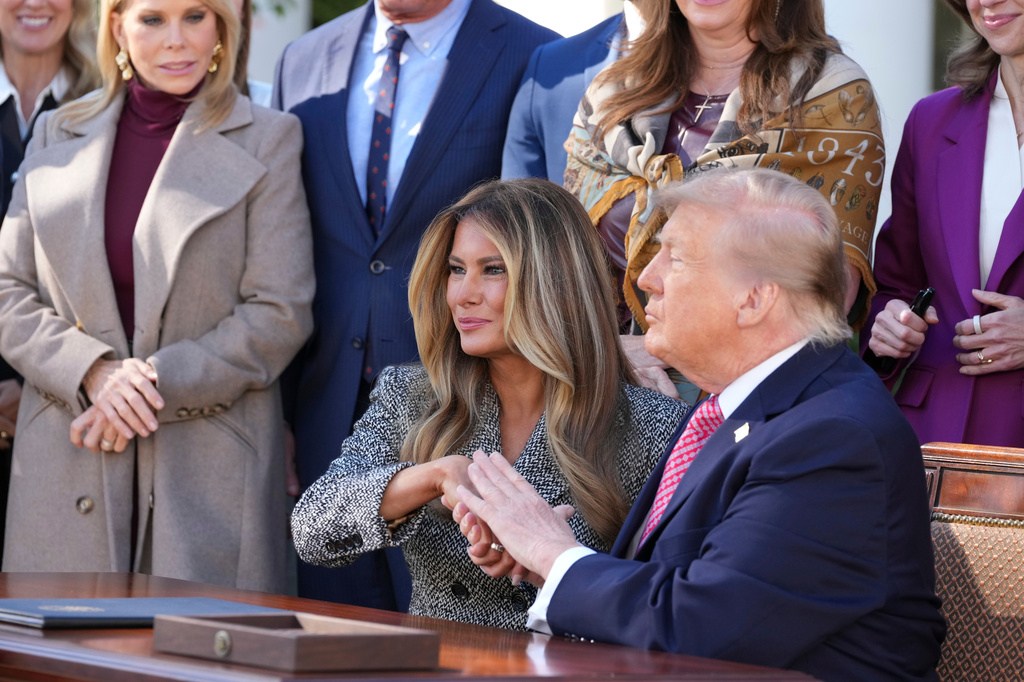
The executive order was prompted by first lady Melania Trump, who was with the president Monday during the signing in the White House Rose Garden. Trump said he was surprised to learn there wasn’t already a division dedicated to women’s health.
“When I heard about it, I said, ‘Are you sure they don’t have that?’” the president said. “Who the hell wouldn’t have a women’s health division? Melania said, ‘They don’t have it.’”
Doescher said women’s health issues have been neglected in comparison to other research areas.
“Like cancer, adjusted death rates have gone down, including in breast cancer because we have gotten much more aggressive with the research,” Doescher said. “But it’s lots of female-specific chronic diseases like endometriosis, like PMOS, used to be PCOS, things like that have been historically completely ignored by medical professionals.”
Doescher said women are often told they “make it all up” when it comes to health concerns.
“And also, for me, you know, when I had my daughter I had severe preeclampsia at the end, and that’s something that’s like, it’s the No. 1 killer, I think, of postpartum women,” Doescher said.
TRUMP CREATES NIH WOMEN’S HEALTH OFFICE AHEAD OF MIDTERM ELECTIONS
Preeclampsia is a serious medical condition that typically occurs midway through pregnancy. Women with preeclampsia can experience high blood pressure, protein in their urine, swelling, headaches, and blurred vision, according to Cleveland Clinic.
“Some people have to deliver incredibly early, if you do more research into figuring out what causes that in the placenta, is there a treatment early on you can do,” Doescher said.
Continue reading...
[ H/T Washington Examiner ]