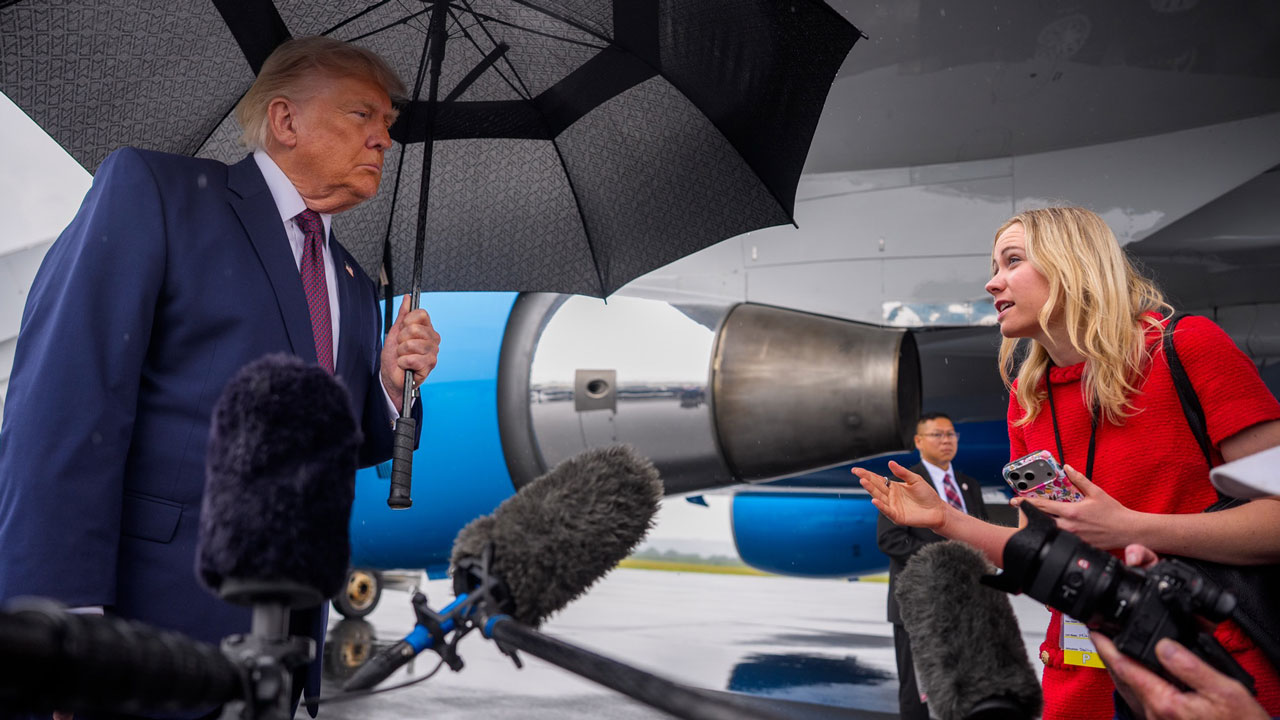
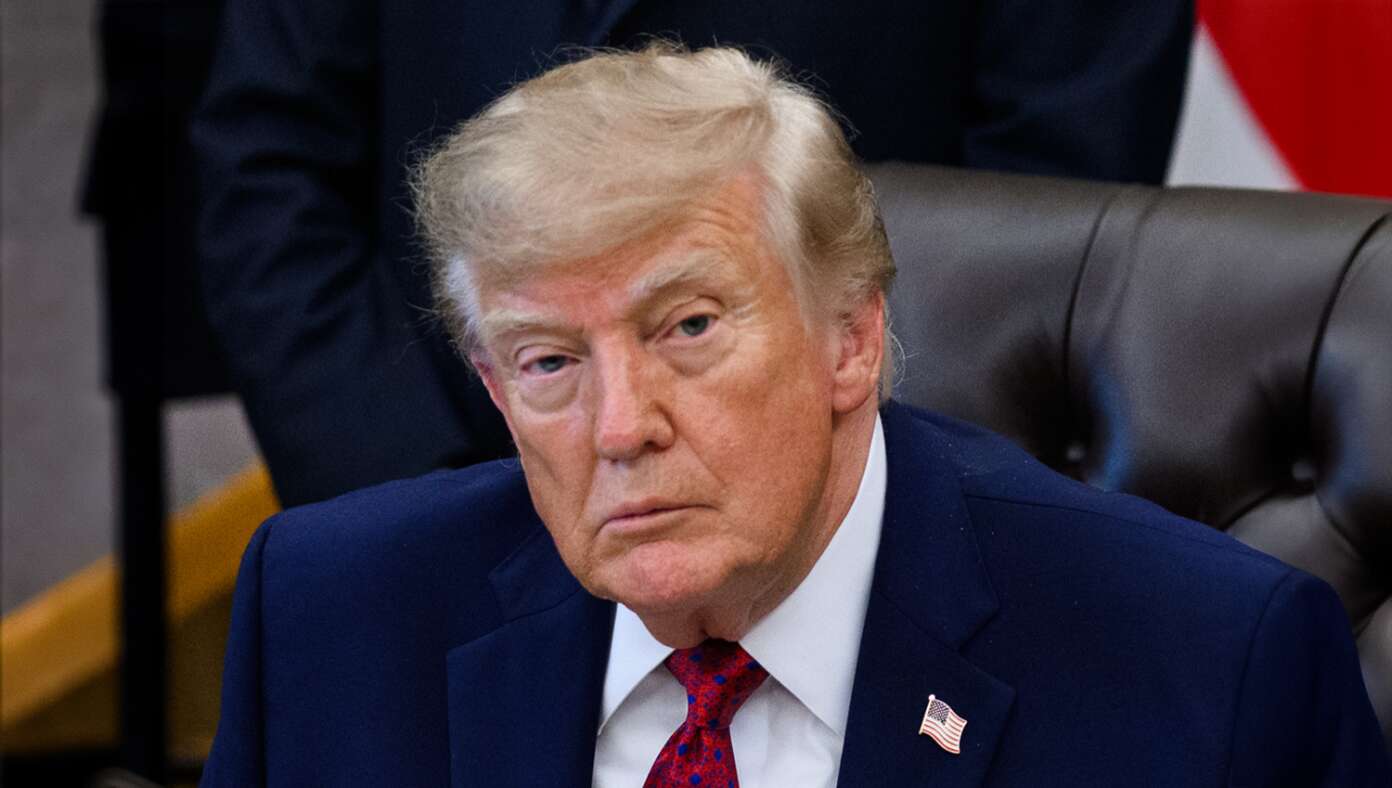


President Donald Trump thinks the upcoming contest to replace him as the Republican standard-bearer will be a “somewhat” open primary process.
“They say whoever Trump endorses is going to win or whoever Trump picks is going to win,” Trump said following the midterm wipeout. “I don’t know if that’s true or not, but they asked that question two nights ago.”
Clearly, the president believes his blessing will still be decisive. He has spent a decade testing his thesis that he could shoot someone on Fifth Avenue and his supporters would still love him, a sentiment he recently echoed at a rally in Clarksville, Tennessee: “I could say the stupidest things and you’d clap.” (And they did.)
But Tuesday’s midterm might have been the political equivalent of the shot finally being fired, and the crowd walking away. The blistering rebuke of Trump’s second term cut him down to size not just with the broader public, but within his own party. Elections in the Trump era have been razor-close; even his Electoral College blowout in 2024 came with just a 1.5-point popular vote win. For the first time in his political career, voters unambiguously branded him a loser.
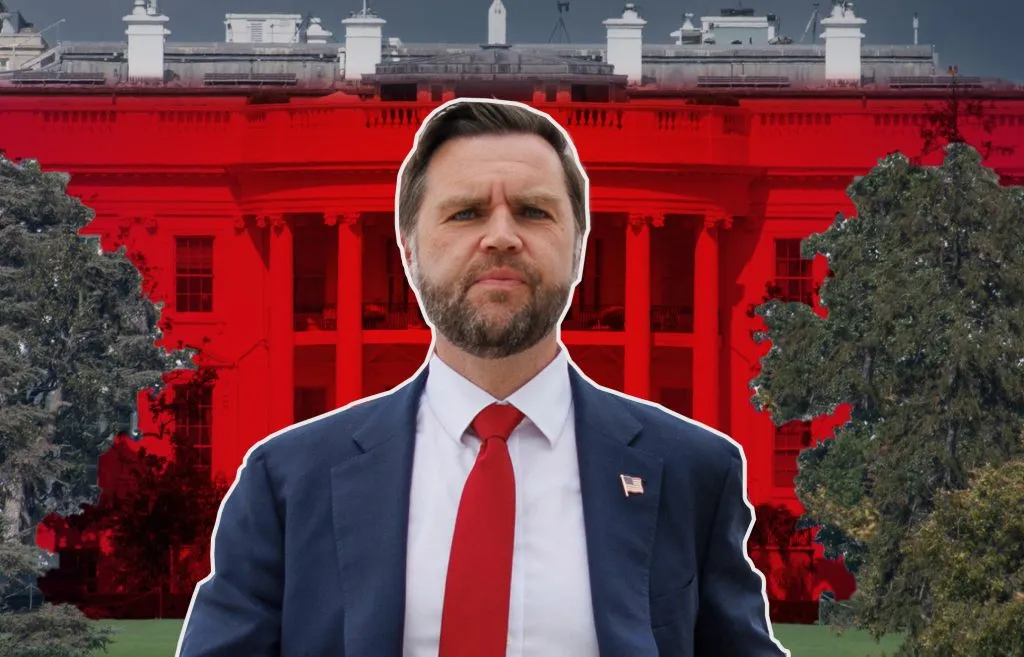
And Republican power players have noticed. Vice President JD Vance put out a 614-word statement the day after the election that broke sharply with the White House line, blaming the losses squarely on the Iran war: “The reason we lost is the war.” Most senior White House staff were caught off guard by it. And the Wall Street Journal reported that it capped weeks of internal hand-wringing over the war’s political cost. For Vance, it read less like a postmortem than a 2028 launch — toward the presidency and away from the president.
(Illustration by Joana Suleiman/Washington Examiner)
" data-large-file="https://www.washingtonexaminer.com/wp-content/uploads/2026/11/JDVance2028-e1793988075294.jpg?w=1024" src="https://www.washingtonexaminer.com/wp-content/uploads/2026/11/JDVance2028.jpg?w=1024" alt="JD Vance" class="wp-image-4795563">
(Illustration by Joana Suleiman/Washington Examiner)
Conventional wisdom after Tuesday’s bloodbath was that Vance had been mortally wounded. That may be so. The “New Right,” the faction of conservatives behind Trump’s domestic policies, particularly tariffs and Trump’s aggressive deportation regime, now looks badly damaged as an electoral coalition.
And Vance, who served as campaigner-in-chief for most of the midterm cycle, did not earn high marks on the stump. His off-color attacks landed with a thud, especially his insinuations that James Talarico is gay and Amy Acton is an alcoholic. Worse, he cheered Ohio gubernatorial candidate Vivek Ramaswamy’s reprehensible ad featuring Acton’s estranged mother, telling Republicans who objected to “stop whining.”
On CNN the morning after the election, Jonah Goldberg, editor of the Dispatch, remarked: “I think the biggest single loser last night was JD Vance because he is Donald Trump with twice the bigotry and half the charm. And that is not what the country said they want more of for the next two years, never mind the next six.”
It’s difficult to argue that the midterms didn’t badly diminish Vance with the general electorate. But in the race for the Republican nomination, the blowout might actually play in his favor.
I’ve written several times this year that Vance’s biggest obstacle to the nomination was that he would have to win, and keep, the blessing of two masters: Trump and the New Right, who want very different things on foreign policy and deportations.
The split between Trump and the New Right, which sees Vance as its champion, had been building throughout his second term as deportation numbers fell short of what the movement demanded, and it exploded when the president launched Operation Epic Fury. The New Right, which advocates a restrained foreign policy and a fundamental rethinking of America’s relationship with Israel, saw the war as a betrayal of everything “America First” was supposed to mean. Their criticism of the president has been persistent and openly derisive for most of 2026.
Vance’s muted opposition to the war kept him in their good graces, and his efforts to end it, from leading the peace talks in Islamabad to pushing a memorandum of understanding with Tehran, made him the New Right’s last best hope inside the administration.
At the same time, he has stayed on Trump’s right side through a clever formulation: While never championing the war outright, he has argued that what separates it from Iraq is that this time, America has a “smart president.” Trump, as Vance well knows, will tolerate criticism of his policies so long as it comes wrapped in compliments.
This formula has served Vance well — though, as I’ve argued, walking this tightrope under the bright lights of a presidential primary, with opponents on all sides looking to exploit every gap in his positioning, would be another matter entirely.
But Trump’s diminished stature on the Right renders all this moot. Vance is now much freer to buck the president on the war and America’s relationship with Israel, cementing his claim to lead the New Right. That may ultimately hurt him in a general election against a Democrat, given that some of the movement’s most prominent figures carry baggage swing voters want nothing to do with. But it would boost him in a primary where 35% to 40% of the vote can be enough to win.
New Right influencers Jack Posobiec, Matt Walsh, and Benny Johnson have all glowingly amplified Vance’s midterm postmortem, with Walsh calling it “the most thorough and honest diagnosis of an election defeat that we’ve ever seen from a politician” and Johnson praising Vance’s “clarity and humility and honesty.”
Vance is their man. And his response to the election was tailored to signal that he wants to be theirs.
But there are risks to Vance openly cementing his New Right support. Beyond making him less viable in a general election, should he get there, claiming one slice of the primary pie leaves a bigger share for everyone else. Marco Rubio and Ron DeSantis would be best positioned to divide up what’s left, each hoping to knock out the other before Super Tuesday and lock Vance into a one-on-one contest the rest of the way.
Then there’s the question of Trump’s endorsement, which, while no longer determinative, would hardly be worthless. What’s less clear is who would still want it, especially if his poll numbers keep sliding into the low 30s.
Vance’s options
In this new environment, Vance has three options. The first is to make a clean break by unapologetically taking the New Right lane, betting he can win the primary with a moderately sized but fervently loyal base. The second is to keep walking the tightrope, trying to please both his boss and his base and hoping the rope holds.
The third, and the one I’d advise, is not to run at all, citing his young family, and to spend the next decade cementing his role as a movement leader with a long political life ahead of him.
I’ve mentioned this to a few colleagues, and each time I get the same pushback: He has to take his shot while he has it. One recalled the cautionary tale of Chris Christie, who passed on his moment in 2012. Another pointed to Dan Quayle, who waited until 2000 and found that vice presidents have a short shelf life.
TRUMP SAYS HE’S NOT SURE IF VANCE WILL RUN FOR PRESIDENT IN 2028
I think both comparisons sell Vance short. Unlike Christie, Vance is an intellectual leader of a political movement that will remain a force in our politics for years and probably decades. And the Quayle comparison borders on insulting; Vance is a far more formidable figure. He will remain highly relevant through his writing and advocacy regardless of whether he holds elected office.
Either way, Vance remains the main character of this primary season. His moves will dictate everyone else’s. And for the first time, Trump’s weakness means those moves are Vance’s alone to make.
Continue reading...
[ H/T Washington Examiner ]