

Perhaps the most telling polling of the post-election Republican debacle compares the public’s view of the economy during President Donald Trump’s first term (before COVID-19) and second.
During Trump I, the president was a +9 on the economy, even when his personal approval number was atrocious. Today, the president is at -35 on the economy.
In October 2018, Gallup’s “economic confidence poll” of American voters stood at -33. In October of 2026, it was at -44.
Now, to be fair, lots of negativity was baked into polls after the Biden administration exacerbated post-COVID inflation. But it also represented a huge opportunity for a new administration.
On Inauguration Day 2025, confidence in the economy was at minus-19. By December 2025, months before the Iran war, American confidence in the economy was at minus-33.
What was the major difference? From 2017-19, Trump and Republicans implemented the kind of “Zombie Reaganism” Vice President JD Vance and his populist DC Praetorian Guard detest and reject.
Trump’s first-term focus was on deregulation and tax cuts, with only a few narrow, focused forays into protectionism. The Tax Cuts and Jobs Act, the first big law of the Trump era, slashed the corporate tax rate from 35% to 21%, lowered individual rates for everyone, nearly doubled the standard deduction, expanded the Child Tax Credit, and added a 20% pass-through deduction for small businesses. When it came to the economy, the administration was largely hands-off.
It’s true that the tax bill was never polled well. When asked about the state of the economy the tax bill helped promote, however, voters largely approved.
Affordability was a driving reason Trump was elected in 2024. But what was the first big economic policy of Trump’s second go-around? Unilaterally slapping taxes on products from virtually every country and territory in the world. The president never made his case to Congress or the electorate, which means he never had any consensus or buy-in.
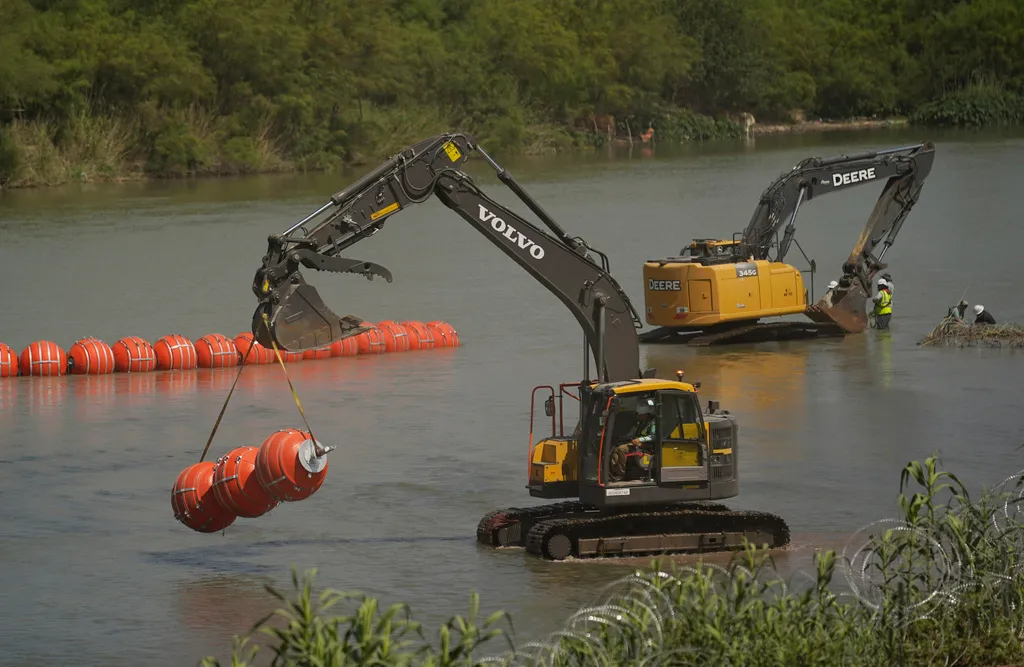
Protectionism, as most economists predicted, brought red tape, corruption, corporate rent-seeking, and chaos. It was all done under the auspices of a fake emergency.
And Trump’s second term ended on “Liberation Day.” You can follow the president’s approval on the RealClearPolitics polling aggregate. Trump’s popularity began to fall when word of tariffs leaked, plummeting 10 points right after “Liberation Day.” Approval clawed back 10 points while the president delayed tariffs after a market crash. When White House finally began implementing tariffs, Trump’s numbers were in free fall.
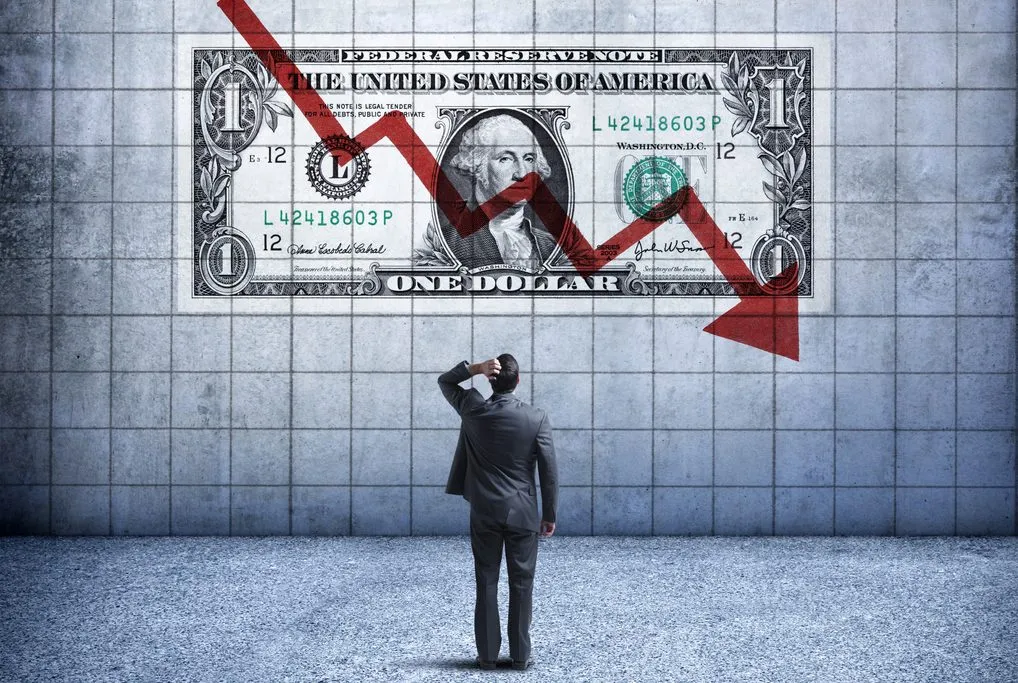
(Washington Examiner illustration; Getty Images)
" data-large-file="https://www.washingtonexaminer.com/...05/iStock-910651838-e1778103460560.jpg?w=1018" src="https://www.washingtonexaminer.com/...05/iStock-910651838-e1778103460560.jpg?w=1018" alt="blue state economic policies liberalism leftism economy regulation tariffs" class="wp-image-4558201" srcset="https://www.washingtonexaminer.com/wp-content/uploads/2026/05/iStock-910651838-e1778103460560.jpg 1018w, https://www.washingtonexaminer.com/...k-910651838-e1778103460560.jpg?resize=300,201 300w, https://www.washingtonexaminer.com/...k-910651838-e1778103460560.jpg?resize=768,515 768w" sizes="(max-width: 1018px) 100vw, 1018px">
(Washington Examiner illustration; Getty Images)
Every other mistake, including the administration’s tragic dillydallying on Iran, only compounded the problem.
Most exit polls find that around 65% of Americans believe tariffs hurt the economy. Red or blue, states with working-class voters, Southern states, rural areas, it didn’t matter. Big majorities said the tariffs hurt their local economy. In Texas, a state that relies heavily on trade, the Associated Press found that tariffs were 44 points underwater. In Ohio, 47. In Michigan, 50.
Even if we conceded Vance’s contention that the Iran war was the cause of the midterm debacle, war is a choice that can be avoided. Republicans can criticize the decision or the execution. But protectionism is at the heart of the NatCon project. It is a deeply unpopular policy plank that Vance wants to tie the GOP to for a long time.
The public’s view of protectionism reminds me of support for Medicare for All. Voters love to hear politicians championing manufacturing and promising to “bring back” jobs and save Rust Belt towns. But when they experience protectionism in real time, they sour on the economy.
And the difference between the first two years of Trump I and II is that “national conservatives” have captured major institutions of the establishment and shifted conservative fiscal ideas to pandering to a narrow band of low-propensity working-class voters at the expense of wide swaths of the suburban voters.
Vance, a long-time economic leftist and one-time Never Trumper who expediently morphed into a Trump sycophant to win a Senate seat, seems to be under the impression that treating voters like hapless victims of Wall Street “barons” and dark secret forces is a winning message. Like Bernie Sanders or Elizabeth Warren, the Vance faction believes they can socially engineer the economy to conform to their cultural vision.
Vance isn’t alone, of course. Trump named George Soros’s former right-hand man Scott Bessent as Treasury Secretary and lifelong Democrat Howard Lutnick as Commerce Secretary. On the economy, Trump II is the most left-wing Republican administration in history.
It is difficult to excavate any positive from the shellacking Republicans took this week. But it’s likely no accident that the only state that escaped the blue wave (barely) was Florida, where Gov. Ron DeSantis has spent two terms implementing conservative fiscal policies, including championing a property-tax relief constitutional amendment that received roughly 62% of the vote and likely drove Republican turnout.
It is worth mentioning that the three of biggest congressional years for Republicans in modern history were propelled by “Zombie Reaganism.”
In 1980, Republicans won 35 House seats and took the Senate for the first time in nearly 30 years, championing free-market economic reforms.
In 1994, Republicans flipped 54 House seats and took both houses for the first time in many decades on a platform that championed free-market solutions.
In 2010, the Tea Party wave, primarily driven by free-market economics, won 64 House seats — the most in the modern era — and ended Barack Obama’s ability to do anything legislatively.
Vance and his crew can mock “libertarian” ideas, but you know who never won any elections? NatCon’s patron saint, Pat Buchanan.
When was the last time protectionism was an electoral winner for the GOP? In the modern age? Never. Indeed, three of the biggest debacles for Republicans in history were triggered by tariffs.
I only bring up William McKinley because he’s apparently Trump’s favorite president — well, second favorite. When McKinley drastically raised tariffs in 1890, the Republicans lost a historic 93 House seats in the backlash.
A generation later, after Republicans passed Smoot-Hawley and plunged the country into a depression, Republicans lost 52 House seats in the 1930 midterm elections. They lost 97 seats in 1932. Over the next 65 years, the GOP held the House for only four of them.
Now, we’re at a pivotal moment for the GOP. There are no political panaceas. Most voters aren’t ideologues. Fiscal conservatives shouldn’t delude themselves into believing the GOP can win back power running around quoting Thomas Sowell and decrying taxation as theft. Old ideas can be good ones. But they need to be repackaged, refocused, and tied to tangible policies that address genuine problems.
VANCE BLAMES ISRAEL
But if Republicans get into an arms race over who can redistribute wealth better or send out more checks or prop up more dying industries or punish more corporations, voters will have an easy choice. If they want endless class war and “industrial” social engineering and state ownership of private companies, a party already exists to do all of that for them.
Which is why Vance’s brand of warmed-over progressivism has little future.
Continue reading...
[ H/T Washington Examiner ]