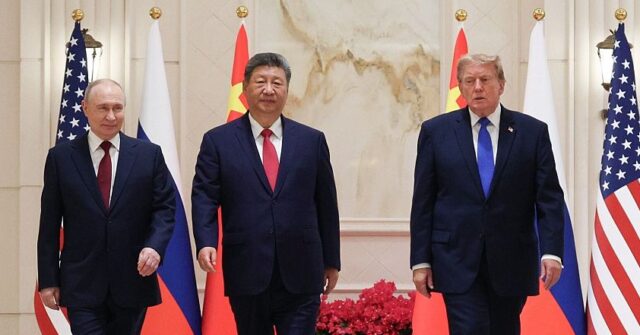


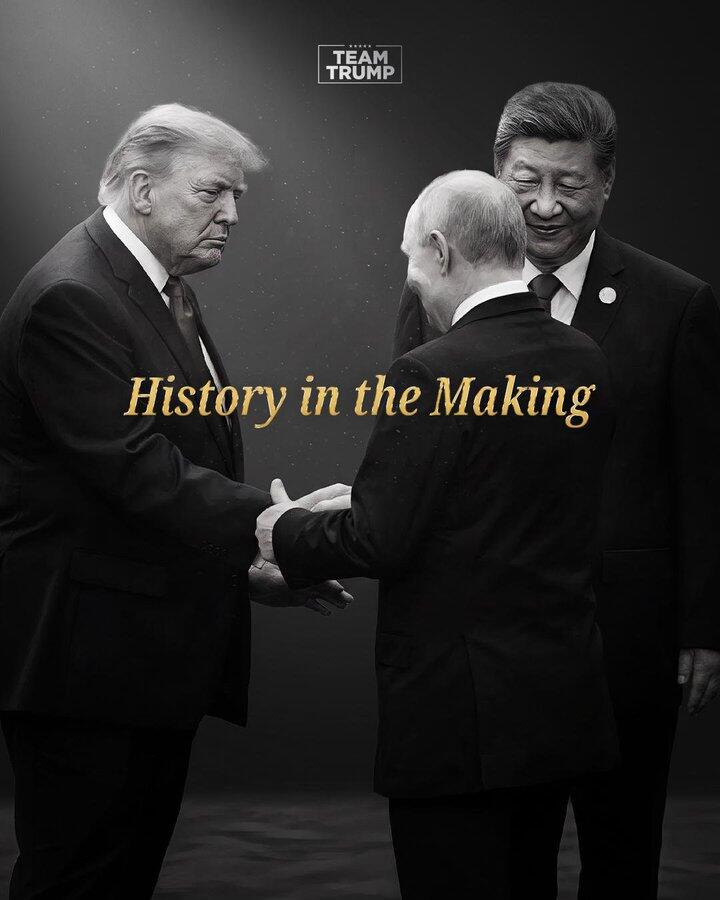


For the first time in more than 50 years, nothing limits the world’s two largest nuclear arsenals. The White House says President Donald Trump intends to raise nuclear arms reductions when he meets Thursday in Shenzhen with Chinese President Xi Jinping and Russian President Vladimir Putin. They also intend to cover the wars in Iran and Ukraine. The administration has indicated that no agreement is expected this week. The larger question is whether a new treaty that will commit China to some form of nuclear restraint is achievable at all.
The meeting comes nine months after the expiration of New START, the last treaty that limited U.S. and Russian nuclear forces. It capped each side at 1,550 deployed long-range warheads and required both to share data and accept inspections. But it expired on Feb. 5, and Washington did not take up a Russian offer to keep observing the limits informally for another year, as the U.S. insisted any new arrangement should include China.
American planners do not want to stay capped while a third arsenal (China) grows unchecked. But the United States also lost something in February. The New START treaty allowed 18 inspections a year at Russian bases and regular data on Moscow’s forces. Without it, planners must guess, and guessing tends toward worst-case assumptions and larger arsenals.
The numbers explain why China refuses. According to the Stockholm International Peace Research Institute’s Yearbook 2026, Russia has an estimated 5,420 warheads and the U.S. about 5,042. China has about 620. Beijing will not sign an agreement that freezes it in that position. Foreign Ministry spokesman Lin Jian said in February that China “will not participate in disarmament negotiations at this stage.”
Instead, China is expanding its arsenal and the Pentagon projects it will have more than 1,000 warheads by 2030. Beijing wants an arsenal that could survive an attack and still strike back, and it sees American missile defenses, including the proposed Golden Dome system, as a threat to that goal. Limits now would lock in that disadvantage.
Russia arrives with different interests. Moscow wants to preserve some limits with Washington, both for risk reduction but also for budgetary reasons. But Russia cannot deliver Beijing as, weakened by war and sanctions, it is now the junior partner, dependent on China for trade and war supplies, and Beijing has little reason to accept constraints that Moscow cannot force on it.
Now the absence of limits since New START expired creates a risk of its own. The U.S. and Russia are not expanding their arsenals, but nothing now stops either from loading stored warheads onto existing missiles. SIPRI expects deployed numbers on both sides to rise in the coming years. It would be cheap: The Congressional Budget Office estimated in 2020 that it could cost the War Department as little as about $100 million.
But it would buy little extra deterrence. Bernard Brodie, one of the classic strategists of the nuclear age, argued in 1946 that once a country can be sure of retaliating, having more weapons than its rival counts for little. Some strategists now say that facing two rivals requires a larger force, but arsenals this size already guarantee devastating retaliation against both. An American increase would invite a Russian one and only fuel Beijing’s case for building faster and refusing any nuclear arms-control limits.
But even if a treaty that includes China and would include real limits is unlikely, the leaders still have useful things to discuss. Some measures lower the risk of accidental war, such as advance notice of missile launches, so that a routine test is not mistaken for the start of an attack. Such agreements exist between Washington and Moscow and between Moscow and Beijing, but not between the U.S. and China. The three could also upgrade their crisis hotlines. A promise to maintain the three-decade halt on nuclear test explosions is also possible but harder. Washington accuses China of a secret test in 2020, which Beijing denies, and the Trump administration has itself signaled openness to resuming tests.
TRUMP IS BETRAYING HIMSELF ON CHINA
Washington should keep pressing for China’s inclusion but stop treating it as a precondition, as the chance that China will agree to any limit is so remote. It should take what Beijing’s red lines allow now, a working hotline and launch notification, and restore limits with Moscow even if China refuses. That would not be nonproliferation in the usual sense. Nothing discussed on Thursday will stop another country from seeking the bomb. But it would bring back inspections and data exchanges between the two countries that hold most of the world’s nuclear weapons, and fewer warheads mean fewer that can be involved in an accident or go astray.
A treaty that includes China will not come out of Shenzhen, and it is unlikely for years to come. Beijing will not accept limits until it reaches rough parity, or judges its ability to retaliate secure, or until Washington and Moscow cut down to its level. None of those is close. What is within reach is smaller. Washington and Moscow agreed on their hotline in 1963. Their first treaty limiting strategic arms came nine years later. Small steps are how this has always started, and they are worth taking to reduce nuclear risks.
Brian McDonald is a geopolitical and defense analyst and a postgraduate in the Defence Studies Department at King’s College London.
Continue reading...
[ H/T Washington Examiner ]