


Guest Post by John Leake
A fascinating character to emerge during the Thirty Years War (1618-1648) was Albrecht von Wallenstein, Duke of Friedland (September 1583 – 25 February 1634), a Bohemian military leader and statesman who fought on the Catholic side as supreme commander of the armies of Holy Roman Emperor Ferdinand II. His successful military career made him one of the richest and most influential men at the time of his death by assassination.
Wallenstein built his initial fortune through the Kipper und Wipper financial crisis by participating in the debasement of coinage. He used those profits to buy estates confiscated from defeated Protestant nobles by Emperor Ferdinand II. Wallenstein organized these lands into a vast enterprise that funded a large private mercenary army.
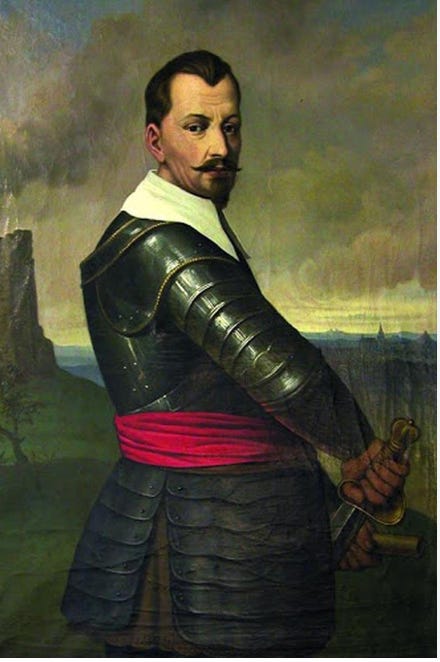
While many criticized Wallenstein’s war profiteering and opportunism, no one accused him of lacking bravery. Early in the war, he personally led a breakthrough with his newly raised regiment of cuirassiers against Count Ernst von Mansfeld’s forces at Theyn in Bohemia.
In this respect, Wallenstein contrasts with most US Presidents. The last to serve in combat was George H.W. Bush, who flew 58 combat missions as a carrier-based torpedo bomber pilot in the Pacific Theater, was shot down twice, and earned the Distinguished Service Flying Cross.
For those who are well positioned, war can be extremely profitable. Some observers who were in a position to know—such as Major General Smedley Darlington Butler (1881–1940), one of the most decorated officers in U.S. Marine Corps history— have concluded that War Is a Racket (as he characterized it in a 1935 pamphlet).
As he saw it, war’s primary purpose is to enrich powerful commercial interests while the enormous costs are borne by ordinary citizens. Butler advocated restricting military force to genuine national defense and removing the financial incentives that encourage war.
I was just reminded of Butler when I read the following essay by Ron Paul titled “Who Is Making Billions from the Iran War?” reproduced on the LewRockwell newsletter.
By Ron Paul, MD
The Ron Paul Institute
October 27, 2026
At a campaign rally over the weekend, President Trump dismissed Americans’ concerns over high oil and gas prices, claiming that it’s a small price to pay for the hundreds of billions of dollars “we” are making from these higher prices.
“We’re making a fortune,” he said. “Hundreds of billions of dollars. Trillions of dollars.”
People are paying a little bit more for gas, he explained, but it doesn’t matter because “we” are making so much money.
The question is, “Who is ‘we’?” We know it is not the American people. They are seeing wage stagnation, inflation, and more pain at the pump. An Economist/YouGov poll earlier this month found that inflation and prices are the top concern among Americans by a wide margin. And in second place were jobs and the economy.
The same poll asked Americans how they rate the state of the US economy and in first place – again by a long shot – was “poor.”
If “we” as in the American people were making hundreds of billions of dollars from the war, you would think these would not be their top two concerns.
But we understand what the President meant by “we.” He meant that part of the “private” sector directly or indirectly in bed with the government war machine. From oil companies to weapons manufacturers and everything in between, war and conflict drive up profits in well-connected corporations at the expense of the rest of us.
That is why we are in a constant state of war. Twenty years in Afghanistan and a similar length in Iraq. Endless bombing in places like Somalia. A twelve-year (and counting) proxy war with Russia in Ukraine. Military bases and covert operations across the globe.
And if we find that the largest military budget in the world does not deliver enough actual weapons to win a war? Well, that’s all good too: just double military spending and accuse anyone who objects of not being patriotic!
“Private” companies with enormous political power – many of them revolving doors between government and business – “make so much money” on war, as Trump would say. Whether these wars produce US wins, loses, or stalemates, these corporations in bed with government always win. The money-printing machine makes sure the money cycles into government-favored companies, while campaign contributions are made to the politicians who support the wars.
And if you don’t support the wars? You get the Thomas Massie treatment.
Endless war produces more corporatism, where the private sector does not exist to provide goods to compete in the free market, but to serve political power and strengthen governmental control over the population. Think of it as welfare for the rich at the expense of the poor. The result is tyranny.
This is the very reason our Founders intended to make it as difficult as possible to wage war. As well-educated students of history, they understood how the concentration of war-making power in the hands of one ruler or an oligarchy would impoverish the masses and lead to a moral and financial bankruptcy. They placed war-making power in the “people’s branch” – Congress – hoping that the people would hold their representatives accountable. We have strayed very far from what they intended and if we are to survive, we must reclaim that authority and responsibility.
Tweet
Continue reading...
[ H/T The Burning Platform ]
A fascinating character to emerge during the Thirty Years War (1618-1648) was Albrecht von Wallenstein, Duke of Friedland (September 1583 – 25 February 1634), a Bohemian military leader and statesman who fought on the Catholic side as supreme commander of the armies of Holy Roman Emperor Ferdinand II. His successful military career made him one of the richest and most influential men at the time of his death by assassination.
Wallenstein built his initial fortune through the Kipper und Wipper financial crisis by participating in the debasement of coinage. He used those profits to buy estates confiscated from defeated Protestant nobles by Emperor Ferdinand II. Wallenstein organized these lands into a vast enterprise that funded a large private mercenary army.
While many criticized Wallenstein’s war profiteering and opportunism, no one accused him of lacking bravery. Early in the war, he personally led a breakthrough with his newly raised regiment of cuirassiers against Count Ernst von Mansfeld’s forces at Theyn in Bohemia.
In this respect, Wallenstein contrasts with most US Presidents. The last to serve in combat was George H.W. Bush, who flew 58 combat missions as a carrier-based torpedo bomber pilot in the Pacific Theater, was shot down twice, and earned the Distinguished Service Flying Cross.
For those who are well positioned, war can be extremely profitable. Some observers who were in a position to know—such as Major General Smedley Darlington Butler (1881–1940), one of the most decorated officers in U.S. Marine Corps history— have concluded that War Is a Racket (as he characterized it in a 1935 pamphlet).
As he saw it, war’s primary purpose is to enrich powerful commercial interests while the enormous costs are borne by ordinary citizens. Butler advocated restricting military force to genuine national defense and removing the financial incentives that encourage war.
I was just reminded of Butler when I read the following essay by Ron Paul titled “Who Is Making Billions from the Iran War?” reproduced on the LewRockwell newsletter.
By Ron Paul, MD
The Ron Paul Institute
October 27, 2026
At a campaign rally over the weekend, President Trump dismissed Americans’ concerns over high oil and gas prices, claiming that it’s a small price to pay for the hundreds of billions of dollars “we” are making from these higher prices.
“We’re making a fortune,” he said. “Hundreds of billions of dollars. Trillions of dollars.”
People are paying a little bit more for gas, he explained, but it doesn’t matter because “we” are making so much money.
The question is, “Who is ‘we’?” We know it is not the American people. They are seeing wage stagnation, inflation, and more pain at the pump. An Economist/YouGov poll earlier this month found that inflation and prices are the top concern among Americans by a wide margin. And in second place were jobs and the economy.
The same poll asked Americans how they rate the state of the US economy and in first place – again by a long shot – was “poor.”
If “we” as in the American people were making hundreds of billions of dollars from the war, you would think these would not be their top two concerns.
But we understand what the President meant by “we.” He meant that part of the “private” sector directly or indirectly in bed with the government war machine. From oil companies to weapons manufacturers and everything in between, war and conflict drive up profits in well-connected corporations at the expense of the rest of us.
That is why we are in a constant state of war. Twenty years in Afghanistan and a similar length in Iraq. Endless bombing in places like Somalia. A twelve-year (and counting) proxy war with Russia in Ukraine. Military bases and covert operations across the globe.
And if we find that the largest military budget in the world does not deliver enough actual weapons to win a war? Well, that’s all good too: just double military spending and accuse anyone who objects of not being patriotic!
“Private” companies with enormous political power – many of them revolving doors between government and business – “make so much money” on war, as Trump would say. Whether these wars produce US wins, loses, or stalemates, these corporations in bed with government always win. The money-printing machine makes sure the money cycles into government-favored companies, while campaign contributions are made to the politicians who support the wars.
And if you don’t support the wars? You get the Thomas Massie treatment.
Endless war produces more corporatism, where the private sector does not exist to provide goods to compete in the free market, but to serve political power and strengthen governmental control over the population. Think of it as welfare for the rich at the expense of the poor. The result is tyranny.
This is the very reason our Founders intended to make it as difficult as possible to wage war. As well-educated students of history, they understood how the concentration of war-making power in the hands of one ruler or an oligarchy would impoverish the masses and lead to a moral and financial bankruptcy. They placed war-making power in the “people’s branch” – Congress – hoping that the people would hold their representatives accountable. We have strayed very far from what they intended and if we are to survive, we must reclaim that authority and responsibility.
Tweet
Continue reading...
[ H/T The Burning Platform ]