





President Donald Trump delivered a stark warning to Iran on Tuesday, telling world leaders that Tehran must choose between reaching an agreement with the United States and facing another overwhelming military assault.
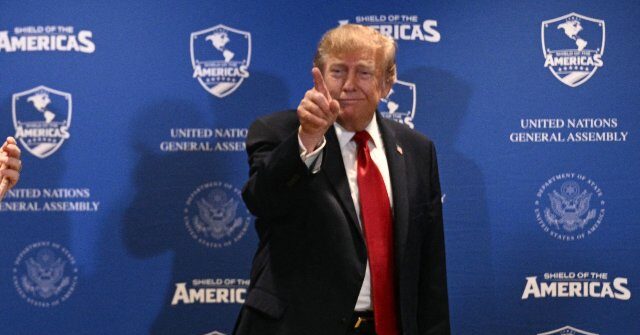
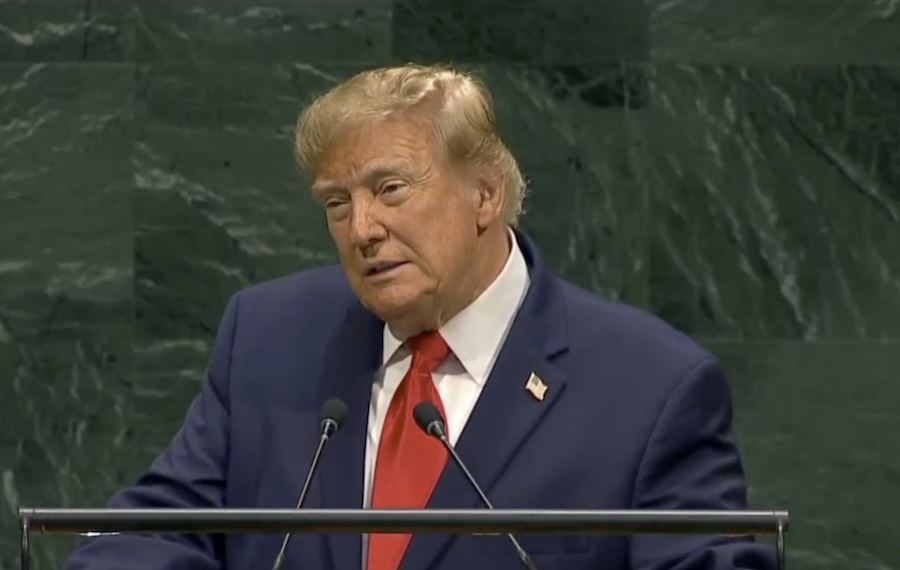
Speaking before the United Nations General Assembly in New York, Trump said he is approaching a consequential decision over the future of the conflict. The president presented two sharply different paths, one offering Iran an opportunity to rebuild and the other involving a rapid expansion of American military action.
“I have a big decision to make,” Trump said. “Will a deal be made with Iran that lets them rebuild and create a far greater country?”
Trump then raised the alternative of using American military power to “annihilate the Islamic Republic,” warning that Washington would not allow the Iranian government to continue threatening other nations. His remarks represented one of his most direct warnings to Tehran since the United States began its military campaign earlier this year.
Despite the forceful language, Trump maintained that a diplomatic settlement remains possible. He predicted that Iran may agree to a deal after the November 3 midterm elections, although he insisted that domestic political considerations are not influencing his decisions.
WATCH:
Trump also called on other governments to increase economic pressure on Tehran and help force its leaders back to the negotiating table. His administration has imposed sweeping sanctions designed to isolate Iran from the global financial system and prevent the government from rebuilding its military capabilities.
The president’s position leaves Tehran with an increasingly narrow set of options. Iran has signaled that it is open to negotiations, but its leaders have demanded an easing of American military and economic pressure. The two governments remain divided over Iran’s nuclear program, its ballistic missile arsenal and control of shipping through the Strait of Hormuz.
Trump has repeatedly said that Iran will never be permitted to obtain a nuclear weapon. The White House has identified dismantling Tehran’s missile production, destroying its naval capabilities and cutting off support for regional terrorist groups as central objectives of the campaign.
The Strait of Hormuz remains a central point of dispute. The narrow waterway connects major Persian Gulf oil producers to global markets and carries a significant share of the world’s petroleum supply. Disruptions in the region have driven energy prices higher and increased pressure on governments seeking to prevent the conflict from spreading.
Trump urged Iran to fully reopen the strait while describing American naval operations intended to protect commercial shipping. He argued that a lasting agreement could quickly ease pressure on oil markets and allow Iran to begin restoring its economy.
Oil prices reacted to the president’s remarks as traders weighed the possibility that negotiations could be delayed until after the midterm elections. Brent and West Texas Intermediate crude remained elevated as uncertainty surrounding Iranian exports and shipping routes continued to affect global supplies.
Tuesday’s speech expanded on comments Trump made during a recent interview with Axios. The president said he was approaching a critical crossroads and would soon decide whether to resume massive attacks against the Iranian government. He also claimed that direct communication between Washington and Tehran was continuing and that Iranian officials still wanted an agreement.
Trump did not announce a deadline for Iran to accept a deal. His address nevertheless made clear that he views the current pause as temporary and expects Tehran to make substantial concessions.
The president’s message combined an offer of economic recovery with an unmistakable military threat: Iran can negotiate from its weakened position or face a renewed American campaign intended to permanently eliminate its ability to wage war.
Continue reading...
[ H/T Trending Politics ]