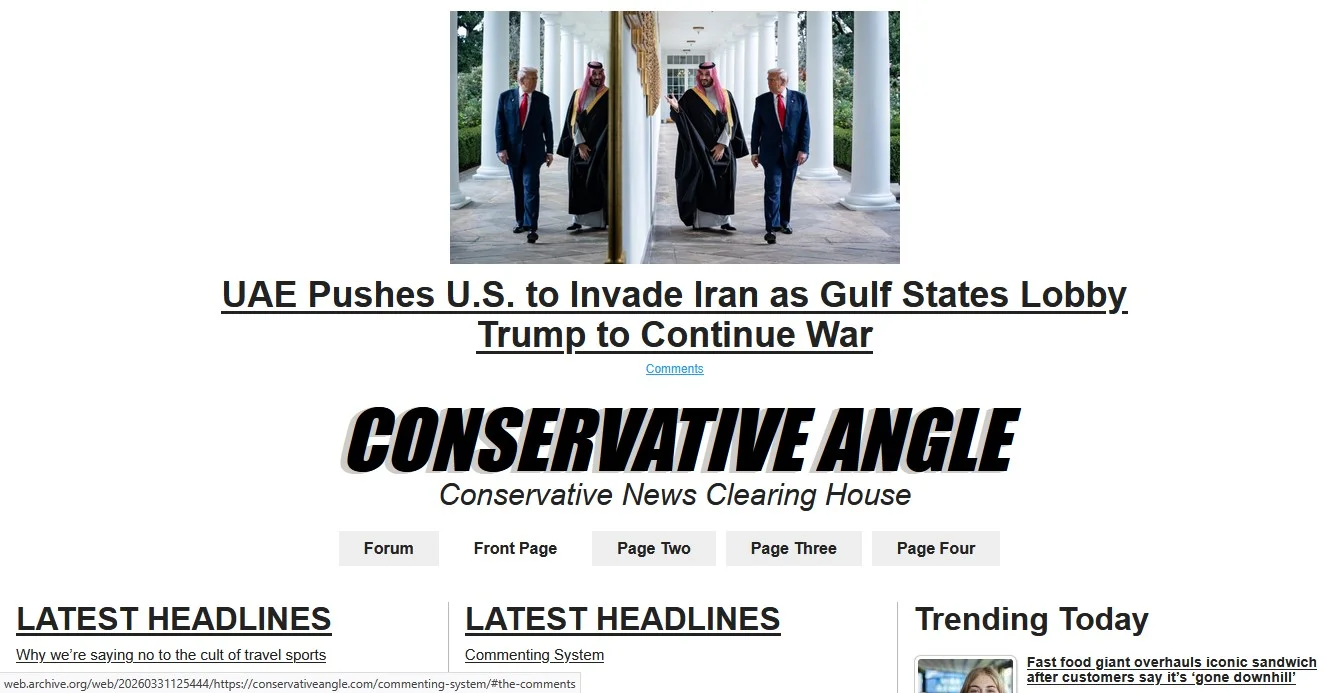
Welcome to the New Conservative Angle!
We're excited to introduce a new era for our readership.
For years, Conservative Angle has served as a clearinghouse for news, commentary, and analysis from across the conservative movement. Thousands of readers have visited these pages to stay informed, discover new voices, and keep pace with the stories shaping our nation and our world.
Today, we are building on that foundation.
The new Conservative Angle is more than a news aggregator. It is a community.
Our mission remains the same: to provide access to important stories, encourage informed discussion, and promote the free exchange of ideas. But now, readers have a place to participate, share perspectives, ask questions, and openly and respectfully engage directly with fellow conservatives and independent thinkers.
As Conservative Angle grows, we will continue adding new features, new content, and new ways for readers to participate. The site will evolve over time based on the interests, ideas, and contributions from the community.
Whether you are a longtime visitor or discovering Conservative Angle for the first time, we invite you to become part of the conversation.
Register for an account, introduce yourself to the community, and join the discussions that matter most to you. Together, we can create a place where news is not merely consumed, but examined, debated, and understood.
Thank you for your patience during our transition and for your continued support.
Welcome to the new Conservative Angle.
— The Conservative Angle Team