








The rising cost of diesel is punishing millions of Americans — especially rural households. Every time a farmer fills his combine, a small businessman tops off his box truck, or a family fuels up the pickup, they feel the cost.
Prices have stayed stubbornly elevated compared with the pre-pandemic baseline. Because trucks move roughly 70% of America's freight tonnage, every extra dime at the pump ripples outward to grocery bills, hardware stores, and the operating margins of the mom-and-pop businesses that keep small towns alive.
Plastic is increasingly displacing steel, iron, and other heavy metals that would otherwise add hundreds of pounds per vehicle.
There are many familiar culprits policymakers can and have identified. These range from refinery closures and global supply chain disruptions to international sanctions and domestic regulations.
However, there is a coming legislative and regulatory threat that will raise prices even more for Americans. Proposals such as the Tracking Plastic Act of 2026 — introduced by Senator Adam Schiff (D-Calif.) alongside Senators Jeff Merkley (D-Ore.), Ron Wyden (D-Ore.), and Cory Booker (D-N.J.) — would place tight reporting restrictions on plastics and make advanced recycling more difficult.
Few voters who will pay for it have any idea what is coming. That threat is the accelerating regulatory war on plastics.
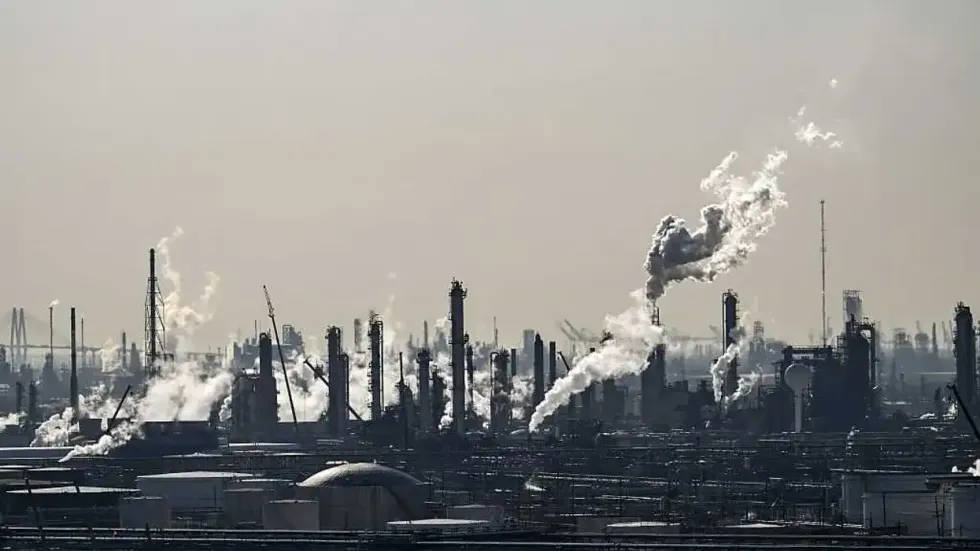
At first glance, plastics and diesel seem unrelated. In reality, they are joined at the molecular hip. Both come out of the same barrel of crude, are refined in the same facilities, and are governed by the same interlocking economics.
Petrochemical feedstocks, such as the natural gas liquids that become polyethylene, are not simply landfill waste. They are co-products whose sale helps keep American refineries economically viable. Shrink that market through bans, caps, or mandates, and America won’t magically get more diesel. Refineries that lose their petrochemical outlet get older and dirtier, and eventually they get shuttered.
There is a second, more direct link that ought to alarm anyone who cares about affordability. According to the American Chemistry Council's 2026 report Plastics and Chemistry in Automobiles, the average vehicle assembled in North America last year contained 428 pounds of plastics. This accounts for nearly 10%of vehicle weight, but around 50% of its total volume. That plastic content has grown 18% in a decade, even as trucks and SUVs have grown larger.
Plastic is increasingly displacing steel, iron, and other heavy metals that would otherwise add hundreds of pounds per vehicle.
RELATED: The Gulf is America’s energy shock absorber
Decreasing vehicle weight is the single most cost-effective way to squeeze more miles out of every gallon of gas or diesel. The same report notes that real-world fuel economy has more than doubled since 1975. This gain has been enabled not only by better engines but by lighter materials. Every pound of plastic that regulators force back into steel is an extra pound the engine has to haul down the interstate.
Multiply that across the 15 million vehicles produced in North America each year and across a national fleet of more than 280 million, and the fuel penalty is enormous. For the diesel pickups, work vans, and tractors that already do the heavy lifting in fuel consumption, the impact is measured in billions of gallons annually. This also translates to billions of dollars extracted straight out of the pockets of hardworking Americans.
The activists driving anti-plastic legislation and regulatory measures ought to think deeply about this. Rather than punishing material that makes modern life lighter, safer, and cheaper, policymakers should shift their focus. Making innovative advanced recycling techniques easier would reduce plastic waste and lower diesel prices, a rare win-win in Washington.
The next time a Beltway coalition insists that phasing out plastics is a costless moral upgrade, policymakers should consider how it will impact the bills of Americans across the nation. Working Americans deserve a break from rising bills.
Continue reading...
[H/T Blaze Media]