


While it has yet to finalize a $14 billion arms deal with Taiwan, the Trump administration is delivering a needed boost to deterrence against China. It is doing so with an anti-ship missile deployment to Japan’s westernmost island, Yonaguni. That island is just 60 nautical miles from Taiwan.
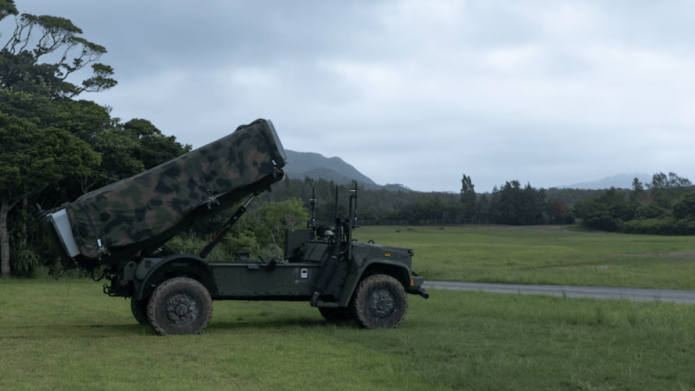
Japanese media report that NMESIS will arrive on Yonaguni for the Oct. 19-29 U.S.-Japan “Keen Sword” military exercise. NMESIS is the U.S. Marine Corps system that uses the Naval Strike Missile. Developed by Norway’s Kongsberg company, the Naval Strike Missile is a highly capable anti-ship missile designed to penetrate advanced air defenses and destroy key targets on enemy warships, such as sensors and control centers. These weapons have a range of at least 100 nautical miles, with upgrades set to extend that range to more than 150 nautical miles.
China is not happy. Geography tells us why. My annotated map below (using mapdevelopers.com) shows a circle with a radius of 100 nautical miles.
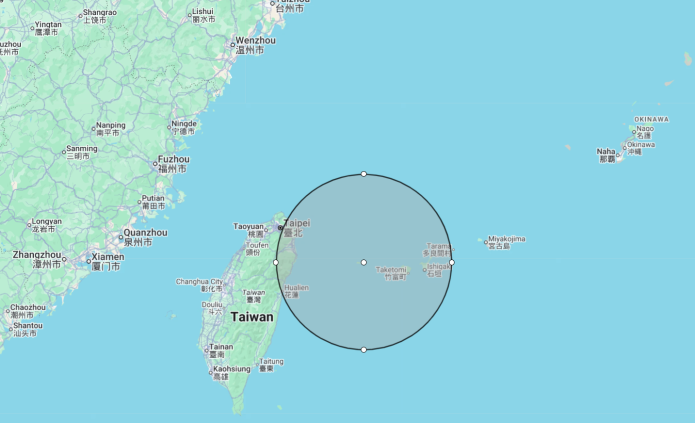
Based on Yonaguni, NMESIS’s range covers waters off the Taiwanese capital of Taipei and throughout northeastern Taiwan. It thus offers extraordinary utility in any future war over Taiwan. Forces deployed under the Marines’ adapted organizational structure could use NMESIS to deny early sea control to the Chinese navy. That would be crucial as the PLAN attempted to encircle Taiwan and deny allied relief to the island. This deployment thus gives us a rare public insight into Pacific Command Adm. Sam Paparo’s vision of turning Taiwan’s periphery into a “hellscape” for the Chinese military in any war.
Putting NMESIS on the Japanese territory closest to China also sends an overdue signal of support to Japanese Prime Minister Sanae Takaichi. A deeply pro-American leader, Takaichi has significantly boosted defense spending and has suggested that Japan would intervene were China to attack Taiwan. This has earned her Beijing’s incandescent fury — a Chinese diplomat threatened to behead the prime minister last year, for example.
The Chinese Communist Party is very unhappy that NMESIS is on its way.
Beijing’s Global Times underlines the Chinese concerns. A retired PLA officer told the newspaper that NMESIS’s deployment would “increase the risk of miscalculation by reinforcing perceptions that Japan and the U.S. could intervene militarily in the Taiwan question. Any forces stationed on Yonaguni that take part in such an intervention could risk becoming an early target in a conflict… the deployment on Yonaguni Island sends a clear signal of potential interference in the Taiwan question.” The officer added, however, that Yonaguni’s relatively small size would make it relatively easy for Chinese forces to target NMESIS units.
Unfortunately for the Chinese, this qualification is only partly true. While the island is small, NMESIS is mounted on unmanned Joint Light Tactical Vehicles designed for rough terrain. And while China would throw a wide variety of missiles and drones at Yonaguni, the island’s southern half is defined by heavily forested hills. NMESIS units could fire in open areas and then quickly relocate into concealed positions in the forest to avoid retaliatory fire. U.S. and Japanese combat aircraft would also almost certainly be fighting to provide air cover.
To be clear, NMESIS is not a war winner. It is nothing of the sort. But it does advance allied means of defending Taiwan. Equally valuable, it introduces one more element of friction into President Xi Jinping’s calculations as he, and he alone, decides whether to risk military action to conquer Taiwan. Xi knows that while victory in such an effort would cement his legacy and the Communist Party’s sense of destiny for global dominance, defeat would risk catastrophic political consequences for both him and the party.
There’s another benefit to these exercises: Australian, British, Canadian, and French forces will also take part. And while it is sending only medical and logistics personnel to mitigate Beijing’s predictable fury, Germany is also participating. These nations deserve U.S. and Japanese gratitude. They know that China will react furiously, potentially with economic retaliation, to their perceived support for the U.S. over Taiwan, which China calls its “first red line” in foreign relations. That these nations are nevertheless willing to support U.S. and Pacific security interests testifies to the value of American alliances.
PUTIN IGNORES TWO REALITIES WITH KALININGRAD NUCLEAR THREATS
The key with NMESIS is not to provoke war but to bolster Xi and the PLA’s understanding that launching that war carries great and unpredictable risks. And reminding Beijing that America remains committed to its treaty defense ally, Japan.
The Marine Corps this month signed a $404 million deal with Kongsberg to produce and sustain NSMs through 2034. This kind of innovative procurement, rather than the Trump-class battleships (U.S. Navy at-sea graveyards in waiting), is the best way to manage China’s growing threat.
Continue reading...
[ H/T Washington Examiner ]