


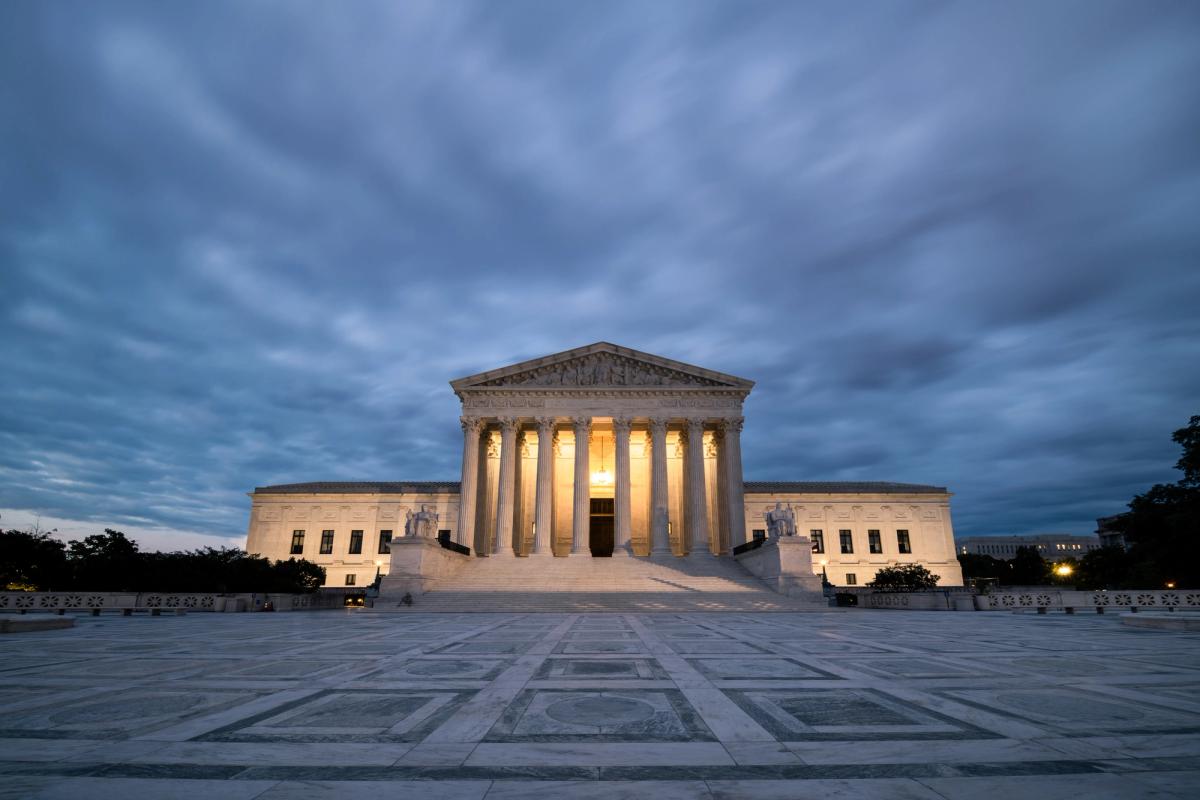
The Native American Rights Fund recently celebrated the 25th anniversary of the Tribal Supreme Court Project, an initiative designed to establish an infrastructure that would allow tribal interests to reach better outcomes in Supreme Court litigation. For decades now, Supreme Court experts sympathetic to tribal interests have advised them to avoid the court if at all possible. Tribal interests face significant structural disadvantages before it, primarily resulting from centuries of precedents arising in what Justice Neil Gorsuch recently called the “atmosphere of their times,” that is, colonialism.
In 2001, in the literal shadow of 9/11, tribal leaders and advocates met to discuss the state of Indigenous advocacy at the Supreme Court. Recent scholarship by leading Indian law scholar David Getches had shown that tribal interests were less likely to prevail in the Supreme Court than even convicted criminals. Worse, tribal interests were typically losing in unanimous or close to unanimous decisions. Indeed, in the year of that very meeting, tribal interests lost five of six cases, four of these losses being unanimous (Nevada v. Hicks; C&L Enterprises v. Shirley; Chickasaw Nation v. United States; and Dept. of the Interior v. Klamath Water Users). Even the United States was losing badly when siding with tribal interests. The fact that the Supreme Court’s roster had not changed since 1994 (and would not change until 2005) also seemed to solidify the court’s skepticism of such interests during this period.
The NARF representatives, as well as representatives of the National Congress of American Indians, several tribal nations, and a handful of experienced appellate advocates came together in Washington D.C. to discuss a strategy on how to respond to these losses. Supreme Court experts and observers identified numerous issues hampering tribal interests. They noted that strategies for defending against petitions for writ of certiorari were lacking, amicus briefs supporting tribal interests tended to be repetitive of the merits briefs, tribal oral advocates struggled before the court during oral argument, and efforts to educate the court about Indigenous history and governance largely failed.
These leaders developed the nugget of a plan to organize collectively whenever an Indian law case reached the Supreme Court at the petition stage and beyond. NARF attorneys would monitor cases (not the easiest work to do in an age where the internet was still in the stone ages and the Supreme Court had not yet made its docket easily accessible to the public). Groups of selected tribal attorneys, appellate litigators, law professors, and tribal leaders would also meet to discuss strategic choices in individual cases, recommending and recruiting Supreme Court specialists at both the petition and merits stage, developing a targeted and focused amicus brief strategy, and creating a plan to educate the court and the federal judiciary about the lived realities of American Indian people, tribal nations, and Indian country generally.
The project (which I have occasionally provided support to) took some time to gain momentum. In 2005’s City of Sherrill v. Oneida Indian Nation, for example, the Supreme Court held in an 8-1 opinion from Justice Ruth Bader Ginsburg that when tribal interests bring claims that are “disruptive” to the “settled expectations” of non-tribal governments and non-Indian citizens they should be barred. But a few years later, in a tribal jurisdiction matter involving nonmembers, Plains Commerce Bank v. Long Family Land and Cattle Co., the court split 5-4 in deciding against tribal jurisdiction. In the three previous tribal jurisdiction cases, the court had ruled unanimously against tribal interests. The dissenters all switched their votes from the previous case.
But in the 5-4 case of Plains Commerce Bank v. Long Family Land, which dealt with whether tribal courts had jurisdiction to decide claims based on suits against non-members voluntarily having conducted business with tribal members, the Tribal Supreme Court Project organized an amicus strategy that has since become a hallmark of the project’s work. First, the affected tribal nation filed an amicus brief that detailed the history of the tribe as well as the tribal court system and its procedures. No more could the court assume facts about the tribal nation, especially those suggested by the tribe’s opponents in their own amicus briefs or those assumed by the court in prior cases. Second, NCAI’s amicus brief strategically enhanced the merits brief with a broader perspective on tribal jurisdiction, as well as providing information about the national policy context. Third, a consortium of tribes and tribal organizations laid down the overall federal statutory framework that supported tribal jurisdiction. Coupled with a brief from the United States in support of tribal jurisdiction that project allies helped in securing by negotiating with the Office of Solicitor General, the court was on notice that if it ruled against tribal jurisdiction it was doing so in contravention of federal policy. Importantly, the merits briefs and several of the amicus briefs were also filed by Supreme Court specialists, names that the justices and their clerks knew and respected.
The project’s strategy came into maturity in 2014 and beyond with a series of decisions favoring tribal interests that would have shocked jaded Indian law observers a decade earlier. Again, the project helped to guide tribal advocates around the county into a comprehensible strategy that helped to answer in advance the questions the court long has asked about tribal nations.
The project is imperfect. For example, 13 Indigenous advocates argued cases on behalf of tribal advocates from the early 1980s through 2001, usually winning their cases. However, since the project prioritizes Supreme Court specialists, who benefit from their mentors guiding them through a pathway that starts for some of them before they even start their career, no Indigenous person has argued a Supreme Court case since the last, James Anaya. Additionally, many of the “victories” have been won on procedural grounds, rather than fundamentally reshaping Indian law.
But given the state of Indian law only a few decades ago, the Tribal Supreme Court Project deserves accolade. Tribal interests that were floundering, often embarrassed by unanimous decisions untempered by a dissenting opinion, now stand a much more sporting chance before the court. After centuries of losses before the nation’s highest judicial body, that is nothing short of remarkable.
Continue reading...
[ H/T SCOTUSblog ]