





A Defense Intelligence Agency report released last week underlines the rapidly growing threat to U.S. interests in space. It offers yet another reminder of the Space Force’s rising importance.
The War [URL='https://www.washingtonexaminer.com/tag/Department-of-Defense']Department‘s[/URL] intelligence service, the DIA, is responsible for operations and analysis related to national defense. So, while this new report employs careful analytical language, its assessment clearly relies upon extensive classified intelligence. The document focuses on China and Russia.
These preeminent American adversaries possess a wide range of increasingly capable weapons designed to target U.S. interests in space. They include ground-based laser dazzling systems that aim to blind or destroy satellites overhead. They include offensive cyber capabilities and microwave weapons. And they include satellites that can use grappling hooks, fire projectiles, collide with other satellites, or even launch nuclear weapons against them. This isn’t a James Bond movie — it’s the real world of 2026.
As a case in point, the DIA provides more detail on Russia’s development of space-based nuclear weapons systems. “Russia is developing a satellite designed to carry a nuclear weapon despite its obligation to comply with the 1967 Outer Space Treaty,” it explains. The report refers to Russia’s development of a satellite constellation-killer system, as first reported by the Washington Examiner in February 2024.
This Russian satellite would launch a concealed nuclear weapon to destroy satellites near the nuclear blast while irradiating a far larger area. The intent would be to destroy satellite networks extensively relied on for U.S. military and civilian purposes. The report explains, “A space-based capability such as this could cause rapid and sudden loss or degradation of thousands of satellites operated by countries and companies around the world, as well as to the vital communications, navigation, scientific, meteorological, commercial, and national security services they provide.”
Russia is deploying other threats. “In 2019, Russia launched satellite Cosmos 2542, which released a second satellite, Cosmos 2543,” the report notes. “Cosmos 2543 then began following a U.S. national security satellite and approached it multiple times at a distance close enough to create potentially dangerous operating conditions. In 2020, after moving away from the U.S. satellite, Cosmos 2543 fired a projectile into orbit as part of a space-based ASAT weapons test.” As the Washington Examiner observed at the time, “this is a wake-up call that [Vladimir] Putin is not the West’s friend and does not soon intend to be. … Here and everywhere, the Russian leader must meet strength.”
Then there’s China.
The report notes Beijing’s development of numerous “research” bases in Antarctica that facilitate nominally civilian satellite operations. But, it adds, “China’s continued investment in Antarctica displays Beijing’s intent to become a polar power, and potentially create more opportunities to monitor the space facilities and signals of Australia and New Zealand.” This concern bears close attention.
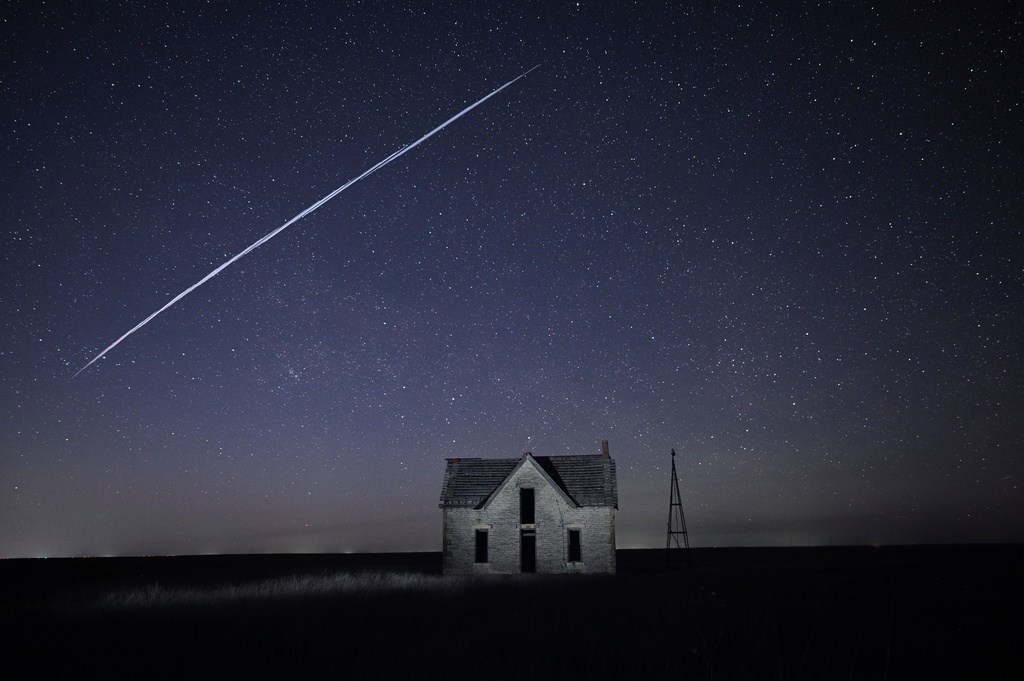
After all, Australia and New Zealand are members of the U.S.-led “Five Eyes” intelligence alliance. Australia also hosts a major joint U.S.-Australian intelligence base focused on space-based operations. China revels in concealing espionage efforts under the cover of seemingly harmless corporate entities. Indeed, China is building out a network of thousands of satellites to rival and even target Elon Musk’s Starlink network.
The DIA also examines the success of Iran and North Korea in disrupting satellites via land-based jamming stations. It explains that both nations are exploiting their ballistic missile programs to develop means of physically destroying satellites in space. And although it leaves out classified details, the report also hints at Russia’s bolstering of North Korea’s space-based capabilities. It’s Putin’s way of reciprocating North Korea’s military support and arms supplies for Russia’s war on Ukraine.
Unfortunately, the challenge isn’t limited to nation-states. “Space commercialization is making previously government-centered space services available to interested parties with sufficient means, including state and non-state actors with malign interests,” the DIA explains. Put simply, we need to prepare for the day when terrorists enter the space battleground.
HERE ARE THE STATES WITH VOTER ID ON THE BALLOT THIS NOVEMBER
The report makes for sober reading. Still, it leaves the United States in a challenging but far-from-impossible position.
For one, it utterly vindicates President Donald Trump’s decision to establish the Space Force. But it also underlines the need for continued investment in America’s defensive and offensive prowess. Only the threat of far greater retaliation will deter our adversaries from harming America from high above. And only the means of carrying out that retaliation will ensure an adversary suffers outsize pain for its folly.
Continue reading...
[ H/T Washington Examiner ]