


The Relist Watch column examines cert petitions that the Supreme Court has “relisted” for its upcoming conference. A short explanation of relists is available here.
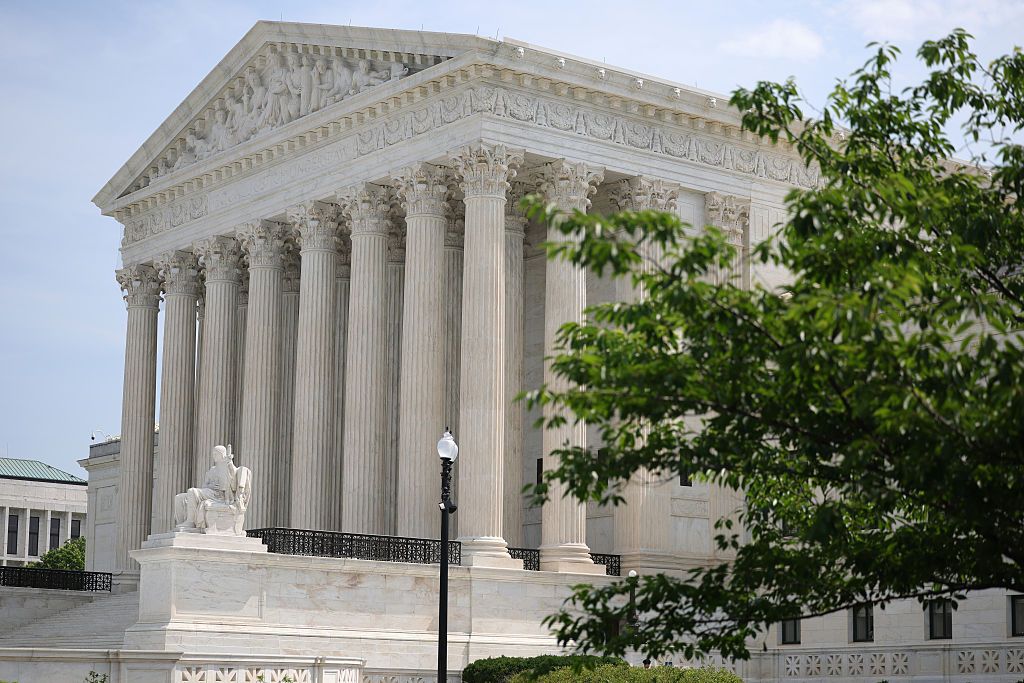
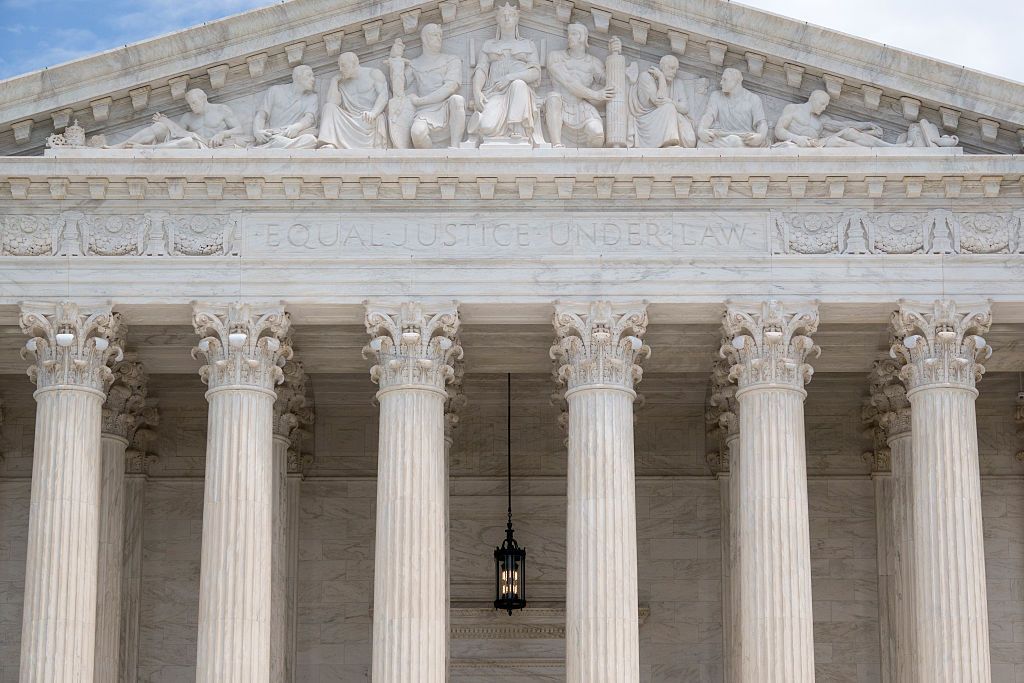
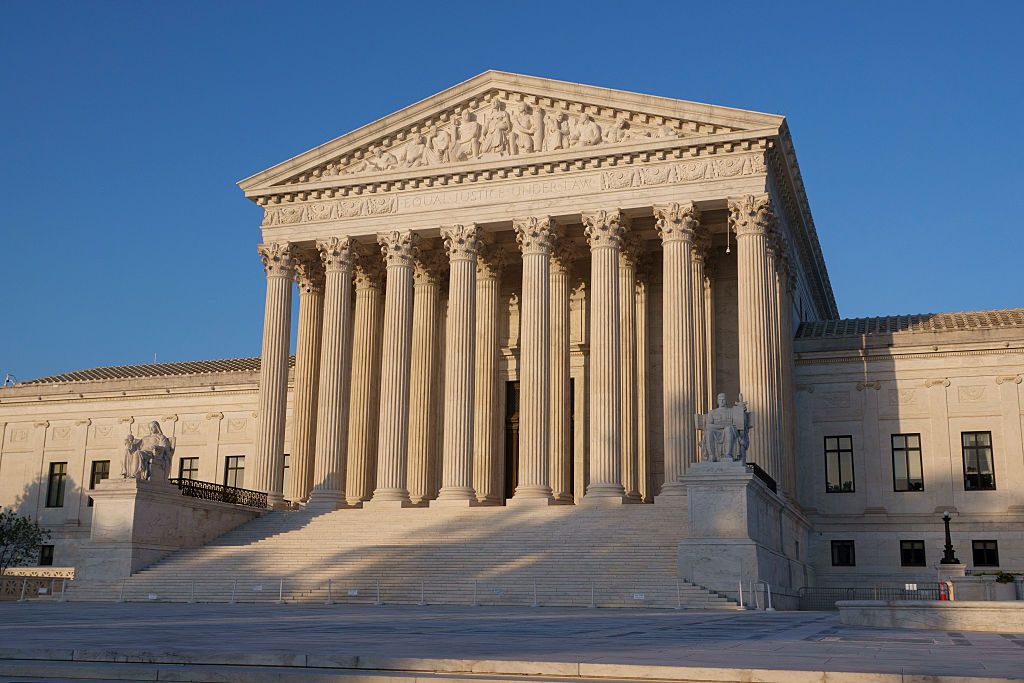
Welcome back! The justices returned from their lazy, carefree days of summer recess to tackle the end-of-summer “long conference” on Sept. 28, where they worked through the hundreds of petitions that piled up while they were away. The court has already granted review in three cases from that conference. But, like any good teacher on the first day of class, the justices asked some of the petitions to stay after school.
There are exactly 100 cases and applications on the docket for this Friday’s conference, which makes this the rare Relist Watch where the math is easy enough for even a lawyer: 14 of the cases on the docket, or 14%, are actual relists. Thirteen are new, and one is a summer holdover from last term. (I’ll also say a word at the end about seven pro se petitions that have been relisted for reasons that probably have little to do with plenary review, and I haven’t included those in the count.) With that many cases, my treatment will have to be summary.
A summer holdover
Only one relist from the 2025-26 term survived the summer recess: Berry v. United States, which I first discussed in June. Corey Berry asks whether a certificate of appealability should issue when a prisoner’s claim is foreclosed by his own circuit’s precedent but has been accepted by another circuit. The justices considered the case at their last two scheduled June conferences but didn’t act before the summer recess. And it is no coincidence that one of this week’s new relists, Clark v. United States, raises the same question; the court appears to have held Berry to let Clark catch up. In an August supplemental brief, Berry argues that his case is the cleaner vehicle and urges the court to grant his petition and hold Clark’s. Clark, for his part, suggests the court take both. So the justices may be picking a vehicle or deciding whether they need two.
Tear gas and tow trucks: a takings trio
The takings clause of the Fifth Amendment bars the government from taking private property for public use without just compensation. For years, the Supreme Court has been asked whether that clause is implicated when police destroy an innocent person’s property while trying to catch a suspect. The justices have repeatedly turned the question away. In Baker v. City of McKinney, for example, they denied review, but Justice Sonia Sotomayor issued a statement, joined by Justice Neil Gorsuch, calling the issue an important and complex one that had divided the courts of appeals, and saying that it “would benefit from further percolation.” This week brings two companion petitions from the Institute for Justice, filed the same day, plus a third case asking where the police power ends.
In Hadley v. City of South Bend, police surrounded Amy Hadley’s house with a warrant for a dangerous fugitive. Only one problem: the fugitive had never been there. Hadley’s 15-year-old son walked out with his hands up, and Hadley told police that her security cameras showed no one else inside except the family kitten. Police still fired dozens of tear gas grenades through the windows, punched holes in the walls, and ransacked the house. The fugitive was arrested elsewhere four days later. But Hadley was left with roughly $16,000 in damage. The U.S. Court of Appeals for the 7th Circuit rejected her takings claim under its “police-power exception,” which holds that no compensation is due when property is damaged under some power other than eminent domain.
Pena v. City of Los Angeles is the West Coast sequel. A fugitive fleeing law enforcement actually did barricade himself in Carlos Pena’s North Hollywood print shop, but he escaped sometime during a 13-hour standoff that left Pena’s shop saturated with tear gas. Pena says the gas destroyed over $60,000 in printing equipment and inventory. The U.S. Court of Appeals for the 9th Circuit held that the common-law defense of public “necessity” barred his takings claim.
The petitioners contend that the circuits are divided between courts that have recognized a “police-power” exception to the takings clause and courts that have rejected it. The cities respond that the split is illusory: whatever label they use, every court agrees that damage reasonably caused by law enforcement isn’t compensable.
Then there is O’Donnell v. City of Chicago, which replaces the SWAT team with a parking-enforcement bureaucracy. Under Chicago’s municipal code, a driver with three unpaid parking-ticket judgments, or two for over a year, can have every vehicle registered in his name booted, towed, and impounded. If the owner can’t pay the fines plus the boot, tow, and storage fees, the city disposes of the vehicle. Ryan O’Donnell and Michael Goree allege that the city sells the cars, keeps the proceeds, credits nothing against the ticket debt, and refunds no surplus. O’Donnell lost his car over three parking tickets totaling a few hundred dollars. Goree lost his because his co-signor owed ticket debt on a different car. The U.S. Court of Appeals for the 7th Circuit, applying Hadley, held that immobilizing, towing, impounding, and if necessary disposing of vehicles is an exercise of Chicago’s police power to enforce its traffic laws and therefore “isn’t a taking.” The petition leans heavily on Tyler v. Hennepin County, in which Chief Justice John Roberts wrote for a unanimous court in 2023 that a county couldn’t keep the surplus from a tax-foreclosure sale. In its brief, Chicago argues that the petitioners never even cite Hadley and claim the petition is a poor vehicle.
Taken together, the cases give the justices several ways to address the issue. If the justices really were waiting for percolation, they now have quite a pot to choose from.
Who’s the Bossier?
The next pair of relists comes from a single encounter outside a Christian rock concert and now has swept up two Supreme Court short-listers and two of the most prominent Supreme Court advocates. Richard Hershey was handing out pamphlets on Christian vegetarianism at the 2020 “Winter Jam” concert in northwest Louisiana. He was on a sidewalk on the grounds of an arena in Bossier City, La., that the city owns and a private company operates. Two police officers and three private security guards approached Hershey and told him to leave or be arrested, so he left. Hershey says the officers ignored another leafleteer nearby who was handing out cards for a radio station.
The resolution of Hershey’s First Amendment lawsuit by the U.S. Court of Appeals for the 5th Circuit left both sides unhappy. A divided panel of the panel granted the officers qualified immunity because the law wasn’t clearly established. Judge James Ho supplied the deciding vote on that point, though he wrote that he was doing so only because circuit precedent compelled it. But a different majority (again with Ho providing the deciding vote) allowed Hershey’s claim that the city had failed to train its officers to proceed under Monell v. Department of Social Services. The full court denied rehearing by a 10-7 vote, with Judge Andrew Oldham writing an opinion for the dissenters. So, in effect, the violation was obvious enough to allow the failure-to-train claim against the city to proceed but not clearly established enough to strip the officers of immunity.
Each side is now seeking review. In City of Bossier City v. Hershey, the city, represented by Jeffrey Wall, argues that the decision turns the narrow “single-incident” theory of failure-to-train liability, which the Supreme Court floated in 1989’s City of Canton v. Harris, into the very vicarious liability Monell forbids. In particular, the city says a single-incident Monell claim can’t rest on a right that isn’t clearly established, and it identifies a split with the U.S. Courts of Appeals for the 2nd, 6th, and 8th Circuits on that question. All of the states within the 5th Circuit have filed an amicus brief in support.
In the cross-petition, Hershey v. City of Bossier City, Hershey, now represented by Paul Clement, argues that the 5th Circuit alone has confined Hope v. Pelzer’s rule (that obvious constitutional violations don’t need an on-point precedent to defeat qualified immunity) to Eighth Amendment claims. Hershey has attracted roughly 15 amicus briefs, including, fittingly, one from the Christian Vegetarian Association. The city responds that no one disputes Hope applies to the First Amendment, that the 5th Circuit has applied it there, and that Hershey never raised Hope below. A slug-fest in the 5th Circuit has now turned into a slug-fest at the Supreme Court.
Two volleys, one second look
In Moore v. Romero, the city of Lansing, Mich., and two Lansing police officers seek review of a decision denying them qualified immunity for the second of two volleys in a fatal shooting captured on body camera. Responding to a domestic-disturbance call and a report of a possible shooting, the officers encountered Stephen Romero beside a car. Romero eventually reached for a pistol in his waistband, and the officers fired. After falling, he reached for the gun again despite an order to “Stop!,” and they fired a second volley. All the shots came within about five seconds.
A divided panel of the U.S. Court of Appeals for the 6th Circuit held that Romero’s estate had plausibly alleged that the second volley violated clearly established law. Judge Richard Griffin dissented, warning that the ruling “endangers the lives of all law enforcement officers in the Sixth Circuit.” Five judges dissented from the denial of rehearing en banc.
The officers argue that the majority improperly segmented the encounter, contrary to last term’s Barnes v. Felix, and applied qualified immunity at too high a level of generality because the case was at the pleading stage – even though body-camera footage captured the encounter. The estate responds that the majority properly considered the entire encounter and that the dispute is fact-bound and interlocutory. If this fact-pattern sounds familiar, it should. Last June, the court denied review in City of Los Angeles v. Estate of Hernandez, another body-camera case about whether an officer unlawfully fired a final volley after the initial threat had subsided. That one took 11 relists before the court denied review, and both Justices Clarence Thomas and Samuel Alito said they would have granted. We’ll see soon if they’ve persuaded two more of their colleagues.
Free Speech
Our next two relists both involve the First Amendment, though from opposite directions.
In Khatibi v. Yip, a California ophthalmologist and the physicians’ group Do No Harm challenge a 2019 state law, effective in 2022, requiring every continuing medical education course addressing patient contact to include curriculum on “implicit bias.” Dr. Azadeh Khatibi teaches courses on retinal tumors, glaucoma, and other eye diseases. She says the requirement forces her to devote scarce class time to a contested theory she considers irrelevant to her subjects. The U.S. Court of Appeals for the 9th Circuit held that the courses are government speech and therefore beyond First Amendment scrutiny. The full court denied rehearing over the dissent of Judges Lawrence VanDyke, Patrick Bumatay, and Eric Tung.
The petition, filed by the Pacific Legal Foundation (and backed by the Cato Institute and a group of states led by Montana), warns that the ruling would let states conscript licensed professionals to deliver the government’s message. California responds that the holding is narrow and specific to its CME program: Khatibi remains free to teach whatever she likes, just not necessarily for state-approved CME credit. The state warns that Khatibi’s theory could subject ordinary CME content requirements to strict scrutiny, including requirements that doctors receive instruction on subjects such as pain management.
StandWithUs Center for Legal Justice v. Massachusetts Institute of Technology arises from campus protests after the Oct. 7, 2023, Hamas attacks in Israel. Jewish students and the StandWithUs Center for Legal Justice sued MIT under Title VI, alleging that the university tolerated a hostile environment. The U.S. Court of Appeals for the 1st Circuit affirmed dismissal.
The petition challenges two aspects of that ruling. First, it says the court treated the harassers’ subjective discriminatory intent as an element of a hostile-environment claim, deepening what the petitioners describe as a 5-3-4 circuit split. Second, it says the court held that “protected speech” cannot create an actionable hostile environment, which petitioners say creates a 3-1 split. The amici include Sens. Ted Cruz and Rick Scott, Hillel, and the Louis D. Brandeis Center. MIT counters with what it says is a “fatal vehicle problem”: Quite apart from its rulings on what counts as actionable harassment, the 1st Circuit held that MIT was not deliberately indifferent because it responded with an “escalating series of actions” as the protests continued – an independently sufficient ground for affirmance that neither question presented directly challenges.
Discovery and dinner: the government’s petitions
The solicitor general is behind two of this week’s relists. The government’s grant rate is higher than that of any other litigant, so these deserve a close look.
U.S. DOGE Service v. U.S. District Court for the District of Columbia is the second trip to the Supreme Court for a Freedom of Information Act fight the justices have already seen once on the emergency docket. Citizens for Responsibility and Ethics in Washington filed a FOIA request with the U.S. DOGE Service four days after President Donald Trump established it. The government says DOGE is a purely advisory body within the executive office of the president and thus not an “agency” subject to FOIA. To test that claim, the district court authorized discovery into DOGE’s structure and authority, including a deposition of its administrator, Amy Gleason.
In June 2025, over the dissenting votes of Justices Sonia Sotomayor, Elena Kagan, and Ketanji Brown Jackson, the court granted a stay, treated the application as a cert petition, vacated the D.C. Circuit’s denial of mandamus, and sent the case back. The court said discovery into the content of DOGE’s internal recommendations was not appropriately tailored and cited Cheney v. U.S. District Court for the principle that separation-of-powers concerns call for judicial restraint. On remand, CREW withdrew those requests, and the D.C. Circuit granted mandamus as to them but otherwise denied relief in an unpublished order.
The government’s petition seeks summary reversal or plenary review, arguing that the D.C. Circuit ignored the Supreme Court’s instructions and that courts should not authorize broad discovery into a presidential advisory body merely to decide whether FOIA applies. CREW responds that the D.C. Circuit followed those instructions to the letter, that the government identifies no conflict with another appellate decision, and that it forfeited many of its specific objections.
In Blanche v. Ozurumba, the question is whether cooking can count as “material support” for terrorism. Izuchukwu Ozurumba, a Nigerian national, accepted work as a cook at a remote camp, only to discover that it was run by a violent separatist group known as the “Unknown Gunmen.” He cooked three meals a day for 15 to 17 of the group’s leaders for about six months, three without pay, before escaping during a grocery run. An immigration judge and the Board of Immigration Appeals held that the Immigration and Nationality Act’s material-support bar made him ineligible for asylum and withholding of removal. He was removed to Nigeria in April 2025.
A divided panel of the 4th Circuit reversed. The majority read “material” to require support that is both relevant to terrorism and significant enough to make a difference and held that Ozurumba’s cooking did not qualify because it provided nothing the group could use or readily divert to plan or carry out terrorist activities. Judge Julius Richardson dissented, reasoning that “[a]n organization acts through its members, and its members need to eat.” The government argues that the ruling conflicts with 2010’s Holder v. Humanitarian Law Project and with decisions of the U.S. Courts of Appeals for the 2nd and 3rd Circuits treating food and shelter unconnected to any particular terrorist act as material support; it says the 4th Circuit’s rule will complicate thousands of immigration proceedings each year.
Ozurumba responds that the supposed split is manufactured and that the dispute is fact-bound. He also points to a vehicle problem: the 4th Circuit expressly declined to resolve whether the material-support bar contains an implied exception for support provided under duress.
An Apple a day keeps the arbitrator away?
Arbitration remains a staple of the court’s business docket, and Goldman Sachs Bank USA v. Brown asks whether bankruptcy provides one of the exceptions to arbitrability. Rhea Ann Brown and Gregory Kevin Maze both held Apple Cards issued by Goldman Sachs and agreed to arbitrate disputes. After each filed for bankruptcy, they allege, Goldman kept sending payment demands and making collection calls in violation of the Bankruptcy Code’s automatic stay. They responded with a putative nationwide class action seeking damages under Section 362(k), the Bankruptcy Code’s private right of action for willful stay violations.
By the time they sued, Maze’s Chapter 7 case had closed and Brown’s Chapter 13 plan had been confirmed, although her bankruptcy remained open. The bankruptcy court nevertheless refused to compel arbitration. A divided 4th Circuit affirmed, reasoning that arbitrating Section 362(k) claims would conflict with the Bankruptcy Code’s central purposes. Judge Robert King dissented, saying the majority had created a “clear circuit split” with the 2nd Circuit. When the panel later refused to stay its mandate, King added that there was “a very solid chance” the Supreme Court would reverse.
Goldman’s petition, backed by the American Bankers Association, argues that the ruling defies the court’s long line of cases requiring arbitration of federal statutory claims absent a contrary congressional command. The debtors respond that the supposed split is illusory: unlike the debtor in the 2nd Circuit case, they say they sought relief not only under Section 362(k) but also under Section 105(a), which gives bankruptcy courts contempt authority. Goldman disputes that the original complaint pleaded any independent Section 105(a) claim.
After the case was distributed for the long conference, things got messier. The bankruptcy court dismissed the complaint without prejudice because the debtors had not adequately alleged actual damages, giving them 21 days to amend. They say they will do so – and, this time, expressly invoke Section 105(a) as an independent basis for monetary relief. Goldman calls that “yet another effort to manufacture a vehicle problem,” arguing that whatever else the amended complaint says, the 4th Circuit’s ruling still prevents arbitration of the Section 362(k) claims. The late-breaking procedural wrinkle may explain why the justices decided to take another bite at this Apple.
Found, and found again
Herrera-Salazar v. United States asks how many times the government may prosecute someone for being “found in” the United States without showing that he left in between. Jesus Herrera-Salazar, a Mexican national removed in 2015, illegally returned and was found near Brownsville, Texas, in 2020. He pleaded guilty to being “found in” the United States after removal under 8 U.S.C. § 1326(a) and served 15 months. Upon his release, however, he was not deported: prison officials gave him a bus ticket to Oklahoma and told him to report there for supervised release; Herrera-Salazar testified that his probation officer told him not to leave the state. In 2022, an officer discovered during an Oklahoma traffic stop that Herrera-Salazar was unlawfully present. The government prosecuted him again for being “found in” the country, relying on the same 2015 removal, and he received another 21 months. The U.S. Court of Appeals for the 10th Circuit affirmed, holding that the Texas and Oklahoma discoveries completed separate offenses.
Herrera-Salazar’s petition argues that the decision conflicts with holdings of the U.S. Courts of Appeals for the 5th, 7th, and (especially) 9th Circuits, which treat a “found in” violation as a continuing offense that ends when authorities find the defendant. The 9th Circuit has said that, to avoid the prospect of rearrest “at the prison gates,” the government must show that the defendant left the country before prosecuting him again. Herrera-Salazar says his case is that hypothetical with a bus ticket: the government released him into Oklahoma, supervised him there, and then prosecuted him for still being here. The government argues that “at any time found in” permits separate prosecutions for separate discoveries, and that the 9th Circuit expressly declined to decide the double-jeopardy question in the case Herrera-Salazar principally invokes. It also notes that the decision below is unpublished and says any unfairness arising from the conditions of supervised release sounds in due process, a claim Herrera-Salazar never raised.
Lost causes
Finally, the court relisted seven petitions from pro se litigants. In each, the respondent waived its right to respond and the court never asked for one. No one can remember the last time the Supreme Court granted review in a case without calling for a response first, so these cases are almost certainly doomed. The subjects run the gamut: a union member’s duty-of-fair-representation claim under the Railway Labor Act (Foster v. Jesel); a Florida custody dispute (Jacquett v. Jacquett); a Pennsylvania transit employee’s challenge to her firing (Leatham v. Mose); a First Amendment pre-enforcement challenge against the president (McClanahan v. Trump); a physician’s attack on his honest-services fraud conviction (Payne v. United States); a lawsuit asking, among other things, “[w]hether diversity, equity, and inclusion (DEI) will continue in the public schools of Arizona” (Karna v. Ross); and an original habeas petition claiming that President George W. Bush used the Patriot Act to classify the petitioners’ medical records (In re Davis).
A relisted batch of waived pro se petitions like this rarely signals a grant. More often, the court is deciding whether to deny the petitioners leave to proceed in forma pauperis as frivolous under Rule 39.8 of the court’s rules. It may also be deciding whether to impose a so-called Martin bar, which directs the clerk to reject any future noncriminal petitions from them unless they pay the docketing fee. That’s my best guess, though the court could just as easily deny these petitions in the ordinary course next week. If sanctions do come, a dissent from Justice Ketanji Brown Jackson is possible but far from certain. In January she wrote at length criticizing these forward-looking filing bars, and she has dissented from them repeatedly since (see here, here, and here). But every one of those dissents involved an incarcerated petitioner, and none of this group appears to be filing from behind bars. So this batch may also tell us whether she thinks her concerns extend to litigants on the outside.
That’s more than enough for opening week. I don’t know about you, but I miss summer already. See you next week!
New Relists
O’Donnell v. City of Chicago, 25-1098
Issues
 1) Whether the City of Chicago’s practice of impounding and selling a driver’s vehicle upon three unpaid parking tickets – keeping all sale proceeds without offsetting the ticket debt or refunding the surplus, and extending this to all vehicles registered to the driver, including those never ticketed and those purchased after any infraction – constitutes an unconstitutional taking; and (2) whether the takings clause places any limit on the ability of a local government to confiscate property under its police power.
(Relisted after the Sept. 28 conference.)
U.S. DOGE Service v. U.S. District Court for the District of Columbia, 25-1103
Issues: (1) Whether the court of appeals’ order departed from this court’s instructions and the separation-of-powers principles that this court articulated in Cheney v. United States District Court; and (2) whether a court may order broad discovery against an executive office advisory body – potentially providing much information sought on the merits of a plaintiff’s FOIA claims – to determine whether FOIA’s disclosure requirements apply in the first place.
(Relisted after the Sept. 28 conference.)
Hadley v. City of South Bend, 25-1158
Issues: (1) Whether the takings clause has a police-power exception, making no compensation due when the government damages private property under its police power outside of eminent domain – or not; and (2) whether the government is exempt from liability under the takings clause when law enforcement officers intentionally destroy an innocent person’s property while trying to apprehend a fugitive.
(Relisted after the Sept. 28 conference.)
Pena v. City of Los Angeles, 25-1163
Issues: (1) Whether the government is exempt from liability under the takings clause when law enforcement officers intentionally destroy an innocent person’s property in the course of attempting to apprehend a fugitive; and (2) whether the doctrine of public “necessity” is an exception to the takings clause.
(Relisted after the Sept. 28 conference.)
Clark v. United States, 25-1199
Issues: (1) Whether, as this court suggested in Slack v. McDaniel, the existence of a circuit split alone, notwithstanding contrary home circuit precedent, can demonstrate that reasonable jurists could find a claim debatable for purposes of granting a certificate of appealability under 28 U.S.C. § 2253(c)(2); and (2) whether collateral challenges to noncustodial punishment, such as forfeiture orders or restitution awards, can be cognizable under Section 2255 if the financial penalty is sufficiently severe that it restrains liberty.
(Relisted after the Sept. 28 conference.)
Khatibi v. Yip, 25-1240
Issue: Whether private instruction in courses required for state licensure constitutes government speech.
(Relisted after the Sept. 28 conference.)
Moore v. Romero, 25-1295
Issues: (1) Whether, in a use-of-force case which involves multiple instances of force, Barnes v. Felix requires that each use-of-force be analyzed progressively from before the first instance of force used through the last instance of force used, considering the information known to the officer, the suspect’s prior actions (including any compliance, non-compliance, resistance, and reaching or grabbing for a weapon), and the suspect’s reactions to those prior use(s)-of-force, and, if so, whether Officers Moore and Kurtz violated Stephen Romero’s constitutional rights under this standard; and (2) whether, when analyzing a defendant law enforcement officer’s motion brought under Rule 12(b)(6) or 12(c), in a use-of-force case where body camera video clearly depicts the entire lead-up to and application of force by a law enforcement officer, whether the lower courts may analyze the clearly established prong of qualified immunity at a more general, plaintiff-friendly, level than at the motion for summary judgment stage of litigation and, if not, whether Officer Moore and Officer Kurtz are entitled to qualified immunity under the facts of this case.
(Relisted after the Sept. 28 conference.)
City of Bossier City v. Hershey, 25-1323
Issues: (1) Whether a plaintiff can plead single-incident municipal liability without alleging a violation of a clearly established constitutional right; and (2) whether a plaintiff can plead single-incident municipal liability without alleging a complete lack of training on the constitutional right in question.
(Relisted after the Sept. 28 conference.)
Blanche v. Ozurumba, 25-1343
Issue: Whether, under 8 U.S.C. § 1182(a)(3)(B)(iv)(VI), material support to a terrorist organization must advance the organization’s actual commission of terrorism to qualify the alien as removable and ineligible for various immigration benefits.
(Relisted after the Sept. 28 conference.)
Hershey v. City of Bossier City, 25-1389
Issue: Whether the principles of Hope v. Pelzer are limited to Eighth Amendment claims or extend to free speech and free exercise clause claims such that petitioner’s constitutional claims should not be barred by qualified immunity.
(Relisted after the Sept. 28 conference.)
StandWithUs Center for Legal Justice v. Massachusetts Institute of Technology, 25-1404
Issues: (1) Whether the harassers’ subjective discriminatory intent is an element of a hostile environment claim under Title VI; and (2) whether the First Amendment bars a plaintiff from pleading a Title VI hostile environment claim based on “protected speech.”
(Relisted after the Sept. 28 conference.)
Goldman Sachs Bank USA v. Brown, 25-1408
Issue: Whether, and under what circumstances, a bankruptcy court may override the Federal Arbitration Act and refuse to honor a valid arbitration agreement with respect to Section 362(k) claims.
(Relisted after the Sept. 28 conference.)
Herrera-Salazar v. United States, 25-6989
Issue: Whether the double jeopardy clause prohibits a second prosecution for the crime of illegal reentry, specifically, the “found in” offense under 8 U.S.C. § 1326(a), where the government fails to show that, after the first prosecution of the defendant for being found in the United States, the defendant was removed from the country and later reentered the country illegally.
(Relisted after the Sept. 28 conference.)
Returning Relists
Berry v. United States, 25-7026
Issue: Whether a certificate of appealability under 28 U.S.C. § 2253 should be granted where the issue that the petitioner seeks to raise on appeal has been resolved against him by binding circuit precedent but has been resolved in his favor by another circuit.
(Relisted after the June 18, June 25, and Sept. 28 conferences.)
Continue reading...
[ H/T SCOTUSblog ]