
China’s approach to gold has evolved from simple reserve building to a sophisticated multi-layered strategy aimed at reducing dollar dependency and increasing financial sovereignty.
Protect & SurviveThe Financial Jigsaw Part 2 (Episode 92) Describes the basis of China’s financial strategy is to match the growth of money supply with growth in production and services. Zoltan Pozsar (2022) argued that the freezing of Russia’s foreign-exchange reserves exposed a fundamental vulnerability in an international monetary system built on Western sovereign debt liabilities. He identified a pivot toward physical commodities and gold assets without sovereign counterparty risk. While not explicitly a blueprint for China, Pozsar pinpointed the macroeconomic shift that made an alternative yuan architecture viable.
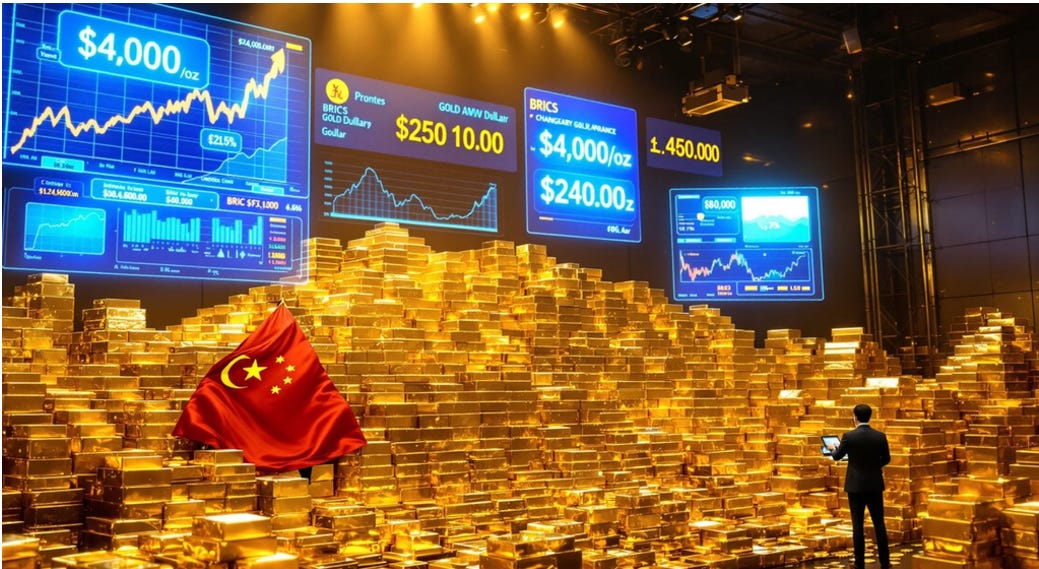
This is part of a series examining the emergence of China’s banking system as it competes with the ruling US dollar against the medium of international finance and trade exchange.
The Scale of China’s Gold Accumulation has dramatically increased its official gold holdings over recent years, with the People’s Bank of China (PBOC) reporting approximately 2,264 tonnes as of late 2024, according to the World Gold Council. This places China as the world’s sixth-largest official gold holder, though these official figures likely represent only a fraction of its actual reserves.
Austrian’s Newsletter is a reader-supported publication. To receive new posts and support my work, consider becoming a free or paid subscriber.
The PBOC resumed reporting monthly gold purchases in November 2022 after a three-year pause, adding gold to reserves for 18 consecutive months through May 2024. During this period, China increased its holdings by approximately 316 tonnes, demonstrating a consistent acquisition strategy.
However, market observers speculate actual reserves could be substantially higher when including undisclosed stockpiles held in various accounts. China maintains separate accounting systems for monetary versus non-monetary gold holdings, creating analytical challenges for outside observers. State-owned enterprises, sovereign wealth funds, and other government-affiliated entities may hold additional reserves not reflected in official statistics, potentially doubling or tripling the publicly reported figures.
China’s gold strategy serves multiple strategic objectives that extend far beyond simple portfolio diversification, representing a comprehensive approach to financial sovereignty. The freezing of approximately $300 billion of Russian foreign exchange reserves following the Ukraine conflict in February 2022 served as a powerful wake-up call for Chinese financial planners. This unprecedented action by Western nations demonstrated the vulnerability of dollar-denominated assets to geopolitical sanctions.
Physical gold holdings provide China with unique advantages in this environment. Unlike digital currency reserves held in correspondent banking systems, physical gold stored domestically cannot be frozen by foreign governments. Gold represents a non-sovereign store of value independent of Western financial infrastructure, providing a potential foundation for alternative payment mechanisms in a more fragmented global economy.
This strategy aligns with broader Chinese efforts to reduce exposure to dollar-based financial systems. By building physical gold reserves, China creates a sanctions-resistant foundation for international trade and finance, particularly with other nations seeking alternatives to dollar dominance.
The Shanghai Gold Exchange (SGE) has expanded to become the world’s largest physical gold exchange by trading volume, handling approximately 27,500 tonnes of gold in 2023 according to the exchange’s annual report. Unlike Western exchanges, that primarily trade paper contracts, the SGE emphasises physical delivery. In 2023, physical gold withdrawals from the SGE totalled approximately 2,000 tonnes, representing actual physical delivery to the Chinese market.
China has established extensive gold vaults and bonded warehouses to encourage international storage within its borders. This physical infrastructure supports a growing ecosystem of gold-backed financial products for both domestic and international markets, creating alternatives to Western gold trading hubs like London and New York.

In a significant policy development, Chinese regulators have been exploring increased gold allocations for domestic insurance companies. This institutional approach to gold investment represents a potential major shift in global gold market performance. Chinese insurance companies collectively manage approximately $4.1 trillion in assets according to the National Financial Regulatory Administration’s mid-2024 data. Even a small percentage allocation to physical gold from this massive pool would represent substantial new demand in the global gold market.
Industry sources suggest Chinese regulators are examining policies that would allow or encourage insurance companies to allocate a portion of their assets to gold. While specific mandates remain under development, even a 1% allocation across the sector could potentially represent tens of billions of dollars in new gold demand. This institution of gold demand would create a stable, long-term buyer base, reducing market volatility while signalling official endorsement of gold as a strategic asset class within China’s financial system.
The insurance sector represents just one element of a broader strategy to integrate gold more deeply into China’s financial landscape. State pension funds are similarly exploring increased gold allocations, while retail gold investment products are being actively promoted to Chinese citizens. Gold is increasingly positioned as a patriotic investment aligned with national interests. Financial education programs highlight gold’s role in preserving purchasing power during periods of currency volatility, reinforcing public support for the national gold strategy.
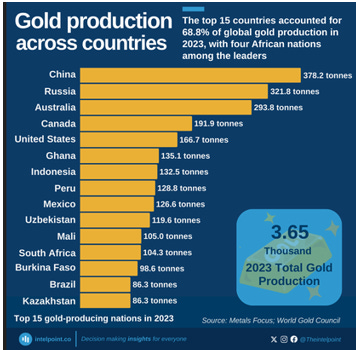
China leads the world in gold production, mining approximately 370-375 tonnes annually according to the U.S. Geological Survey’s 2024 data. This domestic production forms a critical component of the nation’s gold strategy. China maintains strict export controls on domestically mined gold. According to Chinese customs regulations, gold mined within China generally remains within the country’s borders, ensuring domestic production strengthens national reserves rather than supplying international markets.
State-owned enterprises dominate China’s mining sector, ensuring strategic alignment with national policy. This control enables coordination between production targets and broader financial objectives. China’s gold production has gradually declined from its peak of approximately 455 tonnes in 2016, according to China Gold Association data. This decline reflects both environmental restrictions and the depletion of easier-to-mine deposits. Despite these challenges, China continues to prioritise domestic gold production through technology investments and selective enforcement of environmental regulations.
Beyond domestic production, China has systematically invested in gold mining operations globally. Chinese companies have established significant presence in African gold mining, particularly in Ghana and other West African nations. Chinese mining investments typically follow a pattern of vertical integration, incorporating investments in refining and processing facilities alongside mining operations.
This approach ensures control over the entire gold production chain while creating economic and political leverage in resource-rich nations. Technology transfers to host countries create interdependencies that strengthen China’s position in international gold markets while securing long-term supply chains independent of Western financial systems.
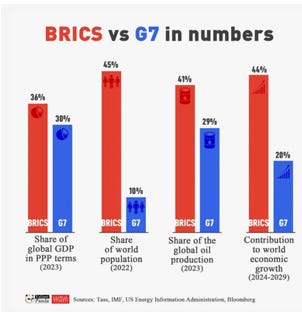
Gold plays a central role in China’s engagement with BRICS partners and other emerging economies, providing a neutral foundation for economic cooperation outside Western financial systems. Gold provides a neutral settlement mechanism acceptable to all BRICS members, many of whom have historically contentious relationships. Russia, another major gold producer, has aligned its monetary strategy with China’s, creating powerful synergies within the alliance.
BRICS nations collectively control a significant percentage of global gold production. This production base creates natural advantages for gold-based financial cooperation, allowing member countries to reduce reliance on dollar-based trade settlement. Gold-backed trade settlement systems reduce exposure to dollar-based sanctions, providing BRICS members with increased economic sovereignty in an increasingly fractured global economy. This alignment of interests around gold strengthens political cooperation on other issues.
China’s alternative to SWIFT, the Cross-Border Interbank Payment System (CIPS), provides infrastructure for international payments independent of Western financial systems. While SWIFT is primarily a messaging system rather than a settlement mechanism, CIPS combines messaging with settlement functionality. CIPS operates on a real-time gross settlement (RTGS) basis for direct participants, enabling much faster settlement for domestic transactions than traditional correspondent banking systems. For cross-border transactions, settlement times vary depending on banking relationships and time zones, though they typically remain faster than SWIFT-facilitated transactions.
As of 2023, CIPS had 1,421 participating banks across 110 countries according to official data. This growing network provides China and its trading partners with increased financial autonomy while reducing exposure to Western financial infrastructure and potential sanctions. China’s gold accumulation is already reshaping global financial markets and geopolitical relationships, with impacts extending far beyond precious metals markets.
Gold prices have shown substantial appreciation in recent years, partly driven by consistent Chinese demand both from official sources and private institutions. This steady buying has reduced price volatility while creating strong support levels during market corrections.
Major investment banks have begun recommending increased gold allocations in response to changing monetary conditions and growing recognition of gold as an inflation hedge. While traditional portfolio models typically suggested minimal gold exposure, newer models often incorporate substantially higher allocations to precious metals.
The relationship between gold and silver prices has also evolved, with industrial demand for silver creating new dynamics in the precious metals complex. Silver’s dual role as both a monetary and industrial metal has gained increased attention as technologies requiring silver continue to expand.
China’s gold strategy is creating global economic realignments. Resource-rich nations increasingly view China as a preferred partner for monetary cooperation, particularly those seeking alternatives to traditional dollar-denominated trade. Western central banks have accelerated their own gold purchases in response to these developments. According to a recent Bloomberg analysis, global central banks purchased 1,037 tonnes of gold in 2023, marking the second-highest year of net purchases on record.
Countries under Western sanctions increasingly find economic lifelines through gold-facilitated trade with China and other BRICS nations. This creates new geopolitical dynamics as gold becomes an instrument for circumventing traditional financial restrictions.

China’s development of the digital yuan (e-CNY) intersects with its gold strategy in significant ways, potentially creating powerful synergies between traditional and digital monetary systems. As of 2024, China’s digital yuan had been piloted in multiple cities with over 260 million individual wallets opened and total transactions exceeding 1.8 trillion yuan, according to People’s Bank of China data. While the e-CNY currently operates as a digital version of the Chinese yuan backed by the full faith and credit of the PBOC, some analysts speculate about potential future connections to gold reserves.
A gold-linked digital currency would potentially enhance international acceptance, particularly among countries seeking alternatives to dollar-based systems. The combination of digital efficiency with gold’s historical credibility could create a powerful alternative to existing international payment mechanisms.
It’s important to note that official PBOC communications have not confirmed plans for gold backing of the digital yuan. However, China’s simultaneous development of robust gold reserves and advanced digital currency infrastructure creates natural opportunities for future integration. Blockchain technology offers significant potential for enhancing gold verification and trading systems. Digital certificates of authenticity for physical gold holdings could reduce counterparty risk while streamlining international transfers.
Blockchain-based trading platforms have the potential to reduce settlement risk and increase transparency in physical and paper gold markets, addressing long-standing concerns about the integrity of international gold trading. Integration of physical gold verification with digital trading systems would combine traditional trust in physical gold with the efficiency of modern technology.
Despite its systematic approach, China faces several obstacles in fully implementing its gold-centred financial strategy, ranging from supply constraints to transparency issues. Global gold mine production has remained relatively flat at approximately 3,000-3,100 tonnes annually since 2016, according to World Gold Council data. This production plateau creates acquisition challenges for China and other major gold buyers.
China’s opacity regarding its true gold holdings creates challenges for both market participants and policy analysts. International scepticism about China’s official reserve figures undermines trust in its market data, creating uncertainty about actual supply-demand dynamics. Verification mechanisms for China’s gold reserves remain limited, with few independent audits of international holdings generally.
Physical gold ownership provides different benefits than paper gold investments, particularly in scenarios involving financial system stress or geopolitical tension. Understanding these distinctions becomes increasingly important as financial fragmentation increases. Geographic diversification of gold storage may become increasingly important as jurisdictional risks evolve. The location of gold holdings, not merely their existence, takes on additional significance in a multipolar financial world.
The most significant aspects of China’s gold strategy extend beyond simple price considerations, representing fundamental changes in the global monetary architecture.
Gold’s re-emergence as a monetary asset represents a paradigm shift in global finance after decades of being treated primarily as a barbaric relic. This evolution has implications across many asset classes and currencies.
The integration of gold into digital payment systems combine traditional monetary attributes with technological efficiency. This symbiosis potentially addresses limitations that previously restricted gold’s monetary utility. Gold’s role as a geopolitical tool is being redefined by Chinese innovation, creating new dynamics in international relations and economic diplomacy. Nations that understand these changing dynamics will be better positioned to navigate an increasingly complex global (Western) financial system.
China’s gold strategy represents a comprehensive approach to reshaping the international monetary system. By systematically accumulating physical gold, developing gold-focused financial infrastructure, and integrating gold into international trade relationships, China is positioning itself for increased financial sovereignty in a changing world. China views gold not merely as a commodity or investment, but as a strategic pillar in its vision for a multipolar financial world.
For global markets, policymakers, and bankers, understanding China’s gold strategy provides critical insights into one of the most consequential financial developments today. As this strategy continues to unfold, its impacts will likely be felt across asset classes, currencies, and geopolitical relationships for decades to come. Recent gold prices analysis suggests this trend is gaining momentum, with experts revising their gold price forecast upward as China’s central bank continues its gold buying spree. Sources
Edited extracts from Muflih Hidayat, Mining & Energy Journalist https://discoveryalert.com/chinas-gold-strategy-reshaping-global-finance-2025/
This article examines the intricate connection between China’s long-term objective of internationalising its currency, the yuan (RMB), and its substantial, sustained accumulation of gold reserves https://metalorix.com/en/learn/price-factors/yuan-internationalization-and-gold
China’s goal of attaining a global community with a shared future is shared by the vast majority of the global populace

Defeating Weaponized Finance and Energy and thus the Outlaw US Empire
Today began with some basic musings on the Moon of Alabama site that prompted thoughts about the premonitions and preparations undertaken by the Outlaw US Empire’s three main opponents—Russia, China and Iran. Those musings follow…https://karlof1.substack.com/p/defe...tm_medium=web&embedding_publication_id=762792
Afterword: “CB reserve managers are perfectly candid about where this goes, if you bother asking them, which the World Gold Council did. Seventy-four percent expect the dollar’s share of global reserves to be lower in five years. 83% expect gold’s share to be higher. A record 45% intend to buy more gold inside twelve months. It is what China has been quietly doing to its Treasury holdings for fifteen years, and how much faster it is doing it now, and why Japan’s debt problem and America’s are the same problem wearing different hats.”
“None of this says the US dollar is about to collapse. It is still the king currency, it sits on one side of the overwhelming majority of world trade, and it is going nowhere. So stop thinking about currencies. That is the trap. The comparison that matters is not one fiat against another. It is the whole financialised paper world against the world of things that have to be dug up, grown, refined or shipped. Gold, oil, copper, farmland, fertiliser. In an increasingly inflationary environment real things beat claims on other people’s promises, and they beat all the currencies at once rather than some of them.”
“Historical precedents demonstrate that currency internationalisation is a protracted process, often requiring deep capital markets, a freely convertible currency, and, critically, a high degree of trust and credibility. This is where gold enters China’s strategic calculus.”

Tweet
Continue reading...
[ H/T The Burning Platform ]