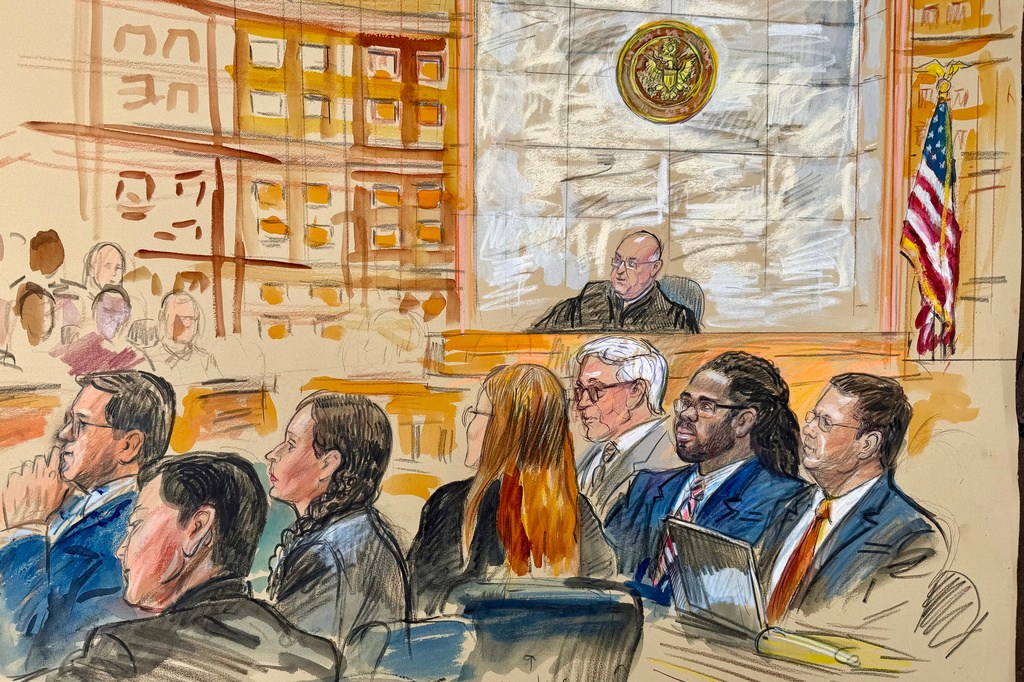




On Monday, the Supreme Court declined to hear former National Labor Relations Board member Gwynne Wilcox’s challenge to her firing. The justices gave no reasons, so the denial settles nothing on the merits. The outcome still matches what I learned running a business and coaching children. They call it the executive branch for a reason, and a duly elected president should be able to appoint leaders he has confidence in.
President Donald Trump fired Wilcox on Jan. 27, 2025. The statute lets a president remove a board member only for neglect of duty or malfeasance in office, after notice and a hearing. In Dec., 2025, the D.C. Circuit held that the board wields substantial executive power, so Congress can’t limit the president’s authority to remove its members. On June 29, a 6-3 Supreme Court overruled Humphrey’s Executor in Trump v. Slaughter, the 1935 precedent that let Congress insulate commissioners. Chief Justice John Roberts wrote that the Federal Trade Commission’s activities fall well within the heartland of executive power. Monday’s denial leaves the D.C. Circuit’s ruling standing.
The framers saw this coming. Article II vests the executive power in a single president, and Justice Antonin Scalia, dissenting in Morrison v. Olson, said of Congress’s attempt to dilute that arrangement: “this wolf comes as a wolf.” Hamilton made the practical case in Federalist 70, warning that a divided executive tends to “conceal faults and destroy responsibility.”
Hamilton’s warning has an NFL version. Imagine your favorite team’s head coach holding a contract nobody can cancel. The team goes 2-14, and the owners lose their minds. After more than a decade coaching youth football and rugby, I can tell you the parents in the stands react the same way. Voters own the executive branch, and Congress keeps handing out contracts they can’t cancel.
Voters can’t fire a commissioner. They can fire a president every four years. Presidents of both parties want their own people at the NLRB. Former President Joe Biden fired NLRB General Counsel Peter Robb on January 20, 2021, after Robb refused to resign. A different office, but the same instinct. Constitutional scholar Jonathan Turley notes that the same removal power would serve a potential President Gavin Newsom or Kamala Harris. I’d defend it for them too.
Three decades in finance, plus years as an expert witness in securities disputes, taught me that capital can live with almost any rule if someone answers for it. As a small business owner, I’d like to know whose name sits on the rules I have to follow. An agency whose leaders answer to nobody writes rules nobody can vote on. Vito Corleone made offers nobody could refuse, and he never stood for reelection either.
Critics have a fair point about disruption. Wilcox’s removal left the board with two members and no quorum to decide cases. The board went nearly a year without one before new members were sworn in on Jan. 7. A year is too long. The cure is faster nominations and confirmations.
Wilcox also argued she deserved judge-like protections because the board decides disputes the way a court does. Yet federal judges hold their offices during good behavior under the Constitution itself, while board members serve five-year terms Congress set by statute. The D.C. Circuit also found that the board makes rules, issues remedial orders, and sues in federal court. The court does not treat every agency alike. In Trump v. Cook, it kept Federal Reserve governor Lisa Cook in her job while her case proceeds.
THE PENALTY FOR DOING YOUR HOMEWORK
The fix belongs to Congress. Lawmakers who want insulated adjudication can build a court for it, staffed by judges who only decide cases, instead of parking adjudicators inside agencies that also write rules and bring enforcement actions. That preserves independence and restores accountability. Lawmakers should also stop handing major policy decisions to agencies and then acting shocked when voters blame the president.
Epictetus opened his Enchiridion with a rule of thumb: Some things are in our control and others not. Voters control one thing here: the occupant of the Oval Office. Whoever answers for the record hires the coach. If we plan to hold a president responsible for the executive branch, he’d better pick his own staff.
Jay Rogers is a financial professional with more than 30 years of experience in private equity, private credit, hedge funds, and wealth management. He has a Bachelor of Science in criminal justice from Northeastern University and has completed postgraduate studies at UCLA, the University of Pennsylvania, and Harvard. He writes about issues in finance, constitutional law, national security, human nature, and public policy.
Continue reading...
[ H/T Washington Examiner ]