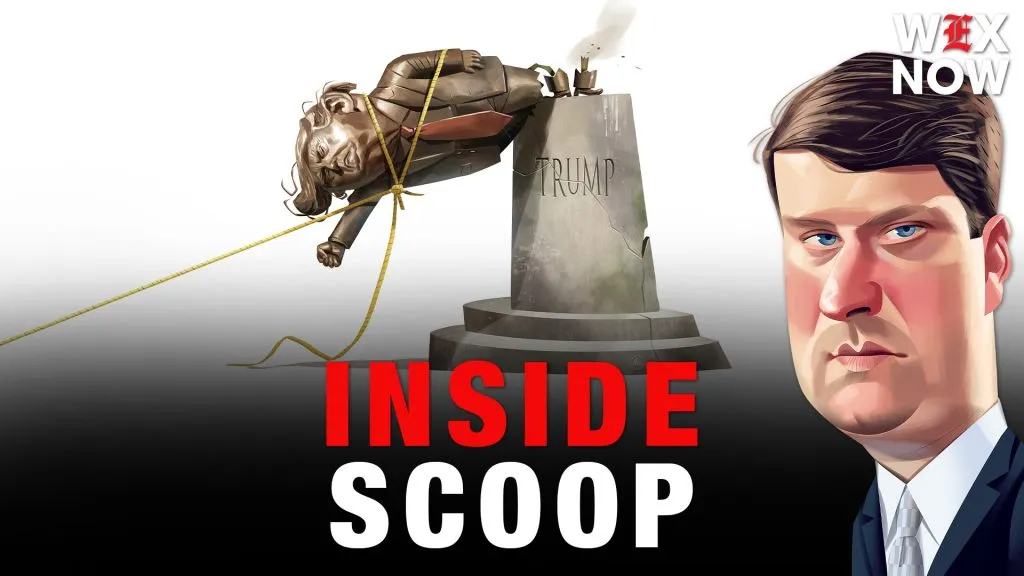



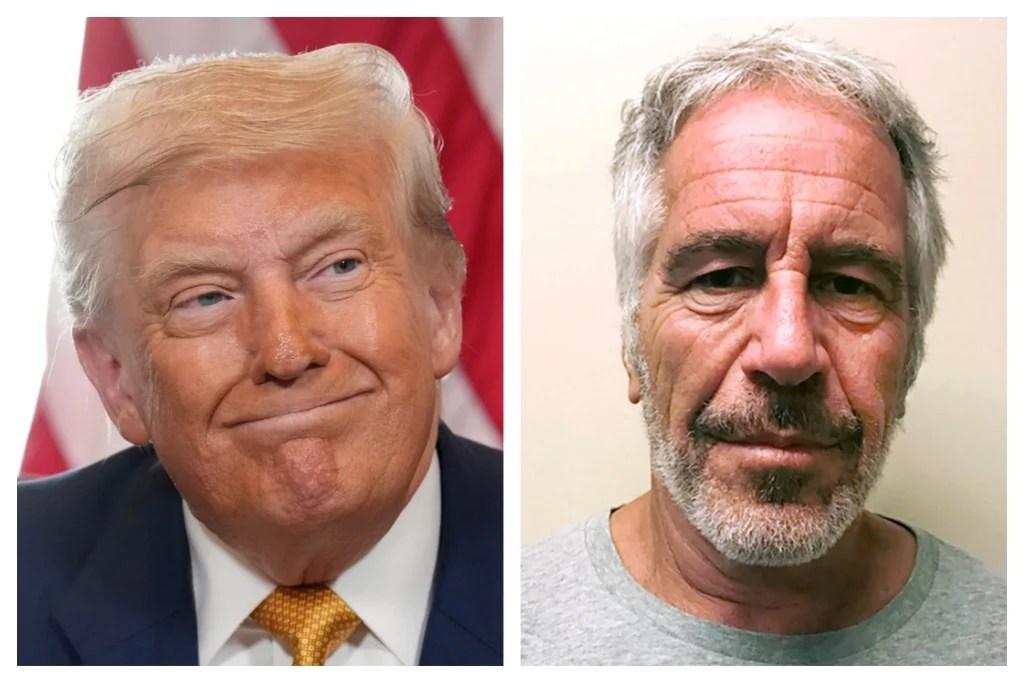
Buried in the coverage of Judge Darrin Gayles’s dismissal of President Donald Trump’s $10 billion defamation suit against the Wall Street Journal was one factoid emblematic of the country’s obsession with convicted sex trafficker Jeffrey Epstein. Trump sued the outlet when it broke a front-page story about an album celebrating Epstein’s 50th birthday that apparently included a drawing and greetings from Trump.
In making their case for the suit to be dismissed, the Wall Street Journal’s defense attorneys argued that the paper had never attributed the letter to Trump. This was despite headlines which clearly depicted Trump as the author. Well, let the facts be damned. Gayle bought the defense claim and declared Trump’s suit a nothingburger. As I cautioned in these pages last year, the Trump greeting may be an AI-generated forgery, a possibility the Wall Street Journal’s defense lawyers now seemingly endorse.
Nonetheless, the article had the effect of dumping Epstein’s dirty laundry squarely in the Oval Office. Along with former Attorney General Pam Bondi’s fumbled initial release of the Epstein files, it fueled conspiracy theories about cover-ups of a fabled, but nonexistent, client list Epstein allegedly used to blackmail rich and powerful men. For more than a year, the media, both legacy and social, obsessed over Epstein.
The fixation had something for everyone: a conspiratorially minded and somewhat lurid public obsession with sex between rich and powerful men and teenage girls, leavened by the survivors’ quest for justice, remuneration, and revenge. Oh, and spiced up with the nontrivial element of antisemitic tropes about Jewish males compromising presumably Christian damsels.
It was a fascinating social phenomenon that caused Congress to grind to a virtual halt, snarled the Justice Department in a bottomless paper-chase, and consumed news headlines which might otherwise have been focused at least occasionally on Trump’s positive achievements. The Epstein files were a witches’ brew of facts, half-truths, and psychotic fantasies. They include an 86-page memo about why Virginia Giuffre Roberts wasn’t a credible witness and an astonishing tale by a woman who claimed to have watched Epstein sodomize and then ritualistically dismember a young boy on his yacht while either George W. Bush or George H.W. Bush looked on approvingly.
FBI raw files often contain fanciful allegations. I know because I used to review them for political appointees up for Senate confirmation. One candidate for a high post broke down in tears in my office over salacious but utterly untrue statements an ex-wife gave to the FBI. They almost scuttled the man’s nomination. I have no doubt that Epstein’s behavior was abominable, and in some cases criminal, but I also believe some of his accusers have very mixed motives, and we are now at a stage of national mass hysteria — a dynamic in which it is almost impossible for any of the newly accused or tangentially embroiled to have any chance to defend themselves.
Democratic strategists quickly picked up on the saliency of this hysteria, however.
In focus groups, pollsters interview small numbers of voters representative of target audiences to explore attitudes and test reactions to issues and messages. Democratic focus groups confirmed that linking a candidate to Epstein was politically poisonous. Capitol Hill Democrats capitalized on the media frenzy and pushed the perception that Trump had hidden ties to Epstein.
Exit polls showed that corruption was a major issue for midterm voters. The Epstein obsession was the gateway issue for the widespread perception that there are two Americas, one composed of the wealthy and elite who can make their own rules and the other average working people who must play by the rules. The belief that Epstein had a list of rich and powerful clients who have escaped punishment reinforces the perception that there are different rules for the elite. The Trump family’s enrichment during his second term feeds the public perception that corruption and rule-breaking are rampant.
Epstein had an outsize impact on the elections, but Team Trump must also own the dismal outcome. Democrats amplified the elections as a referendum on the president. In typical Trump fashion, he consumed all the air in the room. His midterm convention, rambling rallies, and super PAC advertising all combined to focus attention on him, leaving GOP candidates up and down the ticket struggling to differentiate themselves.
Whereas past presidents studiously refrained from doing so, Trump flouted norms by handpicking candidates in the primaries. Most were losers, even in GOP strongholds like Nevada’s 2nd Congressional District and the entire state of Texas.
If Trump’s approval ratings had been above 50%, this novel strategy might have delivered results. But he wasn’t, and it didn’t. Instead, Trump’s strategy acted like an accelerant on a blaze, fanning angry and disaffected voters to turn out in record numbers.
2028 JOCKEYING ALREADY UNDERWAY
Nor are we done with Epstein. House Democrats promise to bring him back in 2027, Scottish police are scouring the Balmoral royal residence for links between Epstein and former Prince Andrew, and New Mexican authorities plan to excavate Epstein’s ranch in a search for buried bodies.
And the beat goes on.
John B. Roberts II was a Reagan White House official, international political strategist, and executive producer of The McLaughlin Group. He is the author of Reagan’s Cowboys: Inside the 1984 Reelection Campaign’s Secret Operation Against Geraldine Ferraro.
Continue reading...
[ H/T Washington Examiner ]