




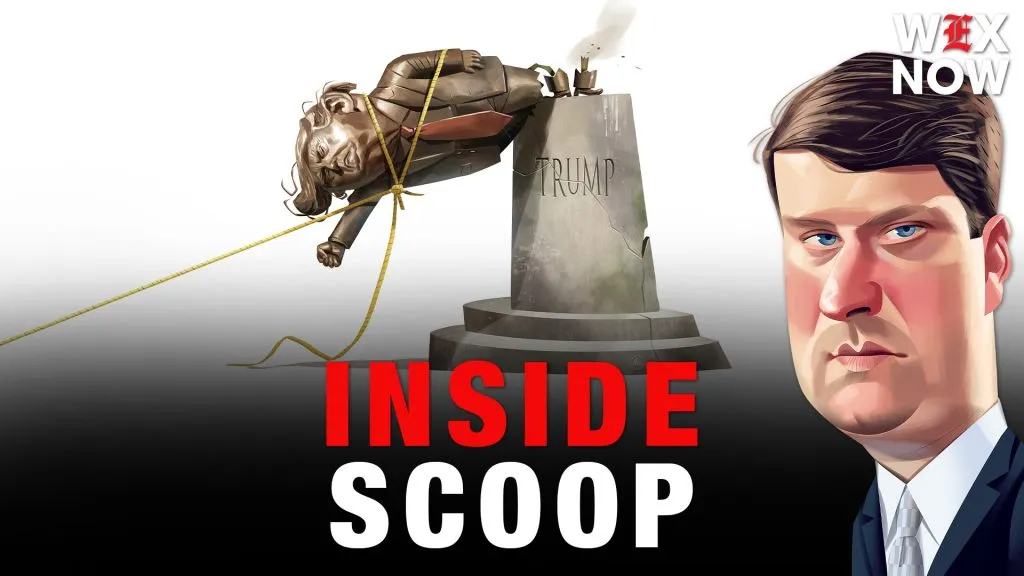
Jim Antle, the magazine’s executive editor, brings to life the pages of the Washington Examiner’s magazine in the show Inside Scoop. Each episode features exclusive insight from the article authors and expert analysis.
On this week’s episode, Antle examines the Democrats’ sweeping victories. President Donald Trump got one of the rarest things in American politics: a second chance. In this month’s midterm elections, voters rendered the verdict that he blew it.
“The big issue is once again the cost of living,” Antle said. “The perception that the Trump administration and the Republican-controlled Congress did not do enough about making it better, making things cheaper, making things more affordable, as voters believed they were promised in the 2024 election.”
Antle noted the potential consequences of the results: Democrats are projected to hold more than 250 seats in the House and are nearing that magic 60 of a filibuster-proof Senate majority.
“Democrats have been making a lot of hay on the affordability issue, even getting socialists elected on the promise of making things cheaper,” Antle said. “We’ll see how that pans out. These policies don’t have a very good history of actually delivering economic prosperity.”
Next in the show, Antle sits down with Kevin Kosar, a senior fellow at the American Enterprise Institute, to discuss, now that the midterm elections are over, how likely congressional Democrats are to keep their promise to investigate the Trump administration.
“They’re probably going to feel like they’re in a bunker and being hit from every possible angle,” Kosar said. “[Democrats are] coming out with guns blazing, and with 17 chairmanships of committees in the House alone, they’re going to have a lot of authority to look into every nook and cranny of the Trump administration, both the people who work for him, the man himself, but also Trump’s family.”
While Kosar said he has no reason to believe Democrats are going to pull any punches, he thinks the wise decision would be for them to be a little more strategic and try to work with Trump.
“He has a veto,” Kosar said. “They need to get appropriations bills across. They want to get concessions about tariffs and a whole host of other things from him. They’re not going to do it if they overplay their hand. But more than likely that’s what they’re going to end up doing.”
In fact, Kosar “absolutely” thinks there will be a slew of congressional hearings against Trump in the future. Antle points out that people may see them as partisan theater, and asks Kosar if people take the hearings seriously anymore.
“Absolutely,” Kosar said. “The cameras are on, C-SPAN is present, and members prepare for it like it’s a show they’re putting on. Hearings are less about learning, less about legislators trying to uncover the truth, and more frequently, it is just a partisan show put on.”
For this week’s in-depth report, Jay Caruso looks at how artificial intelligence is involved with everything nowadays. But what happens when AI comes for the right to bear arms?
A new report from Everytown for Gun Safety called on AI companies to tighten restrictions on firearms-related conversations. The September report, titled “Artificially Assisted Gun Violence,” targets five major developers: OpenAI, Google, Meta, Anthropic, and xAI.
“Everytown describes its mission in terms of public safety, education, and the prevention of gun violence,” Caruso said. “Gun-rights advocates say it is a facade. It hides behind the fluff and ‘education’ as a means to protect its true mission: passing as much gun-control legislation as possible.”
The organization says these safeguards could help prevent AI from facilitating gun violence. But those recommendations raise another question: Who decides what qualifies as unsafe?
Gennifer Hesseling, who does marketing for her family’s federally licensed gun business in Ohio, says ChatGPT refused to help with a promotional campaign for a Desert Eagle pistol — even though she says the chatbot had helped develop a similar campaign before.
“As soon as I put that into it, it said, ‘Sorry, I cannot help you … because that is promoting firearm sales,'” Hesseling told the Washington Examiner. “It has to be clear what the difference is between a licensed legal business promoting the product that they sell and a chatbot assisting someone with committing a crime or self harm.”
INSIDE SCOOP: UNCERTAINTY IN ISRAEL, POLITICAL FOOD FIGHT, DO POLITICIANS HAVE ANY VIRTUES LEFT?
“The wording is vague, and likely so purposely,” Caruso said. “‘Unsafe’ is a highly subjective term, as one could say the existence of a firearm in and of itself is ‘unsafe.’ For people who regularly use firearms, unsafe is entirely different. … A firearms safety instructor would likely argue ‘unsafe’ depends on the person holding the firearm and their use of it. There is not one universal definition of ‘unsafe,’ so how would developers allow chatbots to make such determinations?”
Tune in each week at washingtonexaminer.com and across all our social media platforms to go behind the headlines in the Washington Examiner’s magazine show, Inside Scoop.
Continue reading...
[ H/T Washington Examiner ]