

The Chart That Should Terrify Brussels: EU NatGas Reserves Could Crater By Winter's End
Diplomatic signals between the US and Iran ahead of the US midterms sent Brent crude and European natural gas futures tumbling on Monday, but the relief rally has done little to resolve Europe's energy crisis ahead of the Northern Hemisphere winter.
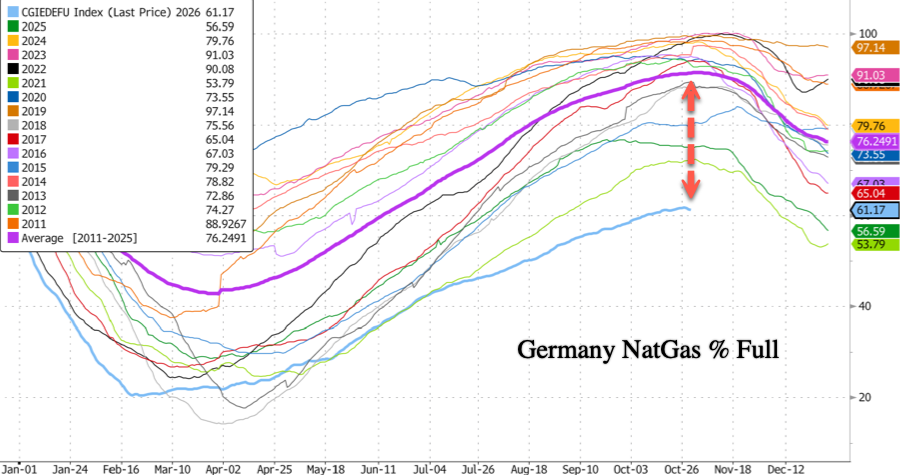
Alarmingly low NatGas storage levels at the start of the withdrawal season leave the energy-stricken continent with a very thin supply buffer, increasing its dependence on global LNG markets and its exposure to cold blasts, supply disruptions and price spikes.
Germany's 15-year average for this time of year stands at around 91%.
At this point, Brussels and its climate cult had better hope that, after years of pushing a false narrative of global warming, it comes true. Perhaps El Niño might help with that.
On Tuesday, the International Energy Agency released a new report that warned Europe is entering winter with its lowest NatGas inventories since 2013.
The report warned:
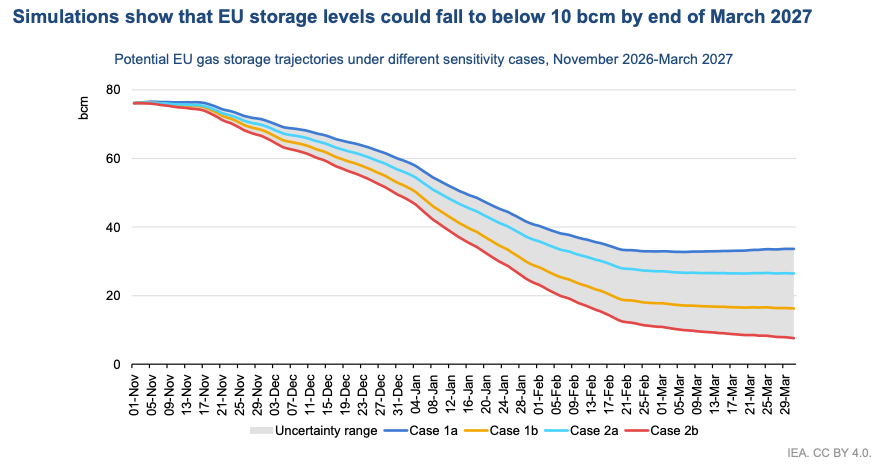
IEA forecasted the EU NatGas storage levels could drop to a crisis low of 10% by the end of winter:
The halt of Russian NatGas supplies and LNG shipments through the Strait of Hormuz has put Brussels in a dangerous spot and serves as a welcome reminder for US observers of just why energy independence is so critical for nations.
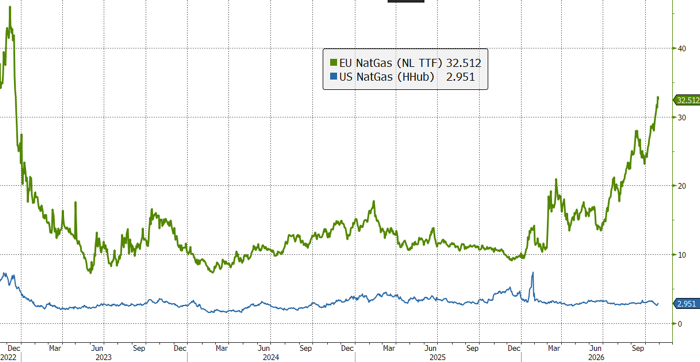
European NatGas trades at roughly 11 times the US price.
European globalist elites who've gambled in all the wrong ways with "green" policies, destroying their nuclear power capacity and declaring war on fossil fuels, are set to reap what they've sown with one terrible energy policy after another.
The end result: the industrial base gets whacked, and working-poor consumers get financially walloped in their pocketbooks. And now you know why Nomura analysts have Europe "lurching right" over the next year and a half or so of elections.
Tyler Durden Tue, 11/03/2026 - 08:00
Continue reading...
[ H/T ZeroHedge ]
Diplomatic signals between the US and Iran ahead of the US midterms sent Brent crude and European natural gas futures tumbling on Monday, but the relief rally has done little to resolve Europe's energy crisis ahead of the Northern Hemisphere winter.
Alarmingly low NatGas storage levels at the start of the withdrawal season leave the energy-stricken continent with a very thin supply buffer, increasing its dependence on global LNG markets and its exposure to cold blasts, supply disruptions and price spikes.
Germany's 15-year average for this time of year stands at around 91%.
At this point, Brussels and its climate cult had better hope that, after years of pushing a false narrative of global warming, it comes true. Perhaps El Niño might help with that.
On Tuesday, the International Energy Agency released a new report that warned Europe is entering winter with its lowest NatGas inventories since 2013.
The report warned:
IEA forecasted the EU NatGas storage levels could drop to a crisis low of 10% by the end of winter:
IEA simulations indicate that EU gas storage levels could drop below 10% of working capacity by the end of March 2027, assuming colder-than-average weather conditions and continued disruption to LNG flows through the Strait of Hormuz.
This would leave the European market particularly exposed to events, whether additional cold snaps, technical outages or other supply disruptions, since the rate at which gas can be withdrawn from storage sites tends to decline once fill levels fall below 30% of working capacity.
Moreover, low storage levels would substantially increase the need for injections through summer 2027, potentially extending market tightness into the following year.
The halt of Russian NatGas supplies and LNG shipments through the Strait of Hormuz has put Brussels in a dangerous spot and serves as a welcome reminder for US observers of just why energy independence is so critical for nations.
European NatGas trades at roughly 11 times the US price.
European globalist elites who've gambled in all the wrong ways with "green" policies, destroying their nuclear power capacity and declaring war on fossil fuels, are set to reap what they've sown with one terrible energy policy after another.
The end result: the industrial base gets whacked, and working-poor consumers get financially walloped in their pocketbooks. And now you know why Nomura analysts have Europe "lurching right" over the next year and a half or so of elections.
Tyler Durden Tue, 11/03/2026 - 08:00
Continue reading...
[ H/T ZeroHedge ]