



What is culture?
That is a big question. It trips up a lot of people. Often, we tend to think of high culture when attempting to answer. Art, literature, and the stuff of the academy are what comes to mind. Yes, of course, that is culture and very important culture. But it is not all of culture. There is also folk culture and the ways of your people. That sounds hokey or old-fashioned in our day and age, but it doesn’t need to be, and that is not how it’s meant, at least not in this case.
The cake you make because your grandmother used to make it was everyday culture for her, just like the way you and your son go fishing every Friday afternoon.
Folk culture can mean a lot of things, but in the most general sense it is taken to mean the ways of the common people. The things they eat, the things they do, the things they believe, the way they speak, the way they marry, the way they die, the things they are afraid of, the things they valorize, and anything else that isn’t so much taught or studied.
Family matters
At the most basic level, your culture is what you consider to be normal.
That is a very simple definition that is easy to understand, and it is applicable at just about every level. The definition applies equally to rich and poor, big countries and small ones, the hinterland and the metropolis. It applies to even smaller units like families. Certainly, a family’s culture is related to its broader people’s culture, but it is also distinct. Each family is different, and each family has its own culture.
This is important to consider, because when we think of culture as only being high and academic, we separate ourselves from our own folk culture. We turn ourselves into spectators or passive observers rather than active participants. We downgrade ourselves and think of ourselves as “culture-less,” when in fact, every single person on earth, by virtue of having grown up somewhere with some family, has a culture — that which they consider to be normal.
Rooted in routine
When you wake up in the morning, how do you greet your wife? How do you say good morning to your kids? What do you do after that? What is the routine you have kept up for the past 20 years? What is the prayer you say before you sit down for breakfast? What kind of clothes do you wear?
How about the way you talk to the people you work with? Do you open the door for women? Do you insist that someone you just met should go first, just to be polite? What do you say and what don’t you say? What do you think is nice and what do you think is rude?
At home, what do you do for dinner? What does your wife make? Or perhaps what do you make? Do you eat together? Do you pray before? What is the rhythm of the meal? Do you sit and talk afterward? Do you have coffee or dessert? Or is that only on the weekends?
Afterward, do you read a book or watch television? Do you work some more, or are you done for the night? Do you listen to music? If so, what kind? Do you have a drink, or do you abstain? When do you go to bed? And when do you wake up and start it all over again?
All these things are so small and mundane that you probably don’t even think of them as anything other than your daily routine. And they are that, of course, but they are also little points of culture. It is these mundane things — and 10,000 other ones — that add up to what we know as life.
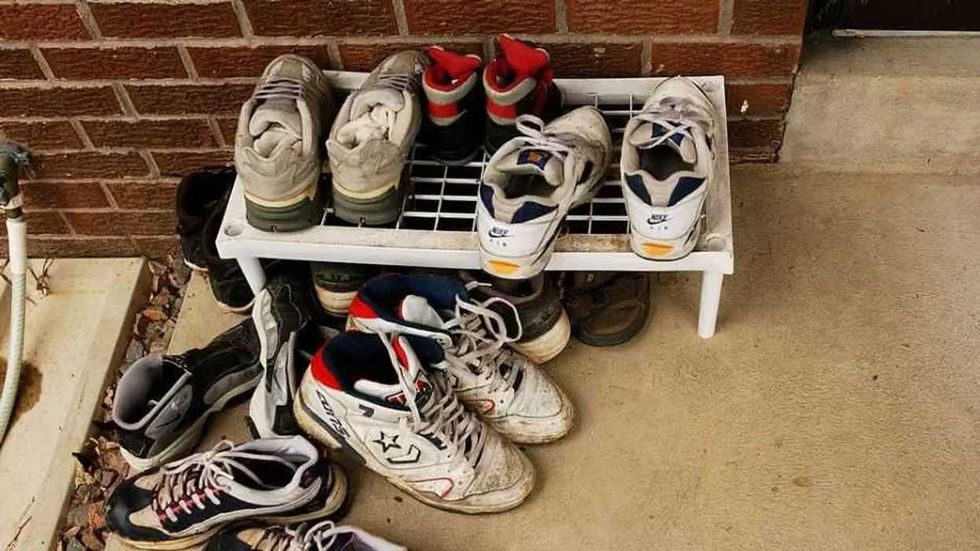
RELATED: Do you wear your shoes in the house?
Home truths
Often, we don’t realize how potent these little points are until we leave home at 18. We move away from mom and dad and meet other people with other ways, and we realize the obvious fact that everyone doesn’t eat the same things on the holidays, wake up at the same time, eat dinner the same way, have the same manners, or live the same way. It is often in close contact with others that we fully realize who we really are, who we aren’t, and what little things make us that way.
The reason all this talk of mundane routine and family culture matters is because we very easily forget how important these little things are. We focus all our efforts on high, hard-to-reach culture and forget that it is the everyday moments that come to shape the world our children consider normal.
The cake you make because your grandmother used to make it was everyday culture for her, just like the way you and your son go fishing every Friday afternoon or the way you all have dinner together every Sunday evening no matter what.
These traditions may seem too ordinary to be worth thinking about. But the things your children grow up considering normal are the very things they may one day pass along to their own children. That is how culture survives, and it is something every family takes part in, whether they realize it or not.
Continue reading...
[H/T Blaze Media]


