





Election post-mortems from the losing party generally follow a formula, journalist Michael Brendan Dougherty has noted: Our party is losing because it’s like you; it would be winning if it were like me.
That is, folks do not want to admit that their preferred policies could have contributed to an electoral defeat. The unstated assumption is that one’s preferred policy is always good politics.
The online diagnoses of the Republican collapse in the 2026 fit the Dougherty Doctrine perfectly:
Libertarians, classical liberals, and other free-marketeers blame President Donald Trump’s off-and-on, slapdash, costly tariffs. Among the more dissident Right, Trump’s decision to unilaterally attack Iran without a clear exit plan gets the blame.
Both arguments boil down to this: The Trump action I opposed on policy grounds is the reason the Republicans collapsed!
I am blessed to have opposed both Trump’s tariffs and his war, and so I am in something of a privileged position to judge this matter.
Reviewing polls, economic data, and voter interviews, it becomes clear that both sides are right: The tariffs and the war both dragged down Republicans. In fact, they acted in concert to ensure Republicans got the blame for a rising cost of living.
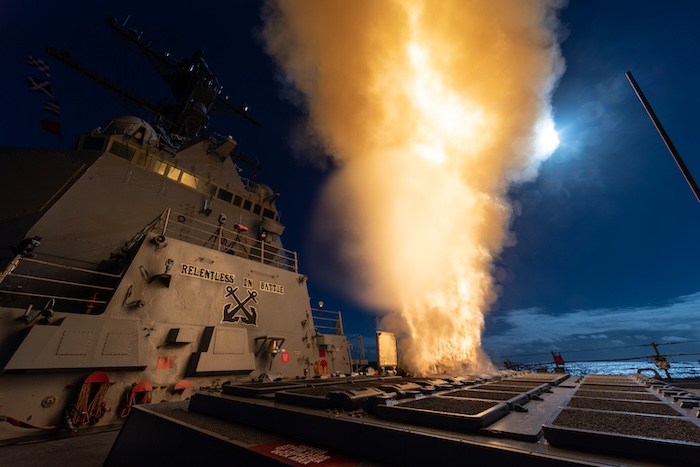
But while both sides are right, the folks who are the most wrong are the ones who try to exculpate the Iran war. Attacking Iran was the Trump mistake that most led to this blue wave.
Many conservatives supported regime change in Iran, and cheered Trump’s initial attack on the Islamic theocracy. That hawkish disposition, like a faith in nation-building or at least regime-change, has deep roots on the American Right. But just because some Republicans think the war was a good idea doesn’t mean it was politically fine.
What the numbers show
The chart of Trump’s approval rating over his second term tells a story. From his Inauguration Day high of just about 50%, Trump immediately started falling, down to 48.5% within the first three weeks. He had sunk to 47.8% in the RealClearPolitics average by the end of March. When he issued his “Liberation Day” tariffs on April 2, his approval took a brief dive, but bounced back up in May. That is, the tariff swoon was transient.
But again, the long-term trends are far more revealing than the weekly ups and downs. From Feb. 7, 2025 (48.5%) to the eve of the war on March 1 (43.4%), he dropped 5.1 percentage points, or 0.39 percentage points a month. From March 1 to his low on Oct. 10 (37.8%, when early voting was starting in most of the country), that’s a drop of 0.77 percentage points per month.
That is, his approval fell twice as fast during the war in Iran as before it. Every month the war dragged on, and high gasoline prices persisted — after constant promises from Trump that he could end the war in a moment — he became much more unpopular.
The No. 1 factor driving down Trump’s approval ratings was affordability (followed by and compounded by corruption).
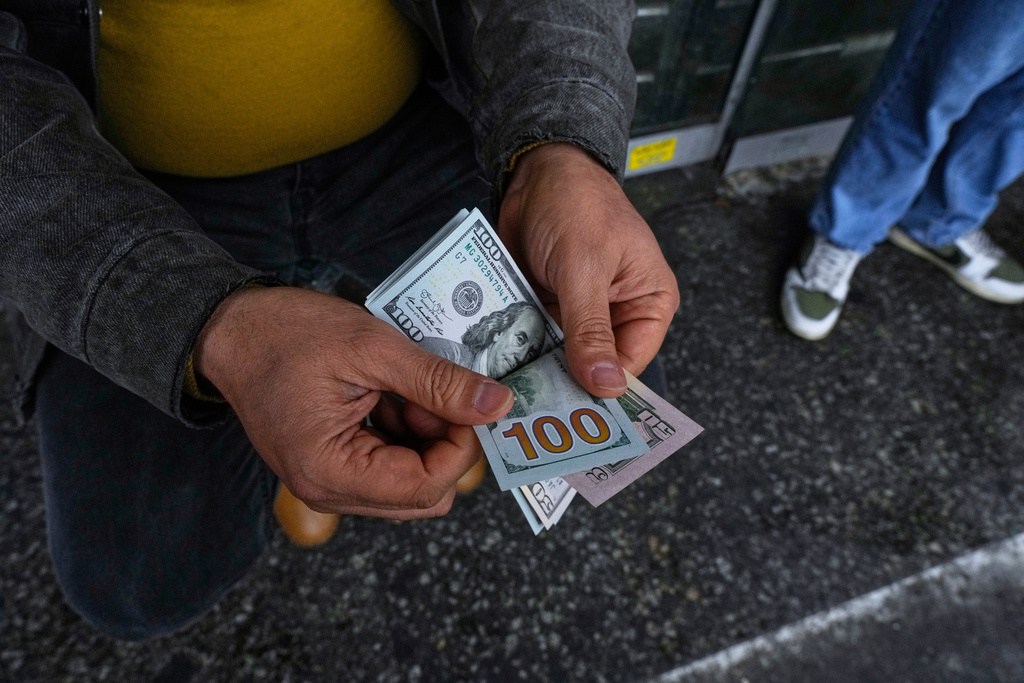
Trump tried to dismiss affordability concerns, but they were valid complaints. The Consumer Price Index for all urban consumers, a main measure in determining inflation, rose 5.8% between Trump’s inauguration and the last pre-election reading in October. That’s an annual inflation rate of 3.3%, well above the 2% that is considered normal. Put another way: Inflation was worse in Trump’s first two years than during Biden’s final two years, when it averaged 3.1%.
Many factors drove up prices. One was tariffs, which made imported goods (and domestic goods that compete with imports) more expensive. Another was the war in Iran. Iran has shut off, or at least choked, traffic through the Strait of Hormuz, which is how oil tankers get in and out of the Persian Gulf. This has pinched the world supply of oil, and caused gas prices to shoot well above $4 for much of 2026 — which in turn makes everything shipped by truck more expensive.
A motorboat passes a general cargo ship anchored in the Strait of Hormuz off Bandar Abbas, Iran, Sunday, Sept. 6, 2026. (AP Photo/Vahid Salemi)
" data-large-file="https://www.washingtonexaminer.com/wp-content/uploads/2026/09/AP26249358444418.jpg?w=1024" src="https://www.washingtonexaminer.com/wp-content/uploads/2026/09/AP26249358444418.jpg?w=1024" alt="A motorboat passes a general cargo ship anchored in the Strait of Hormuz." class="wp-image-4715319" srcset="https://www.washingtonexaminer.com/wp-content/uploads/2026/09/AP26249358444418.jpg 1024w, https://www.washingtonexaminer.com/wp-content/uploads/2026/09/AP26249358444418.jpg?resize=300,200 300w, https://www.washingtonexaminer.com/wp-content/uploads/2026/09/AP26249358444418.jpg?resize=768,512 768w" sizes="(max-width: 1024px) 100vw, 1024px">
A motorboat passes a general cargo ship anchored in the Strait of Hormuz off Bandar Abbas, Iran, Sunday, Sept. 6, 2026. (AP Photo)
It’s no surprise, then, that polls during and after the 2026 campaign pointed toward cost of living as the top issue.
Drill a bit deeper, and you see another pattern: Tariffs were a negative for the GOP, but the Iran War was a bigger deal.
When reading these polls, it’s best to ignore Democrats’ responses. Democratic voters dislike Trump deeply, and their opinions on various issues, including trade and war, are shaped by their hatred of Trump. It’s more telling to look at the responses of independent and Republican voters, whose swings and collapse in enthusiasm cost the GOP both chambers.
Around Trump’s low point, in early October, Ipsos released a poll in which 24% of Republicans said tariffs made life “a lot” more expensive, while 31% said the same of the Iran War.
In a postelection poll, Ipsos asked voters after the election what they want Congress to do. Most Republicans (51%) and an overwhelming majority (70%) of independents said “ending the war with Iran.” There was far less enthusiasm for ending tariffs: By a 2-to-1 majority, Republicans opposed ending tariffs, and among independents, a smaller majority (61%) wanted them ended.
American Compass, a policy organization that favors industrial policy, including tariffs, fielded a poll after the election that explored both issues. It found that both tariffs and the war in Iran turned voters away from the GOP.
The group worded their tariff question in a tariff-friendly way: “Since President Trump took office last year, his administration has imposed tariffs on imports from many countries to protect American businesses and workers. Did the administration’s handling of trade make you more or less likely to support Republicans?”
Independents came down 24 points less likely to support Republicans because of tariffs.
The group’s wording on the Iran attack was also loaded: “In February, President Trump launched a military campaign against Iran that killed many of its top leaders and severely damaged its military. Iran responded by attacking neighboring countries and disrupting shipments of oil, gas, and fertilizer to global markets.”
This issue drove independents, by 25 percentage points, toward Democrats.
When asked whether a given policy raised their costs, 84% of independents and 63% of Republicans said tariffs made life more expensive. The Iran War received more blame: 89% of independents and 75% of Republicans said the war made their lives more expensive.
The geography tells a tale
Nearly every county in America swung heavily toward Democrats in this past election, but some swung more than others — and there was a pattern here.
The Trumpiest counties had the biggest blue waves. “Trumpy” here is defined not as the most Republican counties, but as the (mostly working-class) counties where Trump made the biggest gains compared to other Republicans, such as Mitt Romney in 2012.
This massive swing of Trumpy places suggests either a massive drop-off in the disaffected, working-class white vote or a significant swing of Trumpy voters. In either event, it suggests that the voters who voted for Trump in 2024 didn’t vote for Republicans in 2026.
One Trumpy county was the almost entirely Hispanic Starr County, Texas, on the Rio Grande. In 2012, Starr was Obama’s single best county in Texas, where he outpolled Mitt Romney 86% to 13%. In 2024, Trump won Starr County 58% to 42%. Come 2026, Starr swung back hard to the Democrats, voting 77% to 21% for James Talarico for Senate.
What caused that 37-point drop in Republican vote? “The betrayal was everything—the war and the gas and the fajitas,” Republican Pat Saenz told the Wall Street Journal, referring to the price of gasoline and food.
CHARACTER MATTERS, UNFORTUNATELY FOR REPUBLICANS
Given that Trump ran on tariffs (which he declared his favorite word), and campaigned as the anti-war candidate, it’s pretty obvious which policy of his would feel most like a betrayal to his base.
The most important issue was that the guy who ran on making our lives more affordable and avoiding pointless wars entered us into a war of choice that made our lives much more expensive. Other issues hurt Republicans, too, but nothing hurt them more than the war.
Continue reading...
[ H/T Washington Examiner ]