




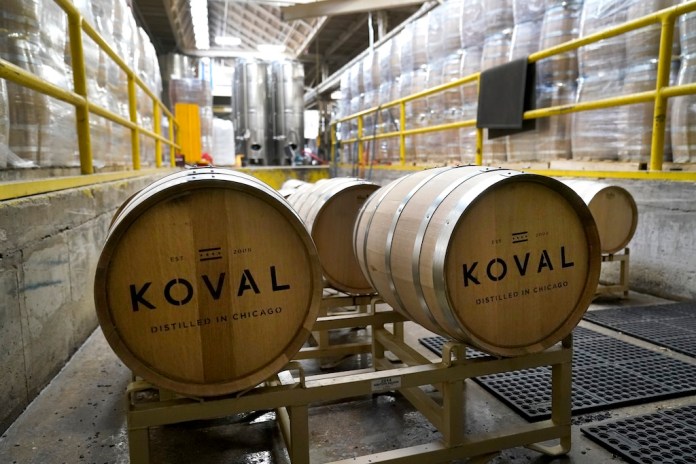
The Supreme Court has been asked to decide whether a federal law barring the home distilling of alcohol is unconstitutional, after a pair of federal appeals courts issued conflicting rulings on the legality of the longstanding statute.
The Buckeye Institute, a conservative think tank, is backing an appeal to the high court asking the justices to look at whether the “federal prohibition on home distilling exceeds Congress’s enumerated powers” and if the Supreme Court should clarify the scope of Congress’s powers to regulate under the commerce clause. The petition to the Supreme Court is an appeal of the U.S. Court of Appeals for the Sixth Circuit’s ruling upholding the law as constitutional, which came less than two weeks after the U.S. Court of Appeals for the Fifth Circuit found the law was unconstitutional.
“Asked which enumerated power authorizes that prohibition, the government answered: the power to tax the very conduct it prohibits,” the petition to the Supreme Court said. “Banning the taxed activity, on this theory, is a ‘necessary and proper’ means of taxing it. The Sixth Circuit accepted that theory and upheld the prohibition. And it did so eleven days after the Fifth Circuit, in a materially identical challenge to the same prohibition, rejected the same theory and held the prohibition unconstitutional.
“The government acknowledges that the two decisions ‘directly conflict.’ Only this Court can resolve that conflict, and this case is the vehicle to do it,” the petition reads.
The case petitioned to the Supreme Court centers on John Ream, who wants to use a home brewing kit gifted to him by his wife to distill small amounts of alcohol for personal consumption. Ream said he filed the lawsuit because he wishes to make spirits at home but does not want to face the penalties imposed by the 158-year-old federal law for doing so. The Buckeye Institute has argued the law is an unlawful overreach by the federal government.
“Mr. Ream’s case offers the Supreme Court a perfect vehicle to address the proper, limited scope of federal power, and does so by challenging a statute that absurdly bans local, noncommercial activity—that is, basement and garage hobbies—under the guise of regulating interstate commerce,” said Robert Alt, president and CEO of The Buckeye Institute and an attorney on the case.
‘ASSAULT WEAPONS’ BANS ARE ON THEIR WAY TO THE SUPREME COURT
“As we just celebrated our great nation’s 250th anniversary, it is worth noting that the Founders would not have countenanced this would-even-make-King-George-III-blush expansion of federal authority,” he said.
With the Supreme Court out of session for the summer, the earliest the justices could consider the petition would be at their opening conference of the next term on Sept. 28. A decision by the justices on whether they plan to take up the case for arguments could come as early as October.
Continue reading...
[ H/T Washington Examiner ]