





.jpg)


.jpg)

Calls at 9 p.m. from an unknown number annoy everyone, even government officials.
In fact, the massive fraud being perpetuated against Americans daily is enough to pay for their commute, groceries, or even the very cell phone bill they are being scammed through.
'Twenty-five percent of the younger age group said they have been scammed more than once.'
In response to the billions being stolen every year, the Federal Communications Commission is issuing guidance.
FCC Chairman Brendan Carr has been a divisive figure over the past year, but in a move that is likely to garner bipartisan appeal, he has directed his federal agency to produce guidelines on how to fight spam calls and texts.
"As part of our ongoing efforts to crack down on illegal robocalls and text, the FCC has published step-by-step guides that enable consumers to turn on blocking and filtering tools," Carr wrote on X.
What followed was a set of government guides for learning how to block numbers, filter spam, and control who can contact a person's iPhone or Android. The guidance is also broken down into providers like AT&T, T-Mobile, and Verizon.
While these instructions may seem simple and targeted toward elderly folk, it's actually younger adults who are more susceptible to fraud campaigns.
According to the Public Interest Network's 2024 report on spam and scam, young adults ages 18 to 44 are three times as likely to be successfully targeted than those over 55 years old. Moreover, 25% of the younger age group said they have been scammed more than once.
The report stated that the reason older Americans are less likely to be victims of phone scams is because they simply aren't picking up the phone or answering a text if they don't recognize the sender.
"Fifty-seven percent have signed up for services like 'Do No Call' registry versus 30% in younger age groups (18-64 yrs)," the study explained. "Twenty-one percent of older adults have also downloaded a caller ID app or have caller ID on their landline compared to 14% in younger age groups."
RELATED: Hackers are trying to steal money from X users — don’t be one of them
Notably, males are more likely to be victims of scam calls with 79% of men admitting to such over a 12-month period versus 68% of women. Women were also more likely to ignore spam calls/texts (65%) than men are (54%), despite women receiving about 5% more spam calls than men overall and per month.
These scams reportedly effect 21% of the adult population of the United States, with an annual average loss of $450 per person and $25 billion in losses nationwide.
Location matters too. A robocall study by outlet WhistleOut revealed that robocalling frequency changes depending on the state.
Since 2020, Louisiana has seen the biggest increase in robocalls by far at 792%, which is more than a skip and a jump ahead of Mississippi's 117% increase.
Alaska, Indiana, Missouri, Oklahoma, and Kansas have all seen a 50%+ increase since 2020.
Utah has seen the biggest drop at -34%, while Nevada, Arizona, Idaho, New Jersey, Wyoming, Rhode Island, California, Colorado, and Connecticut saw decreases as well.
RELATED: Gmail is about to fill your inbox with political spam. Here's how to skip it.
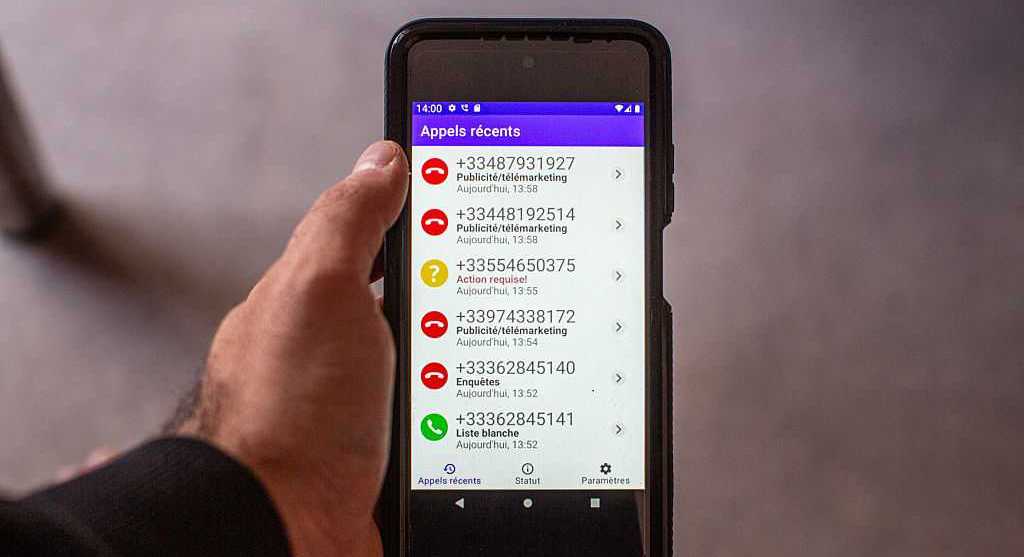
The FCC publishes guidance that warns of over a dozen types of scams, including collect call scams, cell phone fraud, and something called "The One Ring" scam.
The FCC also provides resources to tell Americans the laws around spam and solicitation.
The calls do not appear to be stopping either. There were about 52 billion robocalls in the United States in 2025, with that number estimated to increase to 58 billion in 2028 if current trajectories hold up.
Like Blaze News? Bypass the censors, sign up for our newsletters, and get stories like this direct to your inbox. Sign up here!
Continue reading...
[H/T Blaze Media]


