

Spain is rapidly becoming a serious hazard for international investors. Instead of upholding property rights, the country’s political climate now drives its institutional decay, threatening to compromise a fragile legal system.
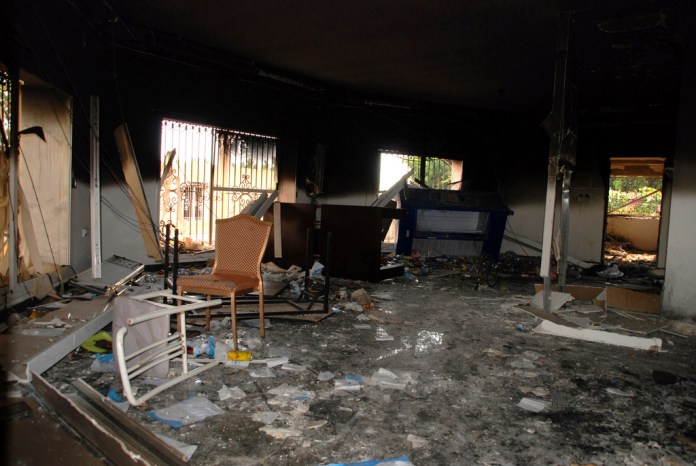
This danger was on full display on Sept. 23, when Madrid police executed the lawful eviction of 87-year-old Maricarmen Abascal — an enforcement action that populist forces quickly weaponized into a false narrative of “fascist tyranny.” In truth, the woman’s legal tenancy expired in November 2007.
For decades, archaic Franco-era regulations kept the original 1956 lease artificially frozen, passing from her father to her mother and ultimately to her. But under reforms enacted by former Prime Minister Felipe González’s Socialist Cabinet, such second subrogations expired after two years unless the heir possessed a disability rating of at least 65% — a bar Abascal’s 50% rating could not meet. Consequently, all legal claims to the apartment ceased nearly two decades ago. Although the Madrid Provincial Court and the Supreme Court ultimately upheld this statutory reality, the rule of law remains under severe assault as activists and radical leftist political demagogues — with the Spanish Congress’s consent — deliberately distort a textbook property-rights case to undermine the judiciary.
Instead of relying on emotional fiction, hard financial metrics immediately dismantle this socialist mythology. Consider, for example, that Abascal paid a mere €204 per month for a premium 90-square-meter apartment in Madrid’s upscale Retiro district. Comparing this artificially depressed rate to August 2026 market data — which valued Retiro real estate at over €8,400 per square meter — reveals that comparable assets command nearly €760,000 on the open market, while district rents easily surpass €2,100 per month. This gaping disparity underscores why the real estate firm Urbagestion Desarrollo e Inversion bought the heavily encumbered asset at a steep discount in 2018. Furthermore, municipal agencies repeatedly offered the tenant subsidized public housing alternatives, yet she rejected every state-backed residence. Predictably, radical city mediators stepped in just days after her lawful eviction to pressure the owners into an extrajudicial lease capped at a fraction of market value. Ultimately, activist cameras choreographed the expulsion, state media vilified the property owners by labeling them as a “vulture fund,” and cheap political theater eclipsed institutional stability.
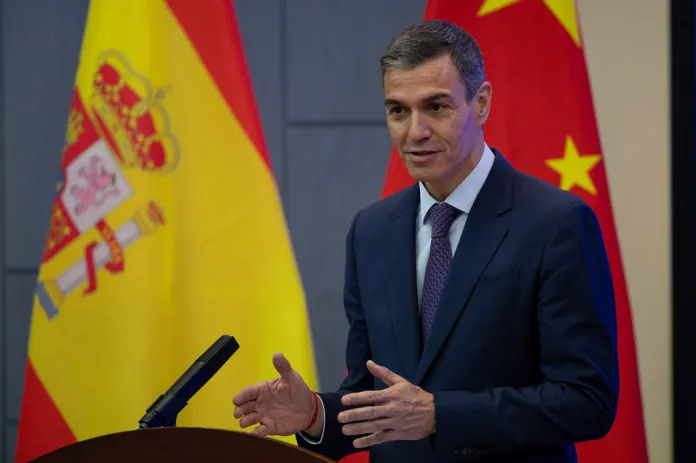
Ignoring reality, Prime Minister Pedro Sanchez actively weaponizes this domestic chaos to mask his severe macroeconomic failures. Bank of Spain audits show that Madrid’s national debt reached a record €1.76 trillion in mid-2026, a crushing mountain of liabilities exceeding 101.4% of the country’s GDP. Not surprisingly, the IBEX 35 stock index increasingly tracks volatile political headline risk rather than genuine corporate earnings. Predatory interventions such as the 2023 housing law and arbitrary energy clawbacks have systematically shattered Western investor confidence.
Amid this environment, recent polling reflects broad public exhaustion with state-sponsored lawlessness. A Sept. 24 DYM survey placed the center-right Popular Party comfortably ahead of the ruling Socialists, signaling that severe border failures — culminating in the chaotic late-July Ceuta breach — have effectively doomed the coalition. Meanwhile, corruption has hollowed out the administration’s remaining legitimacy after the Supreme Court sentenced former Sanchez right-hand man and transport minister José Luis Ábalos to 24 years in prison for the “Koldo racketeering” scheme. As central government paralysis deepens, the crisis spills into the streets, where Marxist-aligned groups occupy public squares to engineer a permanent crisis of governability, poised to destabilize any incoming right-leaning administration.
American strategists must recognize the familiar milestones of this socialist trajectory. In July 1960, former Cuban dictator Fidel Castro orchestrated the uncompensated expropriation of American assets, leaving nearly $2 billion in certified, unpaid claims in his wake. While aspiring dictator Sanchez has not yet nationalized physical refineries, his administration is actively deploying the operational precursors. To blunt this, Washington must execute several aggressive defensive measures before the next confiscatory decree drops.
OPINION: SPAIN IS BECOMING NATO’S NEXT DICTATORSHIP. TRUMP MUST ACT NOW
First, the State and Treasury departments must immediately slap Spain with a targeted investment advisory, while financial regulators blacklist Spanish real estate, corporate leasing, and energy infrastructure as high-risk political exposures. In tandem, Congress must bar the Development Finance Corporation from underwriting Spanish utility or property markets. Finally, Western capital should respond by demanding an absolute end to executive interference in final judicial decisions, forcing remaining high-stakes investors to shield their assets through specialized judgment-finality swaps anchored safely under Delaware governing law.
Because Madrid has shattered its covenant with global capital — proving property rights in Europe survive only until the leftist mob demands a corporate sacrifice — Americans must lock down their assets and refuse to bleed another dime into Spain.
Jose Lev Alvarez is an American–Israeli scholar specializing in international security policy. A multilingual veteran of the Israeli special forces and the U.S. Army, he holds three master’s degrees and is completing a doctorate in intelligence and global security in the Washington, D.C., area.
Continue reading...
[ H/T Washington Examiner ]